
One county, many kinds of door
Across Escambia County you can find a surprising range of housing. Near the older parts of Pensacola there are historic homes with heavy wooden doors and mortise locks. In the suburbs there are ranch houses and two-story homes built in the last few decades with standard builder hardware. Along the water there are condos and beach houses with sliding glass doors and salt-weathered fixtures. Further out, there are larger lots, manufactured homes and outbuildings with gates and padlocks.
Each type calls for different thinking. A mortise lock in an old house is serviced differently from a builder deadbolt, and a keypad on a beachfront door faces conditions that an inland one never meets. Treating all doors alike leads to wrong parts, wasted visits and disappointing results.
That is why we start every job with a conversation. You tell us what the house is like, what the door looks like and what is going wrong, and we plan accordingly. A good description often lets us bring the right parts on the first visit.
Wherever you are in the county, call to confirm availability for your address and receive a quote by phone before dispatch.
How a call works from start to finish
The process begins with a phone call. You describe the problem in plain words: a key that will not turn, a door that will not latch, a lost key, a new home that needs its locks changed. We ask questions about the door, the lock and the location. Based on your answers we give a quote by phone, so you know what to expect.
If the job is straightforward, a technician comes to your address. On arrival, they confirm ownership or authority, look at the lock and the door, and explain what they will do. They carry out the work, test it and hand over the keys.
If the job is complicated, a technician visits first to assess it. The service call charge for that visit is explained before dispatch. After the assessment, we explain the options and give a quote for the work, and you decide whether to go ahead.
At every step we try to avoid surprises. If something changes, we stop and explain. You should always know what is happening and why.
Why we check ownership or authority every time
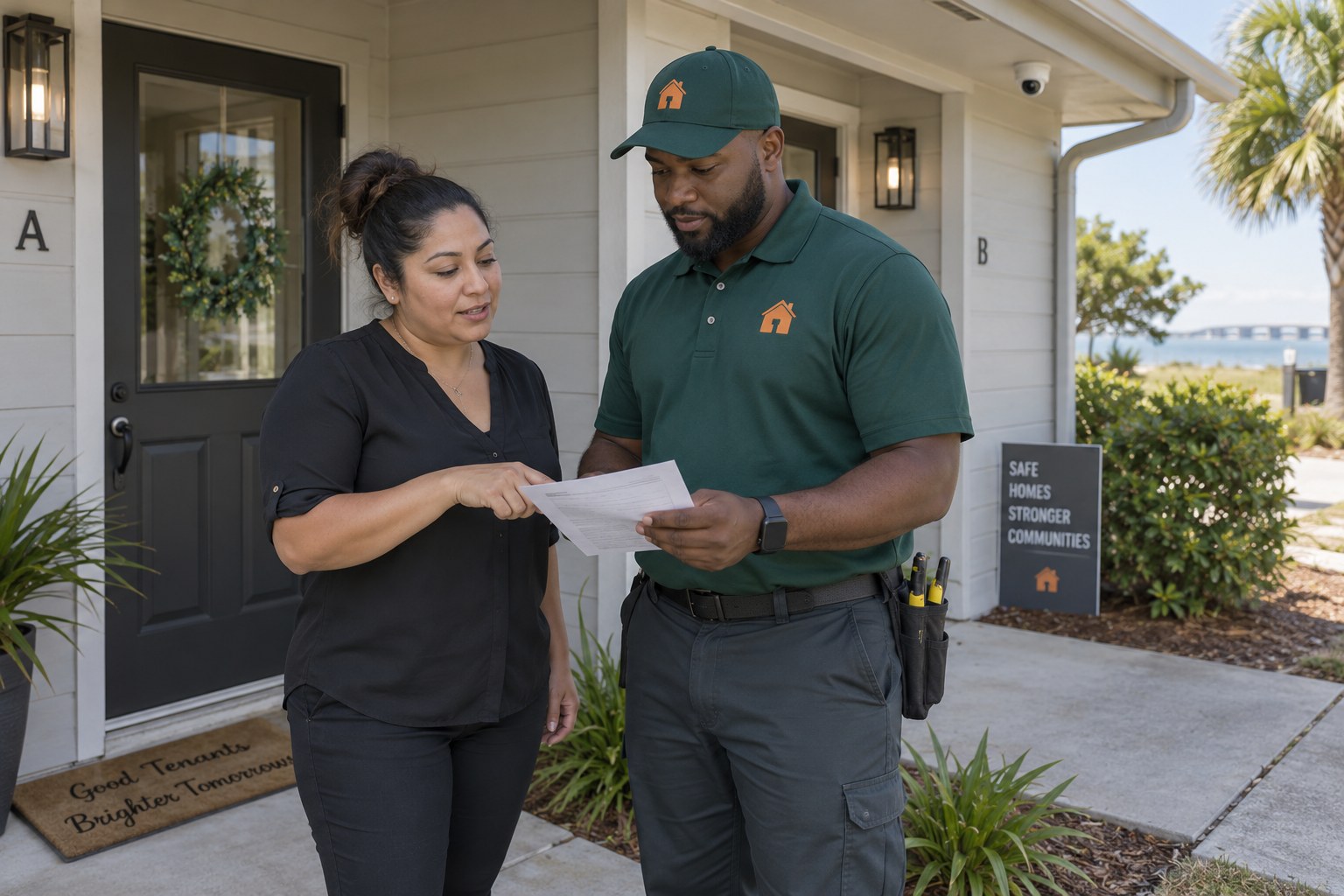
Opening a door for someone who does not belong there is the worst thing a locksmith can do. So before we open, rekey or replace a lock on a home, we ask you to show a connection to the address. That might be identification with the address, a lease, a closing document or a utility bill.
This is not suspicion. It is a standard applied to everyone, the same way a bank asks for identification. It protects the real resident from an ex-partner, a former roommate or a stranger with a good story. It also protects the technician.
If you cannot provide anything on the spot, tell us. We will talk through what is reasonable. A landlord can confirm by phone, a family member can bring a document or a property manager can authorize the work.
For landlords and managers, we ask for proof of ownership or a management agreement. For tenants, we ask about the lease and, for lock changes, the landlord's permission.
Humidity, salt air and the Gulf Coast effect
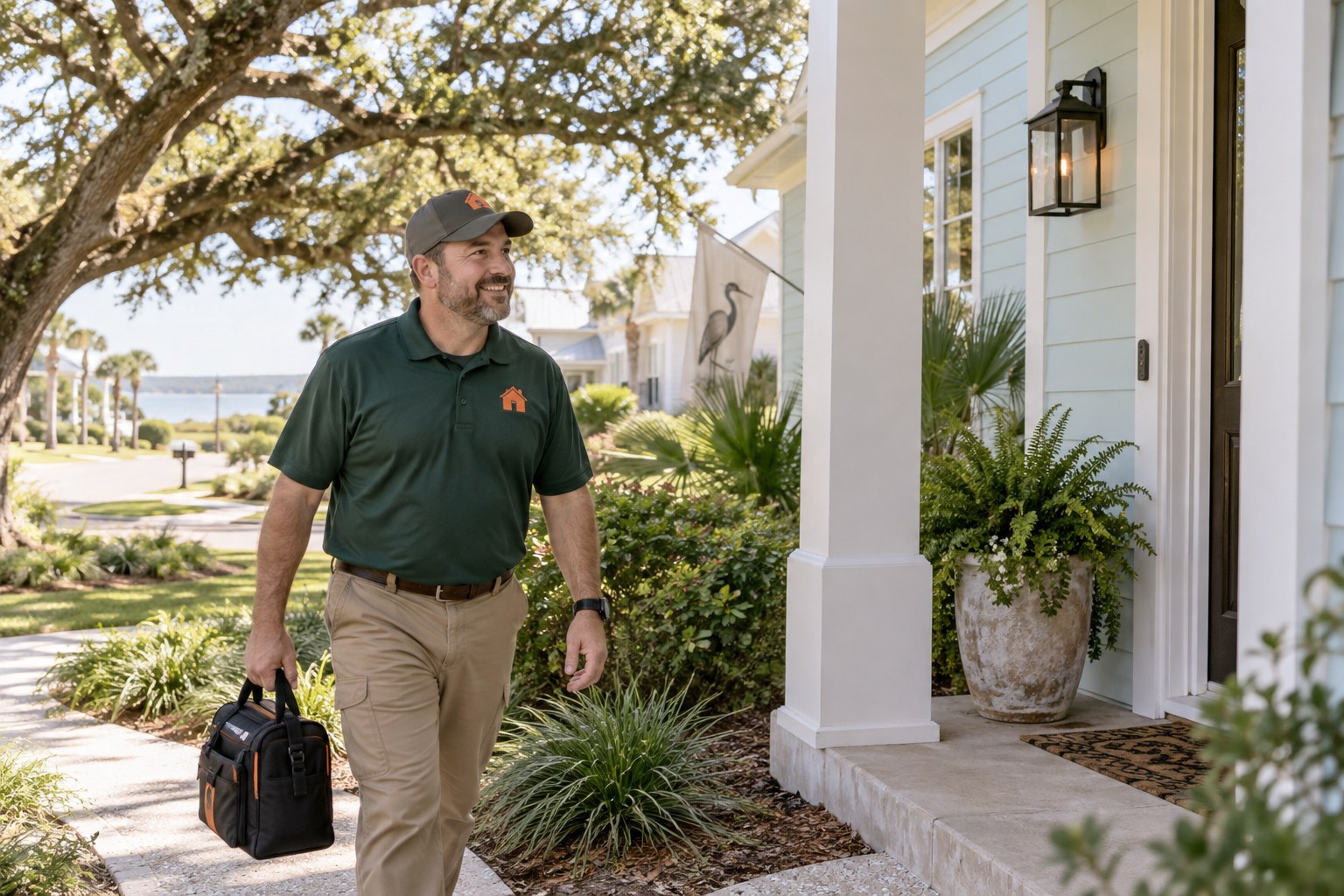
Everything in this region is affected by the climate. Warm, damp air swells wooden doors in summer and lets rust creep onto metal. Near the water, salt adds to the damage, and sand blows into tracks and keyways. A lock here lives a harder life than the same lock in a dry climate.
This is why many service calls start with a lock that feels stiff or gritty rather than one that has failed outright. Catching these signs early allows cleaning, lubrication and adjustment instead of replacement. If a lock is already corroded inside, rekeying or replacing the cylinder is the honest answer.
When choosing new hardware, think about exposure. A door under a deep porch is sheltered, while one facing the open yard or the water takes the full force of the weather. Sealed cylinders and corrosion-resistant finishes are worth the small extra cost on exposed doors.
We will tell you what we see and what we recommend, and we do not sell parts you do not need.
Hurricane season across the county
Anyone who lives here knows the rhythm of hurricane season. It brings preparation, evacuation and recovery, and doors are part of all three. Before the season, check that every exterior door latches firmly, that hinge screws are tight and that strike plates are secure. A door that is loose in calm weather will not hold in a storm.
If you evacuate, give a spare key to someone you trust, or arrange a keypad code. Lock every door and window, and make sure shutters are secured. Padlocks on shutters and storage should be tested and replaced if rusty.
After the storm, swollen doors, debris in locks and shifted frames are common. Do not force keys that stick. Call for help, describe what you see, and let a technician look.
We can talk through pre-season checks by phone, and we can visit if you want your doors inspected.
Renters, landlords and property managers
A large part of the county lives in rental housing, from apartment complexes to single-family homes and duplexes. Rentals raise questions about who may do what. Tenants usually need the landlord's permission to change a lock. Landlords usually want to rekey between tenants. Managers need consistent records of keys.
For landlords, we offer a simple rekey routine: each exterior lock is rekeyed, keys are tested and labeled and a record is made. For larger sets of doors, we can discuss keyed-alike and master key systems, and explain the tradeoffs.
For tenants, we help with lockouts after confirming residency, and we explain what the lease allows. If you want better security, we suggest options that do not alter the door, such as portable devices, and we discuss with the landlord what changes could be made.
We always confirm authority before changes. It keeps everyone on the right side of the lease.
Students, military families and people on the move
The county is home to a university, a college and a naval air station, which means a steady flow of people arriving, leaving and moving between homes. Short leases, shared houses and frequent moves strain locks and key control. Keys get lost in boxes and in transit, and old copies linger.
For people moving in, the best first step is to ask whether the locks have been rekeyed. If not, ask the landlord to do so or to allow it. For people moving out, return all keys and keep a record.
Shared houses benefit from clear rules about keys. Decide who gets a copy, who pays for replacements and what happens when someone leaves. A rekey when a roommate departs is an inexpensive way to avoid disputes.
We make these services easy to understand and straightforward to book. Call and we will explain.
Original hardware on county-line farmhouses and aging homes
Parts of the county have older houses, some with original hardware still in use. Mortise locks, rim locks and early cylinder knobs may have served generations. They often deserve repair rather than replacement, and a skilled technician can restore them. Parts may be hard to find, so the repair may involve cleaning, replacing springs and rekeying.
Old doors need care. Wood has aged, paint has built up and frames have shifted. A lock that worked decades ago may now bind. Adjusting the strike, easing the door and tightening hinges often restore smooth action.
If a lock must be replaced, we try to preserve the character of the door. We choose hardware that fits existing holes and, where possible, matches the style.
Tell us about your door on the phone. If you can describe its shape and share a photo, it helps.
Lockouts anywhere in the county
A lockout can happen anywhere. If you are locked out, check for another entry and for anyone with a key. If not, call us and describe the door, lock and location. Tell us if anyone is inside.
We do not promise arrival times, since distance and conditions vary. We will tell you honestly about availability when you call, and we will give a quote by phone.
On arrival, we verify authority and use the least damaging method. Most home lockouts end without damage. If drilling is needed, we explain and ask first.
Afterward, we test the lock and check that it works properly.
Keeping your locks in good condition
A few habits extend the life of any lock. Use the key gently. Do not force it. Keep keyways clean. Use a dry lubricant sparingly. Wipe exterior hardware after salty or stormy weather.
Replace worn keys. A copy made from a worn key carries the wear forward.
Check screws on handles and strike plates once or twice a year.
If a lock feels different, call early. Small problems cost less than emergencies.
Choosing the right level of security for your situation
Security is not a single dial that everyone should turn to maximum. A retiree in a quiet neighborhood, a student in a shared rental and a family with a business in the garage face different risks, and the right lock for one may be overkill or underkill for another. The useful question is what you are protecting and from whom, then how much effort and cost make sense.
For many homes, a solid door, a quality deadbolt with a firm strike and tidy key control provide most of the benefit. Add lighting and good habits, and you have covered a large share of ordinary risk. Higher grade cylinders, restricted keyways and reinforced frames suit situations with valuable contents or a history of attempts.
Over-engineering has costs too. Complex systems fail in complex ways, and a household that cannot operate its own locks smoothly will leave them open. A simple setup that the whole family uses correctly beats an advanced one that is bypassed.
We aim to give a fair assessment. If a basic deadbolt is what you need, we will say so. If a particular door deserves stronger hardware, we will explain why, and you decide.
Lost keys, found keys and what to do about them
Losing a key is one of the most common reasons people call a locksmith, and the right response depends on the circumstances. If you lost it inside your home and are confident that it is there, you may only need patience. If it was lost outside, in a car, at a gym or in a crowd, you cannot know who has it.
If the key carried an address tag, treat it as compromised immediately. If the key fell out of a bag in a public place, the risk is moderate. If you simply cannot find it in your own house, you can wait a short time before deciding. When in doubt, a rekey costs little compared with the uncertainty.
Found keys are a different issue. If you find a key that you do not recognize, resist the temptation to test it on nearby doors. Hand it to the local authorities or the property manager.
When you call about a lost key, tell us which locks it opened and whether any identifying information was attached. We can then advise on a rekey, a cylinder change or no action.
Planning for emergencies: who can reach your home
Emergencies do not wait for convenient timing. A pipe bursts while you are away, a relative needs to check on someone or a medical situation requires access to a home. In each case, someone other than the usual resident needs to enter. Plan for this ahead of time, not in a moment of panic.
Choose at least one trusted person who lives close by and give them access. A key, a lockbox or a keypad code can all work. Tell them where the shutoff valves and electrical panel are. Make sure they know how your locks work, especially if you have a smart lock.
Consider emergency responders too. In some situations, they need to enter quickly, and they have their own methods. A secure but reasonable setup, such as a visible address number and a lockbox in some neighborhoods, can help. Check what is appropriate where you live.
We can help you choose and set up the right arrangement for your home and explain it plainly.
Covering a wide county: how a mobile technician plans a route of home calls
Escambia County spans dense neighborhoods, quiet residential roads, and areas where homes sit far apart. For a mobile locksmith, that variety affects how a day is organized. Travel distance, traffic on the main roads, and the time of day all shape what can be done. That is why a quote and availability are confirmed by phone, with the technician asking for the address and a short description of the job before dispatch.
A clear description of the problem helps the technician bring the right parts. A lockout with a standard deadbolt needs different tools than a door that will not latch. A rekey of five doors requires a number of pin kits and cylinders on hand. If a job looks complicated, a technician may visit first, and the service call charge is explained before dispatch so there is no surprise at the door.
Customers can help by giving precise directions. Houses in newer subdivisions and on rural roads can be hard to find, and a note about a gate, a long driveway or a hidden entrance saves time. If the property is a rental, mention who has authority to approve work. Ownership or authority is verified before opening or rekeying. Call us to confirm availability for your part of the county and to discuss what you need.
Seasonal conditions matter across the county. After a storm, roads may be affected and travel plans can shift, so a technician may need extra time to reach an address. Calling early in the day, when you can, helps with planning, and being flexible about timing is useful. Be clear about the address, any gate code, and the best number to reach you at the property. That information keeps the visit smooth even when conditions are not ideal.
Thinking about doors you do not use every day
Every home has doors that rarely open: a formal front door used only for guests, a basement or crawlspace hatch, a pantry door to a covered porch, a side gate that sticks all summer. Because they are seldom used, their locks can fail quietly. A bolt that has not been thrown for a year may be seized, and a key that has not been turned for months may have been lost.
Give these doors a yearly checkup. Operate the lock, check the key, look at the hinges and make sure the door still closes properly. If a rarely used door is also hidden from view, consider whether it needs a better lock than its use suggests.
Do not leave a rarely used door unlocked because the lock is stiff. A stiff lock can usually be cleaned and eased, or replaced for a modest cost. An unlocked door is still an open door.
Tell us about the doors you forget when you call. We can often handle several in the same visit.
Questions people ask us
Which parts of Escambia County do you serve?
Our mobile service reaches homes across Escambia County, including the city, the suburbs, the water and the inland areas. Distance and conditions affect scheduling, so please call to confirm availability for your address and get a quote by phone.
Do you open doors for anyone who calls?
No. We confirm ownership or authority before opening, rekeying or replacing a lock. Identification with the address, a lease or a similar document is usually enough. This protects the people who live in the home.
Can a tenant change the locks?
Usually only with the landlord's permission, because most leases reserve lock changes for the owner. We confirm authority first. A tenant can still call for a lockout after confirming residency.
What if the problem is complicated?
A technician visits first and the service call charge is explained before dispatch. After the assessment, we explain options and the quote for the work, and you decide whether to proceed.
Can you work on older mortise locks?
Often yes. Many can be cleaned, repaired and rekeyed, keeping the original look. If parts are unavailable or the body is damaged, we discuss a replacement. We give a quote by phone before any work.