
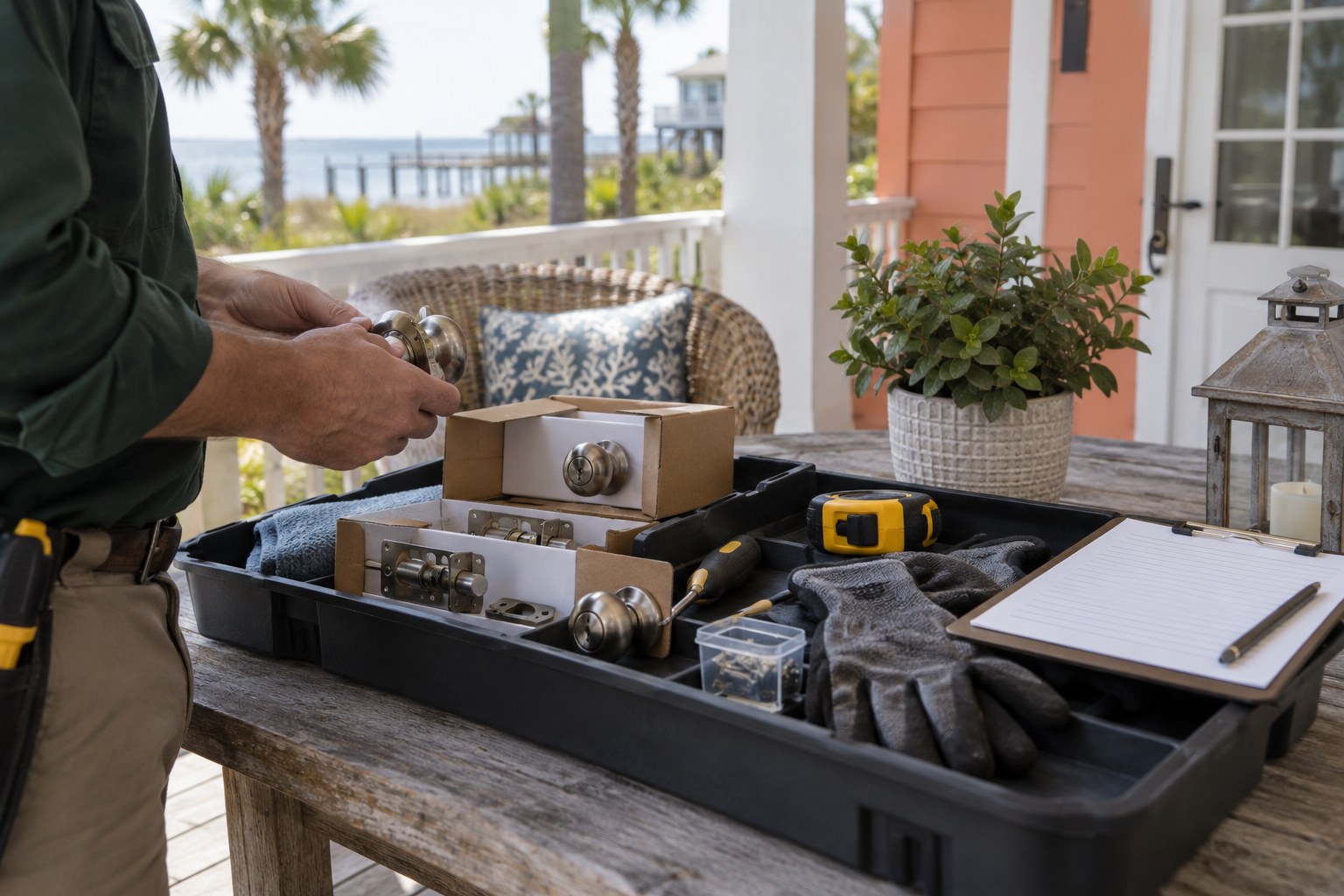
Why a vacant home needs a different lock plan
An occupied home advertises itself through lights, noise, cars and people coming and going. A home left empty for a season sends the opposite signal, and a quiet property attracts attention from people who should not be near it. Locks are only one layer, but they are the layer that decides whether a casual attempt turns into an entry.
Time itself is a factor. Locks that are rarely used can seize, corrode or develop sticking latches. A key that turned smoothly in spring may feel gritty in autumn after months of humidity. Nobody is around to notice the early signs, so small problems grow unchecked until the day you arrive and cannot open your own door.
Access control is the other concern. During a long absence you may give keys to a caretaker, a cleaner, a landscaper, a neighbor and a property manager. Each key is a potential entry point, and without a record, you may not know how many exist or who holds them. A deliberate plan is far safer than a growing pile of copies.
The good news is that a handful of steps before you leave and when you return deals with most of these risks. None is complicated, and together they let you step away for the season with confidence that your house is as secure as it can reasonably be.
Rekey before you hand out keys
If you have owned the home for a while and have lost track of who holds keys, a rekey before the season starts is a clean reset. It changes how every lock responds, so old copies held by former caretakers, previous contractors or past guests stop working. You then issue fresh keys only to the people you choose.
A rekey is often simpler and gentler than replacing locks. The technician removes each cylinder, adjusts the internal pins and tests the new key. Locks that are worn, corroded or unsuitable can be replaced during the same visit. The technician checks ownership or authority at the address before starting, so bring a utility bill, closing papers or identification matching the property.
Think about key groups. You might want one key for the main doors that your caretaker uses and a separate key for a locked room, a garage workshop or a storage closet holding valuables. Separate keys mean a caretaker who can feed the cat cannot also reach the boat paperwork.
Keep a written record of the work. Note the date, the doors rekeyed and how many keys were made. Store the record with your home documents, away from the keys. When you return in spring and want to check that everything is in order, the record is your reference.
Choosing and managing a caretaker
A reliable person who checks on the house is among the best protections a vacant home can have. They notice storm damage, leaks, unusual activity and mail piling up. Choose someone you trust, who lives nearby, and who understands what you expect: how often to visit, what to look for and whom to call.
Give them what they need and no more. A key to the main entrance is usually enough. Resist the temptation to hand over every key you own. If they need access to a garage or shed, discuss whether a keypad code or a separate key suits better.
Be clear about guests. Agree that the caretaker does not let anyone else into the house without your permission, and does not lend or copy the key. A short written note covering these points avoids misunderstandings and shows that you take security seriously.
Review the arrangement each season. People move, relationships change and circumstances shift. If you are unsure whether the caretaker still has the only key, or if they have changed, rekeying or changing a keypad code resets access without any awkward accusations.
Keypads, smart locks and remote access
Keypad and smart locks suit seasonal homes well, because codes can be created, changed and removed without a physical key ever changing hands. You can give a cleaner a code for one afternoon and delete it afterward, or give a caretaker a standing code you can disable the moment you wish.
Many smart locks send alerts when the door is opened, which gives a sense of what is happening while you are away. Be thoughtful about privacy and tell the people involved that the lock records entries. Openness avoids resentment and keeps the system useful.
Electronics need care. Batteries run down, and an empty house is the worst place for a dead lock. Replace batteries before you leave, note the date, and choose a lock with a low battery warning. Keep a physical key backup so a failed battery never traps anyone outside.
Humidity and salt air can also affect electronics. Choose a lock rated for outdoor exposure, check seals and ask a technician about finishes that stand up to the coastal climate. A lock that is installed correctly and maintained will last far longer than one that is neglected.
Humidity, salt air and sticking locks
The Gulf Coast climate is hard on metal. Moist, salty air corrodes keyways, pits finishes and gums up the moving parts inside a lock. A lock that sits unused through a humid summer is more likely to stick than one that is operated daily.
Before you leave, operate every lock several times. Turn the key, throw the deadbolt, work the latch. Apply a lubricant made for locks, sparingly, to the keyway and bolt. Avoid heavy oils, which attract dust and sand and make the problem worse over time.
When you return, test each lock before you unpack. If a key turns hard or a bolt drags, do not force it. A snapped key inside a cylinder turns a small problem into a larger one. A technician can clean, lubricate or replace the lock, and it is better done early.
Doors swell in humid weather, and frames can shift. If a door that closed easily in spring now rubs or sticks, mention it when you call. Adjusting hinges or planing an edge often solves it, and the lock then works as it should.
Hurricane season and long absences
Seasonal owners need a plan for storms. If you are away when a hurricane approaches, someone must be able to reach your home to put up shutters, move outdoor furniture and check on the house afterward. That person needs access, and your plan should say how they get it.
A lockbox with a code or a keypad entry makes this practical. Your caretaker can enter without hunting for a key. After the storm, they can assess damage, secure openings and report back. Change the code or rekey when the season ends so that access matches your current wishes.
Storms can damage doors, frames and strike plates. After a major event, have a technician look at the locks if doors seem misaligned, if a lock feels rough or if a frame is cracked. A lock is only as strong as the wood around it.
Keep important documents, a spare key and a list of contacts in a waterproof container that travels with you. If you evacuate or cannot return quickly, you will still have what you need to manage the home from a distance.
Return-day checks and what to look for
When you arrive after a long absence, look before you enter. Walk around the outside. Check doors, windows, the garage and any outbuildings. Look for signs of tampering: scratches around locks, loose strike plates, pry marks or doors that do not seem to sit right.
Open the door with your key and notice how it feels. Smooth is good. Stiff, gritty or loose is a warning. Once inside, check that nothing has been disturbed, that the home smells normal and that appliances, water and power are as you left them.
Test every exterior lock and window latch. Make a list of anything that needs attention and schedule it promptly. Small repairs are easier before you settle in, and a lock that was fine last year may have worn during the long, humid months.
If you find evidence of entry or suspect someone has been inside, do not touch anything. Step outside and contact the police on the non-emergency line, unless anyone is in danger. After the report, have the locks rekeyed or replaced to restore control.
Renting out your home while you are away
Many seasonal owners rent their homes for part of the year. Renting adds more keys and more traffic, so it deserves its own planning. A keypad lock with unique codes for each guest is far easier to manage than physical keys that must be collected and counted.
Between guests, change the code or rekey as appropriate. If you use a property manager, discuss exactly who holds keys and how the handover works. Get the arrangement in writing and ask for periodic updates on who has access.
Check local rules and any association requirements that apply to rentals. Some communities require registered key or code procedures, and some limit changes to exterior hardware. When in doubt, ask the association or manager before work begins.
Keep your own space secure. If part of the home holds personal items, consider a locked closet or storage room with its own key. A guest key should never open the door to your belongings, and a locksmith can set this up simply.
Mail, packages and signs of an empty house
A pile of mail on the porch, a stack of flyers at the door or a package sitting in the sun tells everyone that nobody is home. Arrange for mail to be held or collected, and ask your caretaker or a neighbor to bring in deliveries. This costs nothing and removes one of the most obvious signals.
Lights and routines also matter. Timers on a few interior lamps, set to switch on in the evening and off at night, give the house a lived-in look. Modern smart plugs let you adjust the schedule from afar, which is helpful if you are traveling and your plans change.
Keep the yard tidy. Overgrown grass, dead plants and drifts of leaves signal neglect, and in the warm months the grass grows quickly enough that a few weeks without service shows from the street. Arrange regular lawn service, and ask your landscaper to move a bin or a hose now and then so the property looks attended.
Avoid announcing your absence online. Posts about being away for months, especially with tagged locations, are read by more people than you intend. Share travel photos after you return, and keep the details of your schedule within a small circle.
Doors, frames and the weak points that matter most
Most forced entries are not clever. They target a door that is poorly fitted, a frame that is thin or a strike plate held by short screws. Before you leave for the season, look at each exterior door. Is the jamb solid? Do the hinges sit firmly? Do the strike plate screws reach the framing behind the trim?
Longer screws in the strike plate and the hinges are an inexpensive upgrade that spreads force over more wood. A reinforcement plate around the lock edge helps on older doors. A technician can add these during a visit, and the improvement is noticeable the first time someone leans on the door.
Sliding glass doors deserve a look. They are common near the Gulf, and their factory latches are often weak. A bar in the track or a pin lock stops the door from being lifted or forced. Make sure the door cannot be lifted off its track from outside.
Garage doors and the entry door between the garage and the house are another weak point. Lock the interior door, and check that the garage opener has a unique code. If you lose a remote, reset the code. A technician can advise on the door hardware, and you can ask the garage door company about the opener. Also consider the small side door or pedestrian door on a detached garage, which is often fitted with a basic knob lock and overlooked until something goes missing.
Handing over the house: a short briefing for whoever checks in
Many seasonal owners rely on a neighbor, a relative or a property watcher to look in on the house. Before you leave, hold a ten-minute walk-through with that person. Show them which key opens which door, how the deadbolt feels when it is fully thrown, and which entrance you prefer they use. A person who knows the hardware is far less likely to force a stubborn lock or leave a door only half secured.
Write down a short list of instructions and leave it somewhere that is not visible from outside. Include where the garage remote is kept, whether the alarm or keypad has a code they should know, and who to contact if the lock acts strangely. Do not include the keypad code or any account details in a text message that could be forwarded. Share sensitive codes in person or by a method you trust.
Agree on what the caretaker should do if something looks wrong. Finding a door unlatched, a window opened or fresh scratches around a lock deserves a photo and a call to you before anything else. They should not try to repair a lock themselves unless you have said so.
If a problem does turn up while you are away, call us from wherever you are. We can talk through the symptoms by phone, and a technician can visit once we confirm that the person letting us in is authorized to do so by the owner.
Update the briefing each season, even if little has changed. Keys get copied, caretakers change and a neighbor who watched the house last year may have moved away. A short refresh keeps the list of who holds a key accurate and prevents a forgotten copy from drifting around unnoticed.
Questions to ask when you call a locksmith
When you are arranging work from a distance, clear communication saves trouble. Describe the property, the number of doors and the goal: rekey, replace, add a keypad or fix a sticking lock. Ask what the visit includes and how the quote is formed. Quotes are given by phone.
Explain who will be at the property. If you will not be there, the person who is must have authority over the home, and the locksmith will check it before starting. Give your caretaker the necessary documents or arrange approval in writing.
If the job turns out to be complicated, a technician visits and the service call charge is explained before dispatch. Ask for that explanation, and decide whether to proceed with the full information in hand. Call to confirm availability for your dates, especially around storm warnings and holiday periods.
Request a receipt that lists the work and the number of keys. Keep a copy with your home records, and share the details with your caretaker if they need to know. A clear record lets you manage access from wherever you are.
Questions people ask us
Should I rekey before leaving for the season?
If you are unsure who holds old keys, yes. A rekey makes those copies useless and lets you issue fresh keys only to people you choose. The locksmith checks ownership or authority at the address first. Call us for a quote and to confirm availability.
Is a keypad lock a good idea for a seasonal home?
Often, because codes can be created and removed without a key changing hands. Replace batteries before you leave, choose a model suited to coastal weather and keep a physical key backup. A technician can advise on your door.
How do humid conditions affect my locks?
Moist, salty air corrodes metal and gums up moving parts, so locks that sit unused can stick. Operate each lock before you leave, apply a lock lubricant sparingly and test everything when you return.
What should my caretaker have access to?
Usually just the main entrance, plus anything they must reach to do the job. Avoid handing over every key. Put expectations in writing, and rekey or change codes if circumstances change.
What if I suspect someone entered while I was away?
Do not touch anything. Step outside and call the police non-emergency line, unless anyone is in danger. Afterward, have your locks rekeyed or replaced so you control who can enter.