
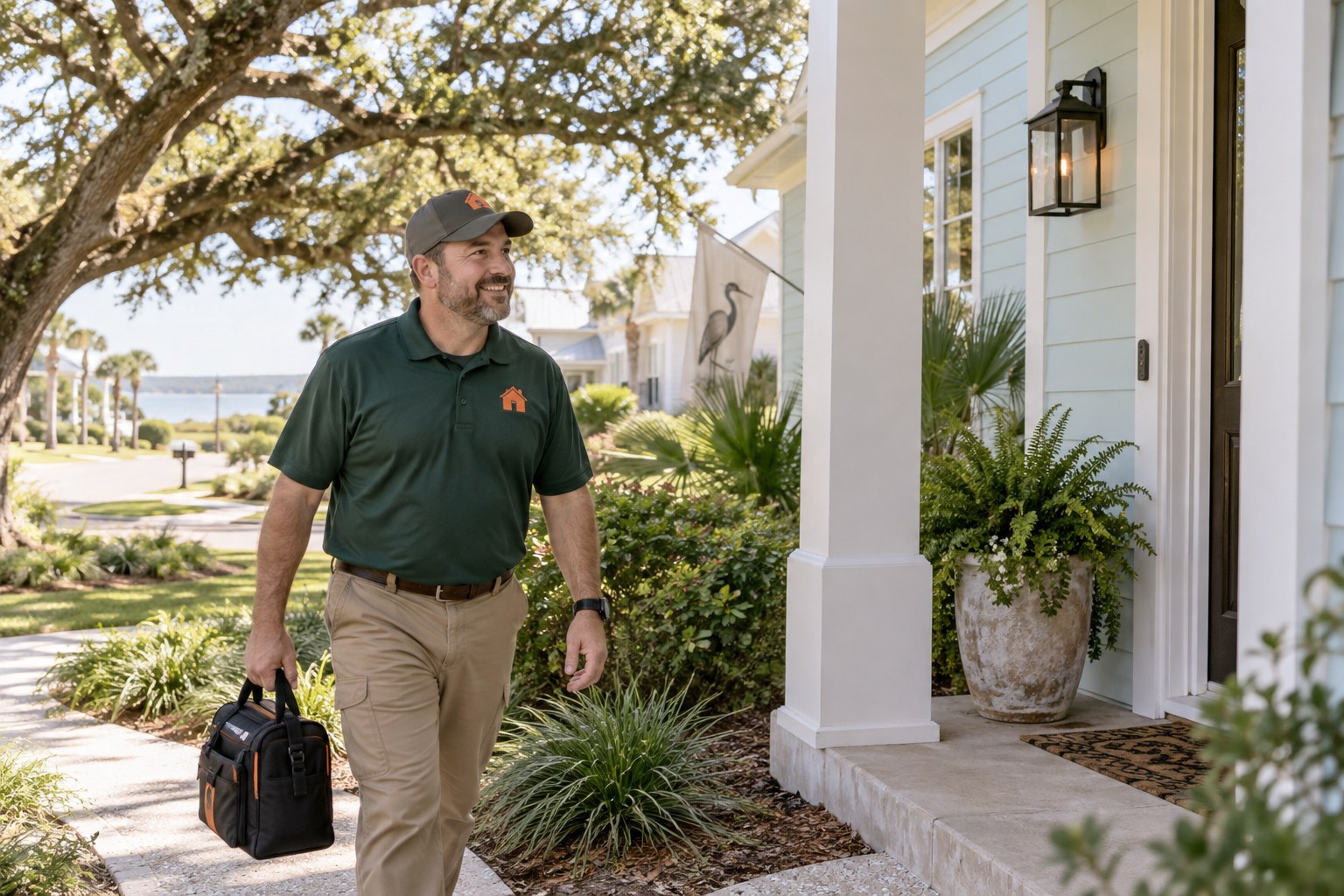
Homes built for the view, and the doors that come with it
Where the water is close, houses tend to be designed around it. Big windows, wide sliding panels, French doors onto a deck and a front entry with sidelights are all common. These features bring light and a feeling of space, and they also mean that more of the wall is glass and less is solid wood. From a security point of view that changes the questions you ask about each door.
A glass-heavy entry door has a lock that is usually reasonable, but the glass next to it can be a weakness if the thumb turn can be reached through a broken pane. Options include laminated glass that resists breaking through, a security film applied to the pane, a decorative grille or a keyed deadbolt on the inside. Each has a tradeoff, and the keyed inside option brings a fire safety concern that we discuss openly before recommending it.
For sliding and French doors, the quality of the latch and the strength of the frame matter more than the brand. A French door pair usually has one fixed leaf held by bolts at the top and bottom. Checking those bolts is part of a good security review, since a loose flush bolt can let a door be pushed open.
When you call, describe the doors with glass and tell us which are used daily. We then plan the visit around the openings that matter most.
Sliders, French doors and the bolts nobody checks
Many homeowners do not realize that a French door has two parts. The active leaf has the handle and lock. The inactive leaf is held in place by small bolts that slide up into the head of the frame and down into the threshold. If those bolts are not engaged, the inactive leaf can be pushed in, and the lock on the active leaf is not much help. A quick check of those bolts takes a minute.
Sliding doors have their own habit. The panel that slides sits in a track and is held by a latch at the edge. If the track is dirty or the rollers are worn, the panel sits slightly out of line and the latch does not catch fully. A door that appears closed can be only barely latched.
The fix starts with cleaning the track, then lubricating the rollers or replacing them. Once the door closes squarely, a secondary lock or a pin adds protection. Salt and humidity gum up the track faster here, so a seasonal clean is a good habit.
We can inspect your doors and tell you what needs attention. Quotes are given by phone for common jobs, and for complicated ones a technician visits and explains the service call charge before dispatch.
- Check top and bottom bolts on French doors
- Clean and lubricate slider tracks
- Replace worn rollers
- Add a secondary slider lock
Wind, pressure and the way doors flex
Bay breezes are part of the charm, and in a strong blow they push hard on doors. A door facing the water takes the load. Hinges, latch and frame all share the force, and any weak link shows up as rattling or a gap that opens and closes with the wind.
If you hear a door flex or whistle, there is often a hardware cause. The hinge screws may be short and loose. The strike may sit slightly proud so the latch only partly engages. The weatherstripping may be worn. Each of these has a simple remedy, and a technician can handle the first two during a lock visit.
For better holding in storms, a deadbolt with a full throw plus a strike secured to the framing makes a notable difference. Some owners add a heavy slide bolt at the top and bottom of important doors, which spreads the load across the frame.
Check these items before the season, not during it. A door that feels solid in a calm week may behave differently under wind.
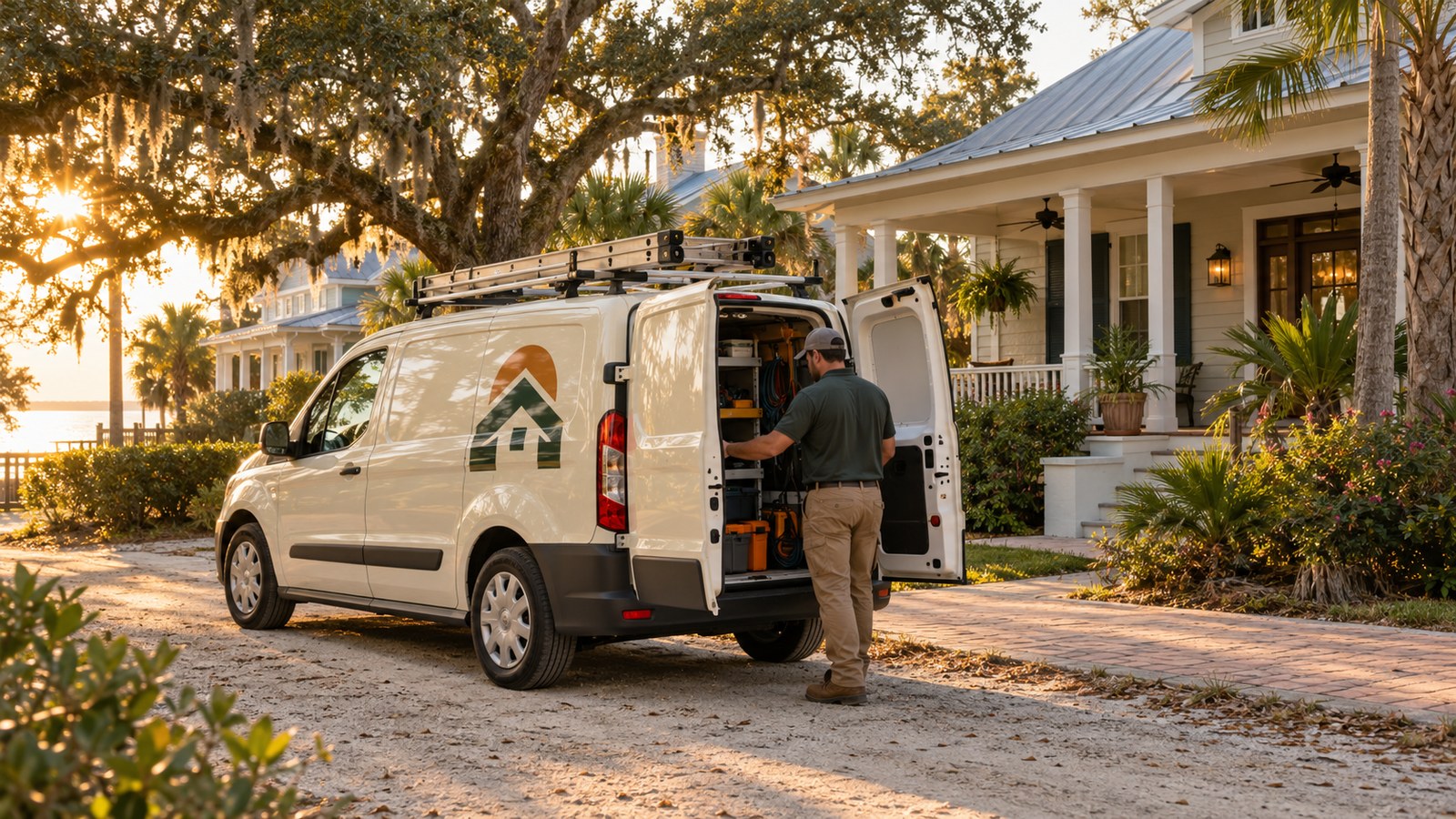
Shutter keys, storm panels and getting the house secure fast
Homes in this area often have some form of storm protection, whether roll-down shutters, accordion shutters or panels stored in a garage. These systems depend on small hardware: locking pins, padlocks and keys for outdoor switches or crank handles. Hardware like this lives outside, and salt air works on it.
Test your shutters and their locks before storm season, not as the weather turns. Operate each one, make sure padlocks open smoothly and lubricate moving parts with a suitable product. Replace seized padlocks with weather-resistant models, and consider keying them alike so a single key handles every shutter.
Label the panels and their hardware so installation goes quickly in a hurry. Keep spare keys for shutter locks inside the house in a place that everyone who may need them knows.
We can rekey or replace the padlocks and cabinet locks that go with your storm protection, once we confirm ownership of the property. Tell us how many you have.
Pool, deck and yard gates
Outdoor living in this region means pools, decks and fenced yards. Gate hardware gets heavy use and constant exposure. A gate latch that does not catch every time is more than an annoyance, especially where small children or pets are present. Many pool areas also have rules for self-closing and self-latching gates, so check what applies to your property.
The hardware itself should be corrosion-resistant. Stainless or coated components last longer than plain steel. A keyed lock on the outside and a release on the inside is a common combination for a pool gate. Make sure that the release is out of the reach of small children, and that the gate closes by itself and latches.
A sagging gate defeats any latch. Check the hinges and post, and adjust the gate so it swings freely and meets the latch squarely. A technician can help with the lock side, and for structural gate repair, a fence contractor may be the right person.
We can supply and install gate locks, rekey them to match your other keys and replace seized padlocks. Ownership is confirmed first.
Garage storage, boat gear and workshop locks
Waterfront homes often have garages full of gear: paddleboards, fishing equipment, bikes, tools and coolers. Because the garage opens to the outside, it is a target. A lock on the garage entry door is only part of the answer, since garage doors themselves can be opened with a determined effort.
Consider securing the garage door from the inside with a slide lock or a bar, especially while you are away. The connecting door to the house should be solid with a good deadbolt. Valuable items can be put in a locked cabinet or a lockable chest.
Cabinet and chest locks are small, and they are often replaced because the key was lost or the lock rusted. We can rekey or replace these locks and match them to a single key if you prefer.
Tell us what you store, and we can suggest sensible measures.
Rekeying a house that has had many visitors
Homes with a view often host family, friends and guests. Over time keys are given to a daughter, a neighbor and a cleaner, and the circle grows without anyone planning it. When you try to count who has access, you may not be sure.
A rekey clears the slate. We change the pins in each cylinder, cut new keys and test them. You then decide who gets a key. It is a calm, practical step and does not require changing the look of the doors.
If you rent the home for part of the year, plan a rekey between seasons or switch to a keypad system so you can change codes easily. A mixed arrangement, with a keypad on the front and keys on the back, is common.
We verify ownership or authority before rekeying, and we quote by phone.
Lockouts when the wind slams a door
A gust can slam a door shut with the key inside. This is one of the most common lockouts near open water. Before calling, check for another unlocked door and ask anyone inside to open it. If no one is inside and no door is open, call us.
Tell us about the door and lock. If it is a lever latch without a deadbolt thrown, entry can be simple and non-destructive. If it is a deadbolt locked by the key or a glass-heavy door, we choose carefully to avoid damage.
We verify that you own or live in the home. Identification with the address is the simplest proof.
We do not promise arrival times. Please call to confirm availability, and we will explain what we know. The quote is given by phone.
Salt air and the care of exposed locks
Everything near the bay is touched by salty air. Hardware finishes dull, screws rust and springs stiffen. A bit of regular care slows the process. Rinse exterior hardware with fresh water now and then and dry it with a cloth.
Use a dry lubricant in the keyway sparingly. Avoid oil or grease, which attract salt and grit. Lubricate hinges and latch bolts lightly. Replace corroded screws with stainless ones.
If a lock shows green or white crust, clean it gently. If the key still feels rough, the cylinder may be corroded inside and need replacement.
We tell you which it is, and we do not sell parts you do not need.
How a Fairpoint lock visit unfolds from knock to test turn
The technician confirms the job, verifies authority and inspects the door. They explain what they find and what they recommend. They carry out the work and test the result several times.
If the job is more complicated than expected, they stop and explain. If a separate visit is needed, the service call charge is explained before dispatch.
After the work you receive keys and care tips. We label keys if you ask.
Contact us afterward if anything seems off.
Elevated homes, stairs and the entry that faces the weather
Raised houses are common near the water, and the front door often sits at the top of a flight of stairs. That entry is exposed from the street and to the elements at the same time. Rain blows across the landing, sun beats on the door in the afternoon and anyone approaching is visible from below. The hardware here should be chosen with exposure in mind, and the stairs and landing should be well lit.
A door at the top of stairs also creates a practical lock concern. If you are locked out, you cannot easily reach a window, and carrying a ladder up or down is a risk. Prevent lockouts with a plan: a keypad, a lockbox at the base of the stairs hidden from the street or a spare with a trusted neighbor. Think about who will need to reach the door in poor weather or with arms full.
The landing is also a place where mail, packages and equipment collect. Keep it tidy so the door can open fully and the lock can be reached. A cluttered landing hides a person from view and makes it harder to notice damage to the door.
During a visit, we examine the door, the frame and the landing. If the threshold is rotting or the frame has pulled away, we point it out so a carpenter can deal with it before the lock is affected.
Choosing finishes and materials that last near the bay
Hardware finish is often chosen for looks, and near the bay that choice has consequences. Polished brass looks lovely and tarnishes quickly in salt air unless it is lacquered or specially coated. Oil-rubbed bronze finishes hide wear well but can show rust spots if the coating is thin. Stainless steel resists corrosion and develops a gentle patina rather than flaking.
Beyond the finish, look at what is under it. A zinc die-cast body with a thin plating will pit and peel in a few seasons, while a forged brass or stainless body shrugs off the same conditions. The difference in price is often modest compared with the cost of replacing the lock twice.
Fasteners deserve attention. Mounting screws, strike screws and hinge screws should be stainless or coated. A rusted screw bleeds orange streaks onto the door and loses its hold on the wood. Replacing them when you replace the lock is a cheap way to keep the whole installation sound.
We can show you the options available and explain how each will behave in your location. We quote by phone, and we do not push the most expensive product when a middle option will do the job.
Sequencing lock work around contractors, painters and other trades
Waterfront homes in Fairpoint often have several projects going at once: new windows, repainted siding, a rebuilt deck. Lock work fits best when sequenced with those trades. Rekeying should happen before workers come and go, so you control who holds keys. Hardware replacement is best done after painting and before final cleaning, so finishes stay clean and fit is tested on a finished door. Planning the order saves redoing work.
Tell each trade what to expect. If painters must remove hardware, ask them to bag and label parts. If window installers need access to a sliding door, give them a temporary arrangement that you can end. A locksmith can coordinate by visiting at a specific stage, such as after framing is complete but before trim is final, to ensure strikes and jambs are properly reinforced while they are still accessible.
Keep a simple log of what is done and when. Note which locks were changed, which keys went to which worker, and when they were returned. At the end of the project, do a full check: test every door from inside and outside, confirm all keys are accounted for, and consider a final rekey if there is any doubt. This keeps a busy renovation from leaving behind a lot of open questions about who can still enter your home.
Planning upgrades in sensible order
If your list of lock tasks is long, sequence it. Begin with anything that prevents a door from locking, because an unsecured door is the biggest immediate risk. Next, fix locks that are failing or unreliable, since those will become lockouts. Then address the hidden weaknesses, such as short strike screws, gaps in the frame and an unprotected slider.
Cost is easier to manage when you spread work over time. A rekey of all doors can be done in a single visit, while hardware upgrades can follow door by door. Tell us your priorities and budget range when you call, and we will suggest an order that leaves your home safer at every step.
Keep a simple record of what has been done. Note the date, the doors affected and any key information. When something changes later, the record saves time and avoids repeated questions.
If you manage the home for someone else, keep them informed. Ownership or authority matters for every job, and a clear paper trail helps everyone involved.
Questions people ask us
Do you serve Fairpoint?
Yes, our mobile service covers Fairpoint and the wider Santa Rosa and Escambia County area. Availability changes, so please call to confirm for your address. Describe the door and problem, and we will quote by phone before dispatch.
How can I make glass doors safer?
Check the latch and frame, secure inactive French door bolts, and consider laminated glass or security film near the lock. A keyed inside deadbolt has fire safety tradeoffs, so we discuss those before recommending it.
Can you fix a pool gate latch?
We can replace or rekey gate locks and fit corrosion-resistant hardware. The gate must also swing and latch properly, so a sagging gate may need a fence contractor. Check any rules that apply to your pool area.
My shutter padlocks are rusted. What should I do?
Replace them before storm season with weather-resistant padlocks, ideally keyed alike so one key handles them all. We can remove seized locks after confirming ownership and fit new ones.
How is a complicated job quoted?
A technician visits first, and the service call charge is explained before dispatch. After the assessment we explain the options and give a quote for the work, so you decide before anything proceeds.