
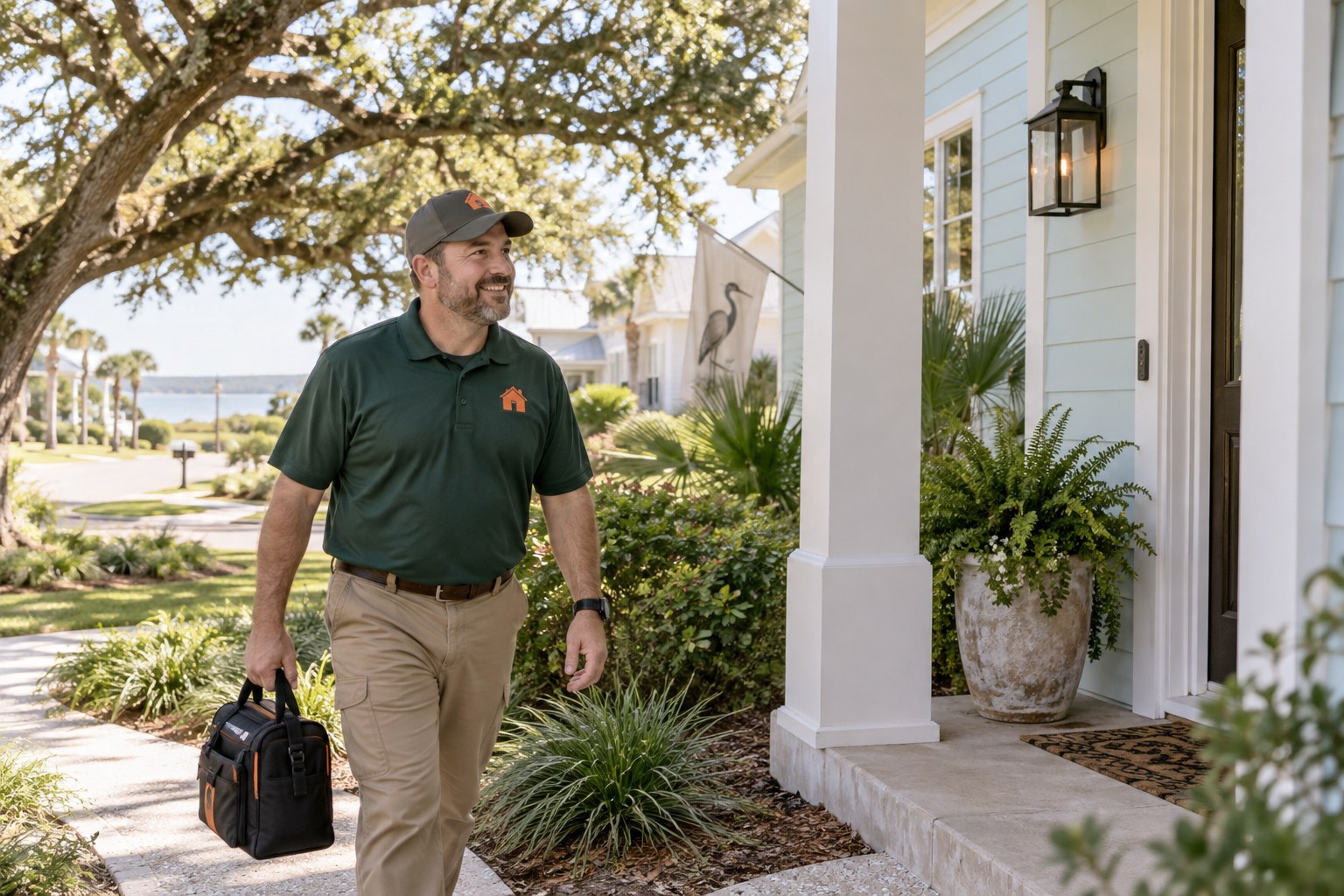
Life on a peninsula: distance, quiet and self-reliance
A peninsula setting means fewer through streets and more space between neighbors. That is part of the appeal, and it also changes how people think about security. If something goes wrong at the door, help may not be a shout away. The sensible response is to make the everyday systems dependable, so that fewer things go wrong in the first place.
Start with reliable locks and sound doors. A deadbolt that works every time, a strike plate that is firmly fastened and a latch that engages without effort are the basics. After that, think about lighting and sight lines, because on a wooded lot a light near the door can be the only illumination for a long way.
Self-reliance extends to keys. Know where your spares are, and give one to a trusted neighbor or relative who can reach you if needed. A lockbox placed carefully can serve as a backup. If you have a lockout and nobody close by, you want a solution that does not depend on luck.
When you call us, tell us how to find the property and whether any gates or locked barriers are on the way. That helps plan the visit and keeps it smooth.
Manufactured homes and their door hardware
Many homes in rural parts of the region are manufactured homes, and their doors are different from those in site-built houses. The exterior doors are often lighter, with a thinner skin, and sometimes swing outward. The lock hardware may be a specific type made for the industry, with bore sizes and backsets that differ from standard residential parts. This matters when you replace a lock.
A technician who understands these doors measures carefully and checks fit before ordering parts. Some locks are thin and designed to sit in a shallow door. Others have a specific latch plate that mounts on the frame in a particular way. Using the wrong lock will not seat properly, and the door will not close correctly.
Outward swinging doors have an extra concern: the hinges are on the outside unless they are the non-removable type. A door whose hinge pins can be tapped out is easy to defeat. Tamper-resistant hinge pins or set screws close that gap and are inexpensive to install.
Tell us on the phone what type of home you have and what the door looks like. If you can describe or photograph the label on the door edge, we can bring the right parts.
Outbuildings, sheds and equipment storage
Larger lots mean more things to store, and the buildings that hold them are often secured with simple hasps and padlocks. A shed holding a mower, a generator and tools may be the most valuable thing on the property that is not the house. It also sits far from the road, hidden by trees.
Strengthen these buildings step by step. A hasp should be bolted through the door and frame, with the bolt heads on the outside hidden by the closed hasp, so that it cannot be unscrewed. The padlock should have a protected shackle that resists cutting. The hinges should be on the inside or fitted with non-removable pins.
If the shed door is thin, consider a metal skin or a replacement. Windows should be covered or secured. An inexpensive motion light or an alarm that sounds locally adds a layer of deterrence.
We can fit hasps and padlocks, rekey several locks alike and advise on the weakest points of each building, after confirming that the property is yours or that you are authorized.
Long driveways, gates and who can get to your door
A long drive with a gate at the road keeps casual visitors away, and it also complicates deliveries, emergency access and service calls. Think through who needs to pass the gate. Family, neighbors and utility workers may all need a way in, and a gate that is hard to open will be left open.
A gate lock should be easy for you and hard for others. A keyed padlock on a chain is common but weak if the chain is light. A heavier chain, a protected padlock and a latch bolted through the post improve it. A keypad gate lock offers a changeable code and no key to lose. Whatever you choose, make sure it tolerates damp air.
Emergency access matters. Many gates in rural areas have a way for responders to enter, such as a lockbox with a key or a code. Check what is appropriate for your property, and make sure the gate can be opened if power fails.
We can fit and key gate locks and help plan an arrangement that balances convenience with safety.
Power cuts, storms and doors that depend on electricity
Storms can cut power for long stretches in a peninsula setting. Electronic locks, garage door openers and motorized gates all depend on it. A keypad lock on batteries continues to work, but a gate opener on house power may not. Know how to open each door and gate by hand.
Garage doors have a manual release, usually a red cord. Practice using it, and make sure the door can be lifted without the opener. If the garage connects to the house, make sure the door between is locked even when the garage door is stuck.
Keep a mechanical key for each smart lock and know where it is. Replace batteries before storm season. Consider a small generator or battery pack for gate openers, if you rely on them.
If you have questions about how your locks behave without power, call and describe your setup. We will explain what to expect.
Preparing for evacuation and returning afterward
Living in a hurricane-prone region means having an evacuation plan. Part of that plan should include the house. Lock every door, check that windows are shut and make sure shutters are secured. Take your spare keys with you or leave them with someone reliable.
After you return, expect surprises. Doors may be swollen, locks may be gritty with salt and mud, and frames may have shifted. Do not force keys. If a lock resists, call and describe what you see. A broken key complicates a repair.
If the house has been damaged, document the doors and locks with photos before repairs. Insurance claims may need them. A locksmith can then repair or replace affected hardware.
If you were away and found signs of entry, contact the authorities before going in. Then call us to secure the doors.
Wildlife, wind and the habits of rural doors
In wooded areas, animals explore. Raccoons can learn to work simple latches, and stray dogs push on gates. A latch that holds under a bump matters. A spring-loaded latch with a proper catch resists casual pushing.
Wind and falling branches also test doors. Check that hinges are tight, that the door closes against the stop and that the lock bolt seats fully. A door that rattles in the wind is a door not fully seated.
Keep brush and limbs trimmed back from doors and windows. This reduces damage and removes hiding places. It also keeps leaves and pine straw out of locks and tracks.
If your door has been damaged by a branch, do not delay repair. A cracked door or frame lowers the lock's effectiveness.
Renting out a cabin or guest house
Some properties in the area include a guest house or cabin that is rented out or lent to family. Each has its own lock, and keys can multiply quickly. Treat the guest space as its own unit with its own key.
A keypad lock suits this use, because you can set a code for each stay and change it afterward. Choose hardware rated for outdoor humidity and keep a physical backup. A lockbox for the key gives a second path.
Make sure the guest space has working locks on windows and doors, and that guests know how to use them. A clear note explaining the lock avoids calls at odd hours.
We confirm ownership or authority for each property before working. Bring a deed or management agreement.
Lockouts: what to tell us and what to expect
If you are locked out, check for another entrance. Rural homes often have a back door or porch door that may be unlocked. If you find none, call us.
Describe the home, the door, the lock and how to reach the property. Mention gates and any hazards, such as dogs. Tell us whether anyone is inside.
We do not promise arrival times, because distance and conditions vary. We tell you honestly what we know about availability and quote by phone. For complicated jobs, a technician visits and the service call charge is explained before dispatch.
At the door, we verify ownership or authority and then open the lock with the least damaging method.
After the visit: keeping the work in good shape
Once the work is done, small habits keep it that way. Operate each lock regularly, clean the keyway occasionally and avoid forcing keys. Keep spare keys safe and separate.
If you notice anything odd, contact us early. Small problems are easy to fix.
Keep records of what was done and which keys belong to which locks.
We stand behind our explanations by being clear about what was done and why.
Well houses, utility cabinets and the locks nobody remembers
Rural properties often include small structures that serve the house: a well house, a pump enclosure, a propane or fuel tank with a cover, an electrical cabinet and a pool equipment shed. These are easy to forget until something goes wrong, and when it does the lock is usually seized or the key is nowhere to be found. They also hold equipment that is costly to replace and sometimes dangerous to tamper with.
Take an afternoon to walk the lot and list every lock. Note which are padlocks, which are built into a latch and which have keys you cannot find. Test each one. Those that stick should be cleaned or replaced, and those without keys should be dealt with before an emergency.
Utility-owned cabinets are not yours to change. If a meter box or utility cabinet has a lock, it belongs to the provider. Leave it alone and contact them if there is a problem. We only work on locks that belong to the property owner, after confirming authority.
A neat set of padlocks keyed alike means one key for the well house, the shed and the gate. We can arrange that in a single visit and quote it by phone.
Camper, RV and trailer storage on your own lot
Space on a larger lot makes it easy to park a camper, a trailer or a boat. These items attract attention, and they come with their own locks. A trailer hitch lock keeps the trailer from being hooked up and driven away, and a wheel lock adds a visible deterrent. Both rust in damp conditions if they are not made for it.
Keep keys for these locks with the vehicle documents, not in the vehicle. A spare in the house is wise. If you lose a key, a locksmith can often remove or replace the lock once ownership is shown. We ask for registration or title paperwork that matches the item.
For the storage area itself, a gate or a post and chain across the entrance, with a good padlock, makes access harder. Lighting and visibility help. Position the item so it can be seen from the house if possible.
We handle locks on property you own, and for vehicles we check ownership before opening or programming anything. Call and describe what you have.
Checking your doors in the quiet season
Late fall and winter are quiet in this region, and they make a good time for lock maintenance. Humidity is lower, storm season has passed and you are less rushed. Go door by door and test everything. Look for loose screws, worn finishes and any door that sticks or rattles.
Make a note of what you find and sort it into urgent and not urgent. A lock that fails to latch is urgent. A finish that is dull is not. Book the work you need and let the rest wait. Bundling several small items into one visit is efficient for you and for us.
If you are planning renovations, consider the locks as part of the project. New doors, new frames and fresh paint are the best time to upgrade hardware. A technician can coordinate with your contractor so the bore holes and strikes are right from the start.
Call us with your list and we will advise on what can be done together and what each part will involve.
Mail, deliveries and finding the house when help has to come to you
In a quiet peninsula setting, a house number on a mailbox at the end of a long road is sometimes the only marker anyone sees. When you call for a lockout or a lock repair, think about how a stranger would find your door. Mention the road name, the turn you take off the main route, any gate you pass, and a landmark that does not change, such as a distinctive tree line or a fence style. Texting a short description of the last half mile to a family member who can relay it is also a sensible habit.
Delivery drivers have the same difficulty, and packages left at an unattended front step become a security question of their own. If you are away during the day, consider a lockable box or a standing arrangement for a neighbor to bring items in. A technician can talk through what kind of lock suits a delivery box and how to mount it so it is not simply carried off. Mail that piles up on a rural property is one of the clearest signs that nobody is home, and it is worth planning around.
If you are calling from somewhere other than the house, such as a relative's home or a vehicle on the roadside, say so plainly. Because we check ownership or authority before opening any door, it helps to have something ready that connects you to the address, whether that is an item with your name on it or a person who can confirm you live there. Having that sorted before the technician arrives saves time on a long drive and keeps the visit simple for everyone involved.
Deciding who gets a key on a shared family property
Family land often has several households on one parcel: parents in the main house, an adult child in a second home and perhaps a cousin in a trailer or cabin. Keys drift between them over the years. Nobody remembers who gave what to whom, and the gate key, the shed key and the main house key end up scattered across three homes.
Sit down together and decide what each household needs. The gate may be shared by all, the main house by two people and each separate dwelling by its own residents. Write down the plan and rekey to match. A shared gate lock keyed alike across households, with separate keys for each house, is a clear arrangement.
Agree on who can authorize changes. A locksmith must confirm authority, and on shared land that can be less obvious. A family member who owns the parcel or holds a written agreement is the right person to call. This avoids disputes and keeps everyone on the same page.
If you tell us on the phone how the property is divided, we will say what documents are helpful and plan the visit accordingly.
Questions people ask us
Do you serve the Garcon Point area?
Yes, our mobile service reaches the Garcon Point area as part of the wider region. Distance and conditions affect scheduling, so please call to confirm availability. Describe the property, gates and locks, and we will quote by phone before dispatch.
Can you work on manufactured home doors?
Yes. These doors often have different bore sizes, backsets and latch plates, so we ask for a description or photo first. We also suggest tamper-resistant hinge pins on outward swinging doors.
How do I secure a shed far from the house?
Use a through-bolted hasp, a protected-shackle padlock and non-removable hinge pins, and consider a motion light. We can fit and rekey locks after confirming ownership or authority, and advise on the weakest points.
What if my gate opener fails in a power cut?
Most openers have a manual release. Learn how it works and keep any release key accessible. For gate locks, a mechanical option or battery backup helps. We can review your setup by phone.
How is a complicated job handled?
A technician visits first and the service call charge is explained before dispatch. After the assessment, we explain the options and give a quote for the work, and you decide whether to go ahead.