
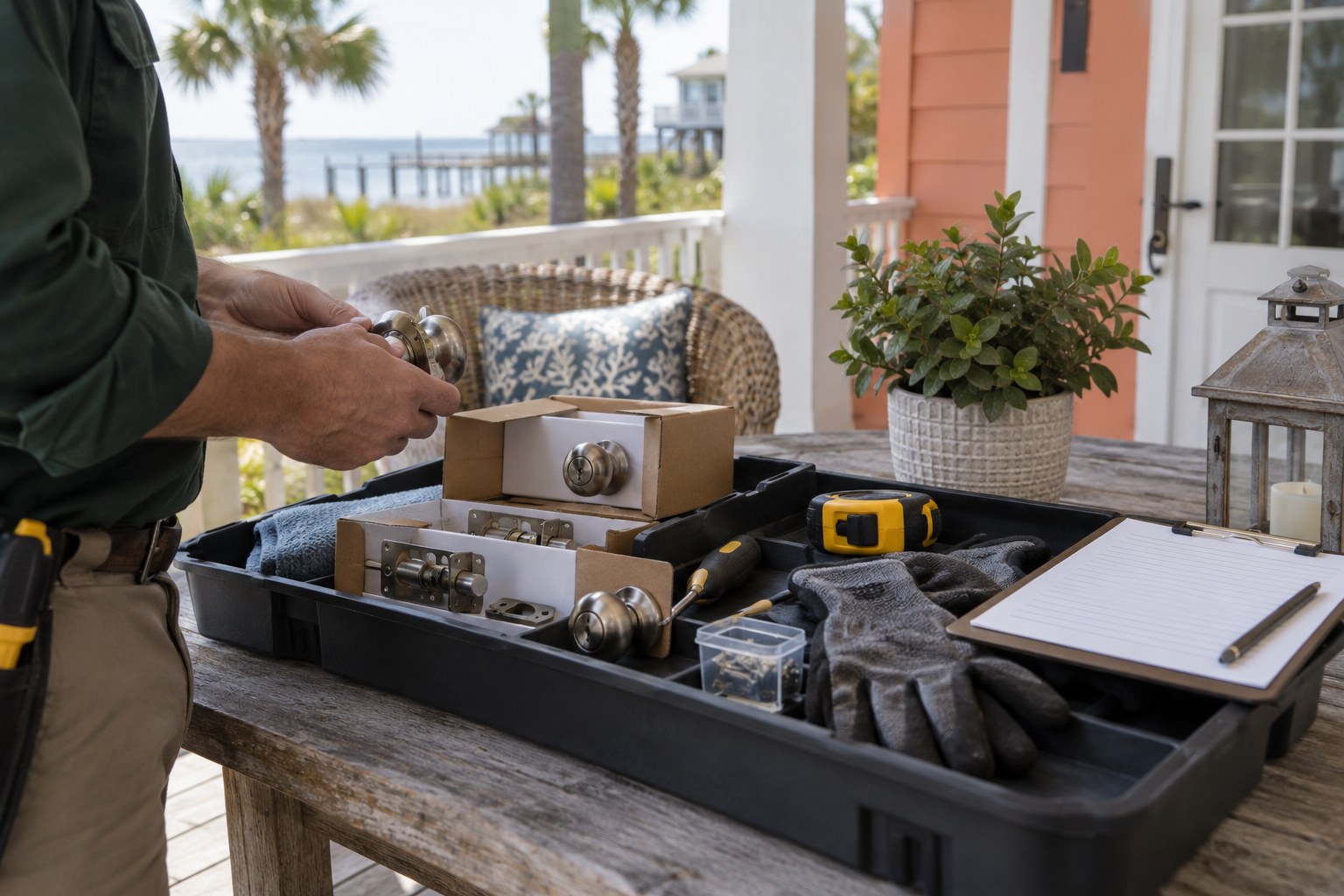
Day one: assume the old keys are still out there
When you receive the keys at closing, you receive only some of the keys that exist. Previous owners, their relatives, agents, inspectors, cleaners, contractors and neighbors may all have held copies. Most are harmless, but you cannot know, and a lost one could be anywhere.
For that reason, the single most valuable lock task for a new homeowner is to rekey the exterior locks. Rekeying changes the internal pins so the old keys stop working and a new key works. It uses your existing hardware, so it is often simpler than replacing locks.
Schedule it as early as you can, ideally within the first few days. Until then, use your deadbolts every night, keep the garage door closed and avoid leaving spare keys in obvious places. The risk is small but real, and rekeying removes it.
A locksmith checks ownership or authority before rekeying. Bring your closing documents, a utility bill or identification showing the address. Quotes are given by phone, and you should call to confirm availability for your area.
Walk the property and list every lock
Before the technician arrives, walk the property with a pen and your phone. List every door that locks: the front door, back door, side doors, garage entry, patio or sliding doors, storm doors, the garage overhead door, sheds and gates. Note anything that sticks or seems loose.
Photograph each lock. Brand names, finishes and the way the lock is mounted help a technician understand what parts to bring. Photograph the inside of each door too, to show the thumb turns and the hardware.
Look at the windows as well. Check that each latches, and notice any with broken or painted-over locks. Older homes often have windows that look secure but are not. Add them to your list of things to repair.
Count the keys you received. Compare them with what the seller said. If the paperwork lists more keys than you were given, ask about the missing ones. Rekeying makes the question less urgent, but it is still worth knowing.
Decide what to rekey and what to replace
Good locks in sound condition can usually be rekeyed. Worn, corroded or cheap locks may be better replaced. A technician can look at each one and tell you honestly which makes sense. Do not feel pressure to replace everything.
Think about upgrades while the technician is there. A door with only a knob lock may benefit from a deadbolt. A weak strike plate with short screws can be reinforced. A back door that you use constantly might suit a keypad.
Consider keying all the exterior locks alike, so one key opens every door. It is convenient, but remember that a lost key then affects them all. Many owners key the main doors alike and keep a garage or workshop on its own key.
Ask about the finish. In a coastal climate, corrosion-resistant finishes last longer, especially on doors that face the weather. Spending a little more on durability now saves repair later.
Check the doors and frames
A strong lock in a weak door is only partly a lock. Test each exterior door by pushing near the lock and the hinges. Does it flex, rattle or sag? Look at the frame for cracks, splits or rot, especially near the strike plate.
Check the hinges. Loose screws, missing screws or hinges with short screws are common. Replace them with longer ones that reach the framing. This is an inexpensive improvement that makes a door sturdier.
Examine the weatherstripping and threshold. Gaps let in air, water and insects, and a swollen or warped door can make a lock hard to turn. A technician or carpenter can adjust the door so it closes squarely.
Notice the doors that are hollow or thin. They are easier to kick through than solid doors. A reinforcement plate on the lock edge, or a solid replacement door, may be worth considering for entry doors.
Garage, sliders and secondary entries
The door between the garage and the house is often overlooked. Treat it as an exterior door, with a deadbolt and a strong strike plate. Make sure the garage door opener has a unique code, and check the remotes you were given.
Sliding glass doors are very common in Gulf Coast homes and are often the weakest entry. A bar or dowel in the track and a pin lock add resistance. Check that the door cannot be lifted out of its track from outside.
Side doors, basement or crawlspace doors, and doors to outbuildings need the same attention. Each should have a lock that works and a frame that is sound. Padlocks on sheds should be sturdy and weather-resistant.
Also look at the less obvious points: pet doors, mail slots, laundry room doors and windows near the ground. Anything that can be reached from outside deserves a quick assessment.
Spare keys: how many, who, and where
Plan your spares deliberately. Make enough for each adult in the household, and one extra stored safely inside. Resist the urge to make many more. Each copy is a possible loss.
Decide whether anyone outside the household needs a key. A trusted neighbor, a family member or a pet sitter may. Write down the name, the date and the purpose, and tell them to keep it somewhere secure without labeling it with your address.
Avoid hiding a key outside. The doormat, the flowerpot and the fake rock are the first places anyone checks. A lockbox with a code, mounted securely, or a keypad lock gives you controlled access without a hidden key.
Keep a simple log of your keys and who holds them. Store it privately. When circumstances change, you can see at a glance what needs updating.
Hurricane season and storm readiness
Living on the Gulf Coast means planning for storms. Know your evacuation routes, and keep your keys, documents and a spare in a waterproof container ready to grab. A small dry box with a spare house key and car key is inexpensive insurance.
Before the season, test every lock and lubricate hardware sparingly. Check that doors close and latch fully, and that hinges and strike plates are firm. A door that fails to latch in strong wind becomes a problem quickly.
After a storm, inspect doors and frames. Swelling, shifting and salt can change how a lock behaves. If a lock sticks or a door no longer lines up, have it adjusted before you rely on it.
Keep photos of your doors and locks for insurance. If damage occurs, records help your claim. Store them with your other home documents.
Smart locks, keypads and what suits a new owner
New owners often wonder about smart locks and keypads. They can be a good fit for busy households, rentals and homes with many visitors. They remove the need to carry a key and let you create and delete codes.
They also need care. Batteries must be replaced on schedule, codes managed, and a physical key kept as backup. The lock must be installed on a properly prepared door to work well.
Choose a model with a weather rating suitable for the coast, and from a maker with clear support. Avoid complicated features you will not use. Simplicity makes a system reliable.
A technician can explain what suits your door and your household. It need not be the first thing you change; rekeying and sound doors come first.
Windows, lighting and the habits that secure a home
Locks work together with everything else around the house. Good outdoor lighting at each entry makes it harder for anyone to approach unseen, and it helps you find your keyhole at night. Motion lights and porch lights on photocells are simple, effective choices, and fixtures rated for damp locations last longer near the coast.
Trim shrubs and trees that screen doors and windows from the street. Landscaping that blocks sightlines gives a person cover. Keep plants low near windows, and keep ladders, tools and bins locked away so they cannot be used to reach upper floors.
Build routines. Lock the doors when you are home as well as when you leave, especially at night. Check that the garage door is closed before bed. Test the habit of pulling on a door after you lock it, to be sure it latched.
Meet your neighbors early. A friendly wave and a phone number exchanged in the first weeks pay off. Neighbors notice unusual activity, can collect packages and may hold a spare key. A watchful street is the strongest layer of all.
The first-month checklist in order
In the first few days: rekey the exterior locks, test every door and window latch, and collect all the keys. Make a short list of what you received and what you made. Lock the doors every night from the start, and use the deadbolts.
In the first two weeks: reinforce weak strike plates and hinge screws, add a bar to sliding doors, fix any window that does not latch and check outdoor lights. Decide on spare key arrangements, and set up a lockbox or trusted contact if needed.
In the first month: set up your key station at home, label keys with a code that does not reveal your address, and create your record of locks, keys and receipts. Walk the property again, with fresh eyes, to catch anything you missed.
Ahead of storm season: test everything again, lubricate sparingly, assemble your waterproof go box and talk through your plan with the household. A calm, practiced plan beats improvisation.
Working with a locksmith as a first-time owner
If you have never hired a locksmith, the process is simpler than it sounds. Call, describe your home and what you want done, and ask for a quote by phone. Ask what the quote includes and what could change it. A good company answers plainly.
Expect the technician to check ownership or authority before starting. Bring your closing papers, a bill or identification that shows the address. This is a good sign, not an inconvenience.
If your home has unusual or older locks, mention it. If the job is complicated, a technician visits and the service call charge is explained before dispatch. Decide with full information, and ask for the plan in your own words.
After the work, test every key in every lock, ask for a receipt and write down what was done. Keep the record with your closing documents. You will thank yourself later.
Common first-year mistakes to avoid
A frequent mistake is assuming the previous owner changed the locks. Many do not. Another is leaving a spare key under the mat or in a fake rock, which is the first place anyone looks. A third is handing out copies to everyone who offers to help during the move.
Another is ignoring small problems. A deadbolt that sticks, a door that rubs or a strike plate that is loose will not improve on its own. In a humid, salty climate, they get worse. Fix them early.
Some owners buy a high-tech system before fixing the basics. A smart lock on a weak door and a thin frame adds convenience but not strength. Start with sound doors, solid locks and good habits, then add technology.
Finally, many forget to keep records. When you sell, rent or hand over the house, a tidy record of locks, keys and who holds them saves time and prevents confusion.
Budgeting your time and priorities
A first home comes with a long list of needs, and locks compete with appliances, paint and furniture for attention. Prioritize by risk. Rekeying and basic door checks come first because they affect safety on day one. Cosmetic upgrades and smart features can wait for later months.
Spread larger projects over time. You might rekey and reinforce in the first week, add a deadbolt or keypad in the second month and replace a worn sliding door lock before the next summer. A paced plan keeps the work manageable and the cost spread out.
Ask for advice, but keep your own judgment. Neighbors, family and technicians will all have opinions. Listen, compare and choose what suits your home, your habits and your comfort level.
Remember that security is a habit as much as hardware. A good lock that is never locked protects nothing. Make the routine easy, and it will become second nature.
Labeling, organizing and handing out your new keys sensibly
After rekeying or replacing locks, you will suddenly hold a fresh set of keys, and how you organize them in the first week shapes habits for years. Decide how many sets you truly need. A typical home might want one set for each adult, one spare kept somewhere safe, and perhaps one for a trusted neighbor. Resist the urge to hand extra copies to every friend and relative who asks.
Give each key a role. If every exterior door shares a single key, the keyring stays simple. If a few doors use different keys, mark them in a private way, such as a small colored cap, so you can find the right one in the dark. Avoid labels that say front door or back gate in words anyone could read, since a found keyring then points straight to your house.
Keep one set apart from your daily carry, stored in a place that does not depend on the house being open, such as with a trusted person or in a secure box. This is the set that rescues you from a lockout without a locksmith call.
As a new owner you will also receive keys from previous owners, agents or contractors. Treat those as unknown. Collect them in a bag, note what they open, and let the rekeying decide which ones become obsolete. A short conversation with us on the phone will help you decide how many locks to change at once.
Resist rushing the whole list in a single weekend. New owners are usually juggling movers, utilities and paperwork. Do the doors first, since those matter most, then labels and the spare plan once the boxes are gone. A calm, orderly job done over a couple of weeks serves you better than a hurried one that leaves loose ends.
When something does not feel right
Trust your instincts about your new home. If you find signs of tampering, a window that has been forced, strange marks near a lock or a key that works in a door where it should not, take it seriously. Do not touch anything that looks like evidence, and contact the police non-emergency line if appropriate.
If you have concerns about someone who may still have access, such as a former occupant, rekey immediately. A locksmith checks authority and can often schedule the work soon. Call to confirm availability for your area.
If a lock fails, a key breaks or you are locked out, do not force it. Call a technician, describe the problem and ask for a quote by phone. A calm approach prevents damage and saves money.
Keep emergency numbers where you can find them, including a locksmith you trust. Add it to your phone now, before you need it, and tell everyone who lives with you where to find it. Doing this on a calm evening is far easier than searching for a number while locked out in the heat or the rain.
Questions people ask us
Should I rekey my new home right away?
Yes, it is a sensible first step. You cannot know who holds old keys. Rekeying resets access using your existing locks. The locksmith checks ownership or authority first, so bring your closing documents.
Do I need to replace all my locks?
Not necessarily. Locks in good condition can usually be rekeyed. Worn or weak locks may be better replaced. A technician can advise after looking at each one.
How many spare keys should I make?
Enough for each adult plus one stored safely inside. Avoid extras with no clear purpose. Keep a private log of who has each copy.
Is a keypad lock a good choice for a new home?
It can be, especially for households that lose keys or have frequent visitors. Maintain batteries, protect codes and keep a physical backup. Rekeying and solid doors still come first.
What should I do before hurricane season?
Test every lock, check hinges and strike plates, and keep a spare key and key list in a waterproof container. After a storm, inspect doors and frames and have any sticking lock looked at.