
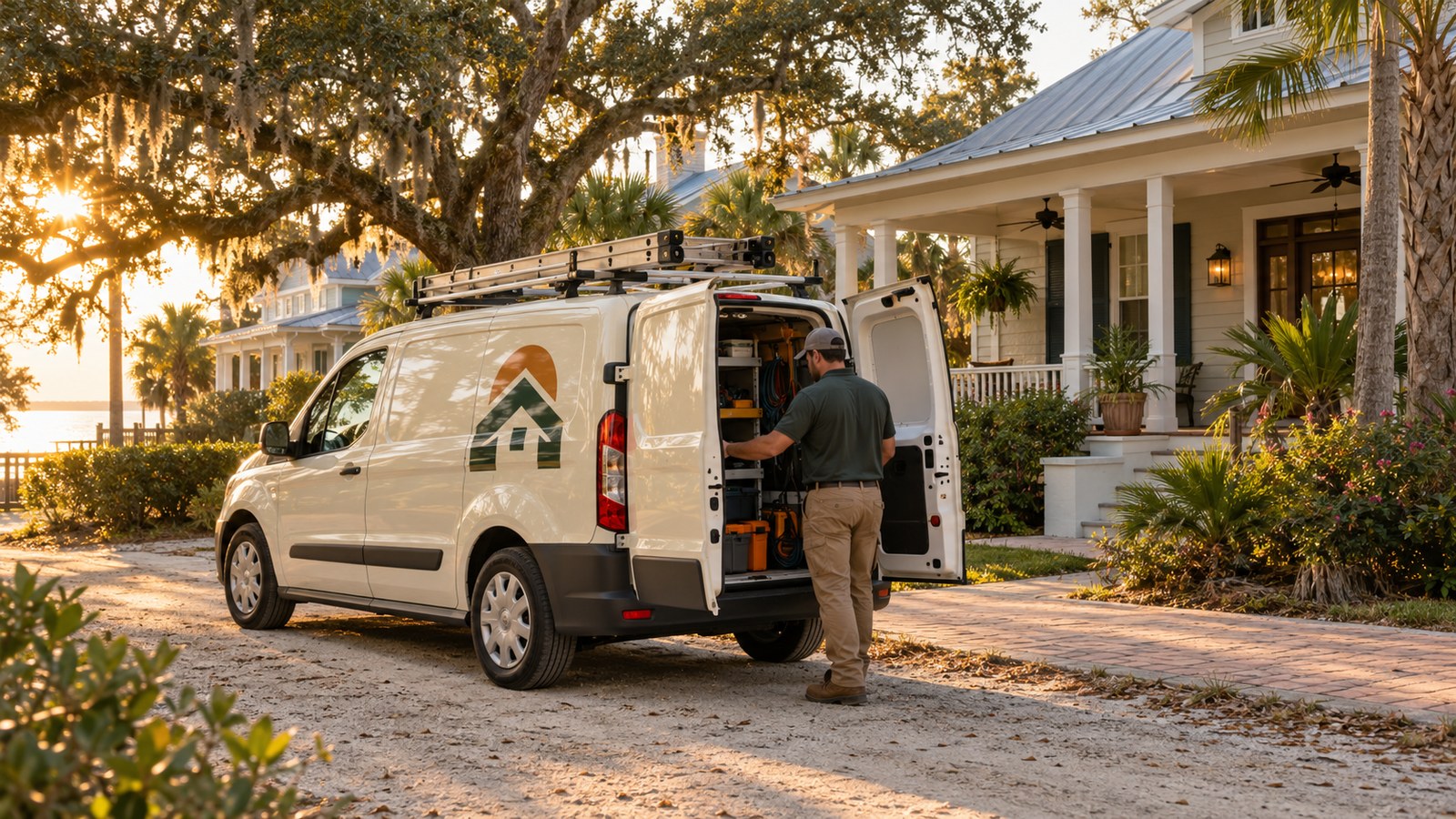
Who exactly is coming to my home?
Start with the simplest question. Ask the name of the person or business you are speaking with, and the name of the technician who will arrive. A business that serves local people should be able to tell you this plainly.
Ask how the technician will identify themselves on arrival. A name, a marked vehicle, or a business card helps. You are about to let someone work on the lock that protects your home, so knowing who they are is reasonable.
Be wary of vague answers, a changing business name, or reluctance to give a name at all. If you cannot get a clear answer, consider ending the call and trying someone else. You lose very little by asking.
How is the quote formed, and what does it include?
Ask for the quote by phone and ask what it covers. Does it include the visit, labor, parts, keys, and testing? Is anything extra likely? A clear answer lays out the pieces and tells you what might change the figure.
Describe your situation accurately so the quote reflects reality. Mention the lock type, the number of doors, and what is wrong. The more precise you are, the more reliable the answer.
If the person will not give any estimate and simply says they will see when they arrive, ask why. Sometimes a visit is truly necessary, and then they should explain the service call charge before sending anyone. Vagueness without explanation is a warning.
Is a service call charge involved, and what does it cover?
Ask directly whether a service call charge applies to your situation. If it does, ask what it covers and how it relates to any later work. This is one of the most common sources of misunderstanding, and asking early removes it.
For complicated jobs, a technician visits first, and the charge is explained before dispatch. If the business promises to explain it only on arrival, or avoids the topic, that is a signal to be careful.
Write down the answer. A short note on your phone of what you were told gives you something to refer to later, and it helps the technician if there is any difference between the phone conversation and the visit.

Will you check that I own the place or have authority?
A responsible locksmith checks ownership or authority before opening, rekeying, or programming. If a business says it will open any door on request without asking, be concerned. That practice protects nobody and puts neighbors and households at risk.
Expect to show identification and something connecting you to the address or vehicle. Ask in advance what they accept, so you can prepare. If you rent, ask what they need from the landlord.
A business that explains this clearly and without fuss is doing its job. If anything, the question works in reverse: you are checking that they are the kind of company that will protect your own door from strangers.
What will happen to my old lock and keys?
If the work involves replacing hardware, ask what happens to the old lock. Will it be returned to you or taken away? Some people want to keep it, and others do not care. Either way, ask so there is no confusion.
For rekeying, ask what happens to the old keys. They will no longer work in the rekeyed lock, but they still exist. Decide whether to keep them as spares for other locks or discard them.
Ask how many new keys you will receive, and whether more can be cut later. If the system is restricted, ask how copies are authorized. These details affect your control over who can enter in the future.
Can you explain what is wrong in plain language?
A technician should be able to explain the cause of a problem without jargon. If the answer is a mess of technical terms with no clear meaning, ask them to try again in simpler words. You are paying for understanding as well as repair.
Ask what the options are. Is the lock repairable, or does it need replacing? What are the tradeoffs? A good technician lays them out and respects your choice.
Be cautious if the answer is always the most dramatic one. Drilling out and replacing a lock is sometimes necessary, but often a lock can be opened and repaired without destruction. Ask whether a less destructive route exists.
How do you handle surprises on the job?
Sometimes the work turns out to be different from what was expected. Ask what happens in that case. Will the technician stop and explain before continuing? Will you be told of any change in the quote before it happens?
The right answer is that you will be informed and asked to agree before extra work begins. You should never be handed a larger bill for work you did not approve.
If you decline the revised work, ask what you would owe. Understanding this ahead of time keeps the conversation calm if a surprise arises.
What about timing and availability?
Ask when someone can come, and treat any specific time promise with caution. Traffic, weather, and previous jobs affect schedules, and an honest business will say that. Call us to confirm availability is the right kind of answer.
If you are locked out, tell them where you are and any safety concerns. A technician can then prioritize sensibly and advise you on what to do while you wait.
For non-urgent work, ask about scheduling. Planning ahead gives you more choice and often a calmer experience.
Do you work on my kind of lock?
Locks vary. A basic deadbolt, a keypad lock, a mortise lock in an old house, and a vehicle key system all call for different skills. Ask whether the business handles your type of lock regularly.
If you have unusual hardware, such as restricted keys, a master system, or an antique lock, mention it. The technician can then bring suitable tools or tell you honestly that a visit is needed first.
A business that admits what it can and cannot do is more trustworthy than one that claims to do everything. If the work needs a specialist, they should say so.
How do you protect my property during the work?
Ask how the technician avoids damage to your door, frame, and finish. Careful work, protective coverings, and cleanup afterward are signs of professionalism. Ask about cleanup if you care.
Ask what happens if something is damaged. A confident business has an answer. It will explain how it handles mistakes and what you should do if you notice a problem.
Ask about testing. The technician should test each key and the lock's operation with you before leaving, so you know everything works.
What should I watch for during the call?
Notice how the person speaks to you. Do they listen to your description, ask relevant questions, and explain clearly? Or do they interrupt, hurry you, and avoid specifics? The tone of the first call is a good preview of the visit.
Notice pressure. Statements such as you must decide now, or this offer disappears, have no place in this work. A good technician gives you time.
Notice what they do not say. Unmentioned charges, unexplained terms, and evasive answers are all clues. Trust your sense of whether the conversation feels straightforward.
Questions that apply to renters and landlords
Renters should ask whether the locksmith will need the landlord's approval and how the business handles that. Have the landlord's contact ready. A tenant cannot authorize changes to the owner's lock.
Landlords should ask about volume work, standardizing hardware, and key records. They should be prepared to show ownership or authority. For many doors, ask whether a survey visit would help.
Everyone should ask what happens after the visit if something does not work correctly. A lock that sticks the next day deserves attention, and you should know whom to call.
Questions specific to Gulf Coast homes
Homes near the water face salt air, humidity, and storms, and a locksmith who works locally should understand that. Ask whether they recommend particular finishes or materials for coastal conditions, and why. A thoughtful answer shows they know the area and are thinking about how the hardware will age.
Ask about storm preparation. A technician can check that doors latch fully, that frames are solid, and that strike plates are anchored properly. Ask what they look for and how they decide whether a door is storm-ready. The answer should be practical and specific, not vague reassurance.
If your home is older or historic, ask about experience with older hardware. Mortise locks, old doors, and unusual fittings call for patience and skill. A technician who is honest about how they would approach the job, and when they might recommend repair over replacement, is worth listening to.
Questions about keys, copies and control
Ask how many keys come with a new or rekeyed lock and whether more can be cut later. Ask how copies are handled. With standard keys, copies are easy to get anywhere. With restricted keys, copies require authorization. Knowing which applies to you shapes your future key habits.
Ask whether the keys will be tested before the technician leaves. Each key should turn smoothly in the lock. A key that is slightly off should be recut then and there, not left for you to discover on a rushed morning.
Ask for advice on key control for your situation. A family home, a rental, and a small business all have different needs. A helpful technician can suggest a sensible level of control, such as a simple log, numbered keys, or a restricted system for shared entrances.
Questions about electronic and smart locks
If you are considering a keypad or smart lock, ask how it is installed, how codes are managed, and what happens when batteries run low. Ask whether there is a physical key override and how it is protected. A lock with no fallback can leave you stranded.
Ask about compatibility with your door. Not every door accepts every electronic lock, and cutting new bores in the wrong place can damage a door. The technician should measure first and explain any modifications.
Ask about humidity and weather. Electronic parts do not love salt air, and a lock on an exposed porch needs to be rated for the environment. A thoughtful answer includes maintenance advice, such as checking battery contacts and replacing batteries on schedule.
After the work: follow-up questions
Before the technician leaves, ask what you should do if something seems wrong later. Whom do you call? What is a normal break-in period for new hardware? Knowing this removes anxiety and helps you spot real problems early.
Ask for any care advice. A new lock lasts longer with simple habits, such as using a dry lubricant sparingly, tightening screws occasionally, and keeping keys clean. Ask what applies to your hardware and environment.
Keep a record. Note the date, what was done, how many keys were issued, and the type of lock installed. This is useful if you ever need to explain your hardware to another technician, a landlord, or an insurer.
Warning signs that should end the conversation
Some patterns should make you pause. A caller who will not name the business, a technician who arrives in an unmarked vehicle and cannot explain who they work for, or a person who demands payment before explaining the work are all concerning. So is anyone who says your lock must be destroyed without trying gentler methods first.
Pressure is another red flag. Phrases like decide now or the price goes up if you wait are tactics, not information. A technician who respects you gives you time to ask questions and consider.
Finally, be careful with anyone who does not ask about ownership or authority. It might sound convenient, but it means they would open a door for anyone. That is not a business you want to rely on, and it is not one that protects your own home from a stranger.
Comparing more than one option
If time allows, speak to more than one business and compare the conversations. Do not compare only the numbers. Compare how clearly each explains what is included, how they handle ownership checks, and whether they are open about charges.
Note how each treats your questions. A business that welcomes them is likely to treat you fairly during the work as well. A business that gets defensive is giving you information about how problems will be handled.
If you are in an emergency and cannot compare, rely on the basic questions above. Even a two-minute call that covers who is coming, how the quote works, and whether ownership is checked will protect you from most of the common problems.
Testing an answer: what a thorough reply sounds like versus a vague one
Asking good questions is only half the task. The other half is judging the answers. A thorough reply is specific. If you ask how the quote works, a good answer explains that the price is given by phone after the technician learns the job, and that a complicated problem may require a visit with the service call charge explained first. A vague reply that dodges the question, or promises a number without any details, deserves caution.
Listen for how the person describes their process. A technician who explains that they check ownership or authority before opening or rekeying is describing a professional habit, not an obstacle. Someone who offers to open any door without asking a single question about who you are is cutting a corner that should concern you. Likewise, a technician who explains what will happen on arrival, and what will not, respects your time.
Pay attention to tone as well. A knowledgeable person can explain a lock in plain language without talking down to you, and is comfortable saying when something is outside their scope. Pressure to decide immediately, or a reluctance to give a business name when asked, are signals to slow down. Write down what you were told so you can compare it with what happens at the door. Call us and ask anything on your list.
Keep a calm record of the call. Jot down the name you were given, the time you called, and what was promised about the quote, the service call charge and how long the work might take. If anything changes at the door, you can refer to your notes politely and ask why. A reputable technician will not be bothered by this. It also makes it simpler to resolve a misunderstanding if one arises.
Putting it together: a short script for the call
Here is a simple way to run the call. Say your location and the situation. Ask who will come and how they identify themselves. Ask how the quote is formed and what it covers. Ask whether a service call charge applies and how it is explained.
Then ask about ownership checks and what you should have ready. Ask about timing, noting that you understand specific arrival times cannot be promised. Ask what happens if something unexpected arises.
Finish by repeating back what you understood. If the answers are clear and the person is patient, you can proceed with confidence. If not, you have lost only a few minutes.
Keep this page handy on your phone or print the questions and tape them inside a kitchen cabinet, so that they are there when you need them. Stressful moments make it hard to think of the right thing to ask, and a short list takes the pressure off. Over time you will find that the same handful of questions works for any tradesperson who comes to your home, not only locksmiths.
Questions people ask us
What is the most important question to ask?
Ask how the quote is formed and what it covers, including any service call charge. A clear answer prevents most misunderstandings. Quotes are given by phone.
Should a locksmith ask for proof that I live here?
Yes. Ownership or authority is checked before opening, rekeying, or programming. A business that skips this is not protecting you or your neighbors.
Can a locksmith give an exact arrival time?
Be cautious of exact promises, since traffic, weather, and earlier jobs affect schedules. Call us to confirm availability.
What if the price changes when the technician arrives?
The technician should explain what changed and why, and you should agree before extra work begins. If you decline, ask what you would owe.
How do I know a locksmith is trustworthy?
Look for clear names, plain explanations, open discussion of charges, ownership checks, and no pressure. Trust how the conversation feels and ask questions.