

Larger lots mean more locks to manage
On a spacious property, the house is only one of several things that need securing. There may be a detached garage, a workshop, a storage building for lawn equipment, a boat shed and a gate at the end of the drive. Each opening has its own lock, usually bought at a different time and often keyed differently. The result is a ring of keys that nobody can sort without trial and error.
A tidy fix is to bring those locks under a smaller number of keys. Where hardware allows, padlocks and cylinders can be rekeyed or replaced with a matched set, so one key opens the shed, the gate and the workshop, while another opens the house. You carry fewer keys, and losing one has smaller consequences.
Before the visit, walk the property and note every lock. Take a quick photo of each and write down what it protects. When you call, give us that list. We can estimate time and bring the right padlocks, hasps and cylinders.
We check ownership or authority for the property before changing anything, which is straightforward if you hold the deed, a lease or a management agreement.
Gates, chains and driveway barriers
A driveway gate is often secured with a chain and padlock, or a latch with a keyed lock. These are exposed to rain, sun and the occasional bump from a vehicle. Padlocks seize, chains rust and latches loosen where they attach to posts. A gate that is hard to open is also hard to keep secure, because people stop locking it.
Replacement is often the practical answer. A weather-resistant padlock with a shrouded shackle resists cutting and drains water. A chain with welded links lasts longer than a cheap one. We can advise on a matched combination and install it, adjusting the latch so the gate closes squarely.
If a gate lock is seized and you cannot open it, tell us about the type. A padlock can usually be removed without harming the gate or post. We confirm that you own or manage the property before removing a lock.
Remember that a gate stops casual entry, not a determined person. Pair it with good lighting and secure doors on the buildings behind it.
Detached garages and workshops
A workshop often holds the most valuable things on a property: tools, mowers, generators and boating equipment. Yet these buildings frequently have the weakest doors. A light steel or wooden door with a surface latch and a hasp can be forced in seconds. Because the building sits away from the house, no one hears it happen.
Upgrades are practical. A deadbolt in a solid door, a heavy hasp bolted through rather than screwed to the surface, and a quality padlock with a protected shackle provide real resistance. For overhead doors, a slide lock or a bar can prevent them from being lifted.
Lighting helps more than people expect. A motion light near the workshop door draws attention and discourages tampering. Together with decent locks, it makes the building a less attractive target.
We can look at each building, tell you which door is weakest and suggest steps in order of value. You decide how far to go.
- Solid door with deadbolt
- Through-bolted hasp
- Protected-shackle padlock
- Slide lock on overhead door
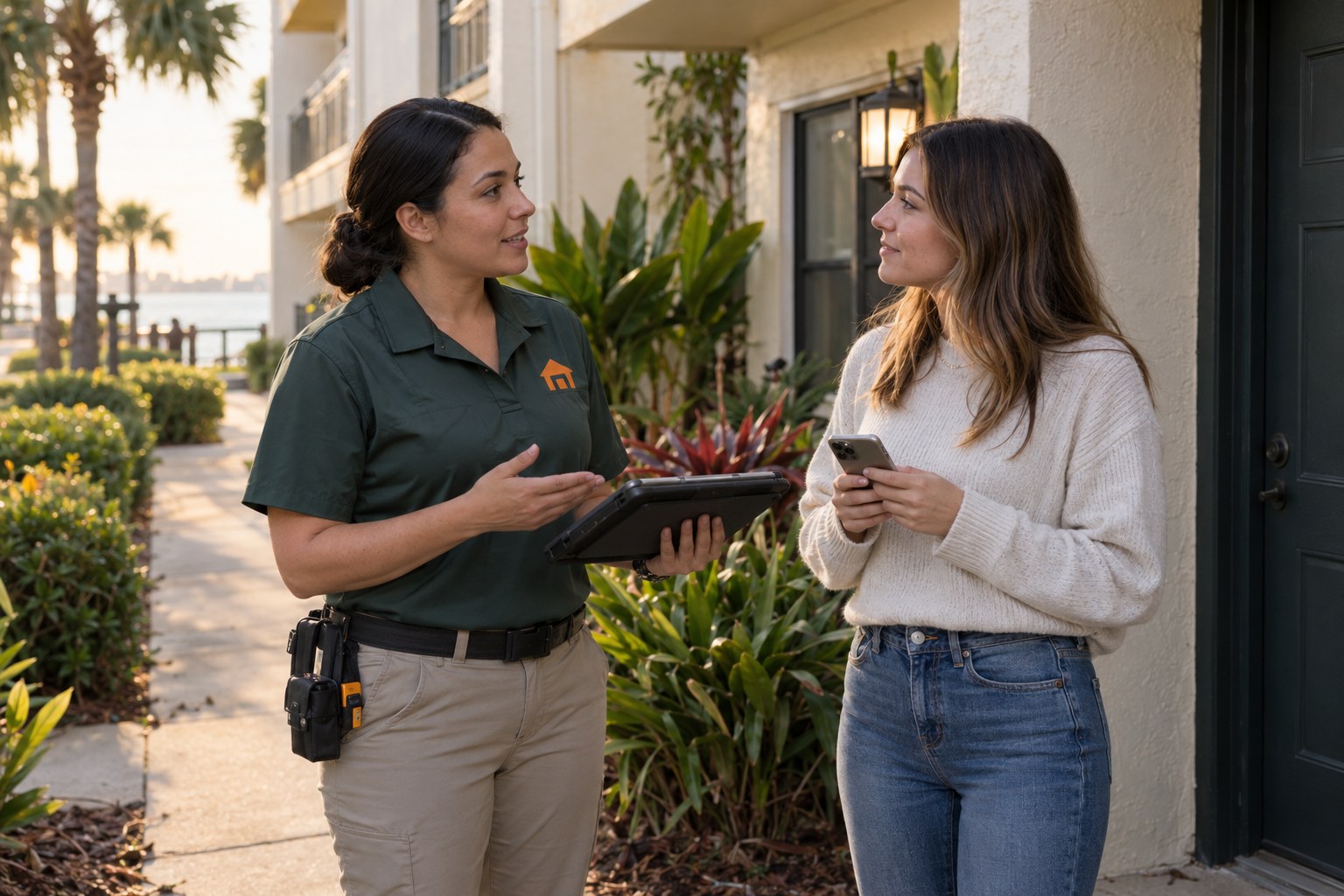
The main house: entry sets and deadbolts
The house itself usually has a keyed entry at the front, a deadbolt and perhaps a back door to the yard or deck. Because the property is quiet, owners sometimes leave a spare key in a familiar hiding place. That habit is risky anywhere, and especially where a driveway gives cover.
A good deadbolt with a solid strike gives you confidence at night and when traveling. We check the fit of the bolt, the screws that hold the strike and the condition of the door. If the door is hollow or the frame is weak, we point it out.
Sliding glass doors and French doors are common on homes with a view of the water or the yard. These deserve attention, because the factory latch is often modest. A secondary lock or a track bar closes that gap.
We keep recommendations proportional to the risk and your budget, and we give quotes by phone so you can decide in advance.
Humidity, bay breezes and rust
Close to the bay, air carries moisture and some salt. Padlocks and exterior hardware show it first. A new padlock can look rough within a season if it is not made for coastal conditions. Latches and hinges on outbuildings rust at the screws and lose strength.
Choose hardware with corrosion-resistant finishes, such as stainless steel components or heavy plating. Rinse and dry exposed hardware occasionally, and lubricate moving parts with a suitable product. Avoid heavy grease on cylinders, which attracts grit.
If a lock is already rusted, do not force it. Penetrating spray can help loosen a seized padlock, but a cylinder with internal corrosion should be replaced. A technician can tell the difference.
When you replace hardware, replace the screws too. Rusted screws pull out of wood easily, and a strong lock on a weak mount does little good.
Lockouts on a spread-out property
A lockout on a large lot has a different feel. You may be far from neighbors, and the house may be set back from the road. Before calling, check if a window, a patio door or a garage side door is unlocked. If you are outside in poor weather, find shelter first.
When you call, give clear directions to the driveway and describe any gate that the technician must pass. If the gate is locked, tell us the lock type, because we may need to open it before reaching the house. We confirm ownership or authority at the door, so have identification ready.
We prefer non-destructive entry. For most home locks, this means the door opens without damage. If a lock must be drilled, we explain why and replace it so the property can be secured again.
Call to confirm availability for your location, since distance and conditions affect scheduling. We give the quote by phone.
Power outages and electronic locks
Rural and waterfront areas can lose power during storms, and electronic locks and gate openers depend on it. A keypad lock with fresh batteries keeps working, but a gate opener on house power may not. Make sure you know how to open a motorized gate manually, and keep any release key in a safe place.
For keypad deadbolts, replace batteries on a schedule instead of waiting for the warning beep. Keep a mechanical key as a backup. A lock that relies on a network connection to open should always have an override.
If your property has a generator, consider how locks and gates behave when the generator starts and stops. Voltage swings can confuse some electronics. A quick test beforehand avoids surprises.
We can talk through your setup by phone and tell you whether a mechanical solution would be more reliable for a particular door.
Moving into a country-style property
If you have just bought or rented a property with outbuildings, ask for every key. Previous owners often hold more than they realize. Even then, assume that copies exist. A full rekey of the house, shed, shop and gate padlocks is a sensible first step.
List what needs attention: the main house doors, the garage entry, the workshop, the shed, the gate and any mailbox or equipment lock. We rekey what can be rekeyed and replace what cannot, then group the keys sensibly.
We also check smaller points. Does the gate latch work? Are hinge screws tight? Is any door rotted at the bottom? If something is beyond what a locksmith can fix, we say so.
Bring documents showing your ownership or lease. We verify authority before rekeying anything, which protects both of us.
Hurricane season thinking for outbuildings
Outbuildings take a beating in a storm, and doors fail before walls do. A door that blows open invites wind inside and can damage the structure. Check latches and hinges on sheds and garages before the season. A heavy bolt or a slide lock holds a door closed more reliably than a simple turn button.
Secure loose items inside, and make sure you can reach them afterward. Padlocks that have rusted shut can trap you out of your own shed when you need your tools. Replace weak ones in advance.
After a storm, check the locks before you need them. Debris, moisture and shifted frames can change how doors fit. If something binds, call before you force it.
We help with these checks by phone or on site, depending on what you need.
The Lillian service call step by step, from arrival to final check
The technician arrives, confirms the job and verifies authority. They examine the locks and doors, explain what they find and carry out the agreed work. If something new turns up, they pause and discuss it with you.
If a job is complicated, such as a damaged frame or an unusual lock, a technician visits first. The service call charge is explained before dispatch, so you know in advance.
After the work, every lock is tested and the keys are handed over. We label sets if you ask. If you have questions about maintenance, we answer them.
If you notice any problem afterward, contact us. We would rather fix it than leave a lock that does not work properly.
Planning a key system for the whole property
A thoughtful key plan saves frustration. Decide who needs access to what. The family may need the house and garage, while a worker needs only the shed. Separate keys for separate areas let you limit access without changing every lock.
Consider a simple scheme: one key for the house, one for outbuildings and perhaps one for the gate. If you want more convenience, a keyed-alike set makes everything open with one key at the cost of less separation.
Label keys clearly and keep a master list. When a key goes missing, you will know which locks are affected and can rekey only those.
We can design a system with you by phone. Tell us what exists, who needs access and how you prefer to carry keys, and we will suggest a plan.
Mailboxes, equipment cabinets and small locks that matter
On a larger property the small locks add up. A locked mailbox at the road, a cabinet on the porch for tools, a storage box on a trailer, a fuel can lock on a tank and a cover latch on an outdoor panel are all items someone has to keep keys for. They are cheap hardware, usually bought in a hurry, and they tend to share the same few key patterns that thousands of other locks use. That means a key from a neighbor's shed might open yours.
Replacing these with locks keyed to your own set solves the problem and cuts your key ring in half. Some small locks can be rekeyed, and others are simply replaced with a matched type. Tell us which ones matter most. Fuel and equipment locks are worth the most attention, because those are the things people are most tempted to take.
If a small lock is seized or its key lost, a technician can usually remove it without damaging what it protects. We check ownership first, as always. For mailboxes, the box may belong to the postal service or a management group, so confirm who is responsible before asking us to change anything.
A short, honest conversation by phone is enough to sort this out, and the quote comes before the visit.
Pets, wildlife and locks that need to be easy
Outdoor-minded properties come with animals. Dogs push on doors, cats squeeze through gaps and wildlife sometimes explores a shed left ajar. A latch that holds under a bump matters more than people expect, and a door that is hard to close fully invites trouble. If a latch rattles or the door springs back, adjust it before an animal learns to open it.
Keep pets in mind during a lockout, too. If an animal is inside in hot weather, tell us at once. It changes the urgency and the method, and we will explain what safe steps you can take while we arrange the visit. We cannot promise a time, and we will say so honestly, but we will help you decide what to do.
For people who want pet access, a pet door is a security tradeoff. It makes a hole in the door, and a large one can admit a person. If you add one, choose a lockable model and consider placing it in a door that leads to a secure room instead of the main entry.
We can help you balance convenience and safety, and we are glad to talk through the details before you buy anything.
Marking out which lock belongs to which building before we arrive
On a property with a main house, a garage, a shed and a gate, the number of locks can surprise even the owner. Before a technician arrives, it helps to walk the grounds and make a simple list. Give each lock a short name, such as front door, shop side door, gate chain or pump house, and note what type it is: deadbolt, knob, padlock or something unusual. Take a quick photo of each. That list becomes the map of the day.
With the list in hand, decisions are easier. You can decide which locks need rekeying, which can stay, and which should be keyed alike for convenience. You can also decide which doors must stay separate for security reasons, such as a workshop with tools or a shed with chemicals. The list prevents the common problem of rekeying five locks and discovering later that a sixth, forgotten padlock still works with an old key.
Mention distance and access. If the gate is far from the house, tell us whether the path is clear and whether any animals are loose. If power is needed for a tool, say whether an outlet is available near the work. Tell us who will be present, and who can confirm that the property is yours or that you have the authority to change the locks. A little preparation saves time and helps us finish all the locks in one visit.
When to repair, when to replace, and when to wait
Not every lock problem demands immediate action. A slightly stiff padlock on a rarely used shed can wait for a convenient visit, while a front door deadbolt that no longer throws fully should be fixed promptly. The test is simple: what does this lock protect, and what happens if it fails tonight? Prioritize accordingly and mention the priority when you call.
Repair is usually enough when the hardware is sound and the issue is alignment, a loose screw or a dirty cylinder. Replacement is better when parts are corroded, the lock is a weak design or keys are failing. In coastal conditions a cheap padlock might not be worth repairing at all, since a stronger weather-resistant one costs little more.
Waiting makes sense only when the risk is low and the fix is not urgent. If a lock shows early signs of trouble, such as a key that sticks or a bolt that drags, a quick fix now often prevents a lockout later. Lockouts cost more time and stress than maintenance.
Describe the situation honestly on the call and we will tell you which category it falls into. Sometimes the answer is that it can wait, and we will say so.
Questions people ask us
Do you serve the Lillian area?
Yes, our mobile service reaches the Lillian area as part of the wider Pensacola region. Distance and conditions affect scheduling, so please call to confirm availability. Describe the property, any gate and the locks involved, and we will quote by phone.
Can you rekey sheds and gate padlocks?
Often yes. Many padlocks and cylinders can be rekeyed or replaced with a matched set so one key opens several locks. We check ownership or authority first. Tell us how many locks you have and what each protects.
My gate padlock is rusted shut. What now?
Describe the padlock and gate when you call. A technician can usually remove a seized padlock without harming the gate. We confirm authority over the property before removing it, then fit a weather-resistant replacement if you want one.
Are keypad locks reliable during outages?
Battery powered keypad deadbolts keep working in outages if batteries are fresh. Motorized gates may not. Always keep a mechanical backup key and know how to open a gate manually. We can review your setup by phone.
How is a complicated job handled?
A technician visits first and the service call charge is explained before dispatch. After assessing, we explain options and the quote for the work. You decide whether to proceed.