

What keyed alike actually means
Keyed alike means two or more locks are set up so that the same key operates all of them. Inside every pin tumbler lock is a row of small pins that must line up exactly at the shear line before the cylinder turns. Locks keyed alike have pins arranged in the same pattern, so a single key lifts each set to the correct height.
It is different from a master key system, in which several different keys each open their own lock while one special key opens them all. Keyed alike is simpler: everyone with the key has the same access. For most households, that simple arrangement is exactly what is wanted.
It is also different from locks that simply look alike. Two deadbolts from the same brand and finish may have completely different key patterns. Only the internal arrangement of pins determines whether a key works, so appearance tells you nothing about compatibility.
Keyed alike can be arranged when locks are first bought, since many manufacturers sell sets that share a key. It can also be arranged afterward through rekeying, where a technician adjusts the pins in existing cylinders so they all match one chosen key pattern.
The everyday benefits
The most obvious benefit is convenience. One key on your ring opens the front door, the back door, the garage entry and the patio lock. Arriving home with groceries, a child on your hip and a ringing phone is far easier when you do not have to sort through keys in the dark.
There is also a simplicity benefit for the whole household. Each person carries one key rather than several, and spare keys are easier to manage because one copy serves every door. Fewer keys means fewer things to lose, and fewer chances of a lockout.
For people who share a home with elderly relatives or young teenagers, a single key can reduce confusion. Nobody needs to remember which key goes with which door, and the risk of someone being stuck outside because they carried the wrong key drops.
Visitors and helpers benefit too. If a caregiver or trusted neighbor needs access, you hand over one key rather than a bunch. That convenience should be balanced against the security considerations below, but it is a real advantage for many households.
The tradeoffs to weigh honestly
The main downside is that a lost key opens every door it fits. If you rely on one key for the whole property and it goes missing on a beach day or a boat trip, your entire home is exposed until you rekey. With different keys, a single loss would affect only one entrance.
Another tradeoff is access control. Giving a contractor a key to the back door also gives them the front door and the garage unless you take care to separate them. Some homeowners choose to key the main doors alike and keep a different key for an office, workshop or guest suite.
There is no universally right answer. A small household in a quiet neighborhood may value convenience most. A family with many outside helpers or a rental property may value separation. The best approach is to decide deliberately and discuss it with your locksmith.
Think about the consequences of the worst case, which is a lost key. If you would be comfortable rekeying everything promptly in that situation, keying alike is a sensible choice. If rekeying seems like a major hurdle, extra caution about key handling is wise.
Which doors are good candidates
Exterior doors that you use daily are the most natural candidates: the front door, the back door, the garage entry and the patio door. These are the doors you open most, so sharing a key saves the most effort.
Think carefully about the doors that serve special roles. A detached garage or workshop may hold tools and equipment that you would prefer to protect separately. A guest suite, a rental room or an office may justify its own key, since access is meant for a different group.
Gates and outbuildings are worth a look. A pool gate, side yard gate and shed lock often use padlocks or small cylinders that can be keyed to match, which is helpful if you have several. Padlocks can be bought keyed alike or rekeyed to match.
Interior bedroom or bathroom locks are usually privacy locks and are not designed for high security, so they typically stay separate. Focus first on the exterior perimeter, and add interior locks only if they serve a clear purpose.
How a technician sets it up
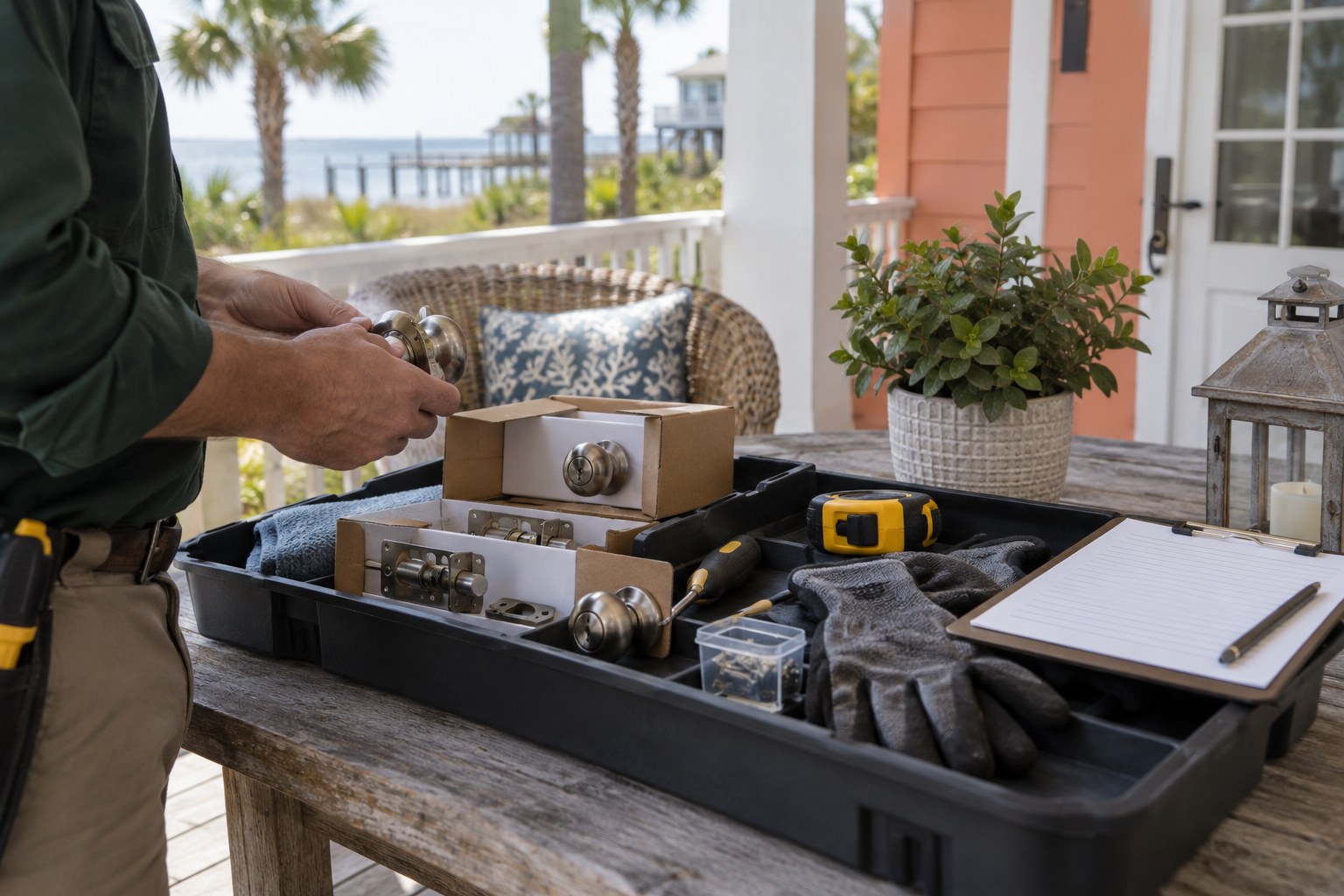
The technician starts by looking at what you have. Each lock's brand, keyway and condition determine whether it can be matched to the others. Locks of the same brand and keyway are the easiest. Different brands may need a different approach.
For compatible locks, the technician removes each cylinder, changes the pins to the chosen pattern, and tests the new key. This is the same process used in standard rekeying, with the difference that every lock is brought to one pattern rather than separate ones.
When a lock cannot be matched, such as one with an incompatible keyway, the technician may offer to replace the cylinder or the whole lock with one that matches. They will explain the options and any additional work before starting, so you can decide how far to go.
At the end the technician tests every lock with the new key, confirms that old keys no longer work, and cuts any additional copies you need. You walk away with a key that opens everything you intended and nothing you did not.
Dealing with locks that will not match
Not every lock can join a keyed-alike set. A lock with a special keyway, such as a restricted high security model, usually will not accept a standard key pattern. Likewise, an older lock whose internal parts are worn may not hold the new pin arrangement reliably.
Sometimes the answer is to replace the stubborn lock with one that matches the rest. This can be an opportunity to upgrade a weak knob to a deadbolt or to improve a worn finish. The technician will tell you whether replacement is worth it or whether leaving that door on its own key is simpler.
Smart and keypad locks present another case. Many of these use electronic codes in addition to, or in place of, a physical key. If a door has a keypad lock, it may not need to share a key at all, and your key set can focus on the doors that rely on keys.
Be honest with yourself about doors that do not need to match. Leaving a rarely used door on its own key, or on a keypad, is a perfectly reasonable choice. A strong, simple system beats a clever but fragile one.
Renters, landlords and shared buildings
Tenants often ask whether they can key their locks alike. Usually this requires the landlord's permission, because lease terms commonly restrict changes to locks. Always ask first and keep any approval in writing. A locksmith will also check authority before starting.
Landlords with several units sometimes want the opposite: a different key for each unit but a single master key for management. That is a separate system from keyed alike and is worth discussing if you manage multiple doors. A technician can explain the options and their limits.
In a condo or association-managed building, exterior doors and shared hardware may be controlled by the association. Check your governing documents before changing locks on doors that affect the building. Interior doors in your own unit are usually yours to manage.
College housing and shared houses bring a particular wrinkle. Roommates often hold keys to the same front door, and a change in the group is a natural moment to rekey. Keyed alike across a shared house is convenient, but make sure everyone agrees about who holds what.
Security habits that go with a single key
If one key opens many doors, treat it with care. Do not label it with your address. Do not leave it in a car's glove box or hanging on a hook by the door where a visitor could pick it up. A key is a physical piece of access, and it deserves a little discipline.
Keep a record of who holds copies, and review it when circumstances change. A house sitter, a cleaner, a relative or a past partner may each have had a copy at some point. If you are unsure who has one, rekeying is the cleanest way to reset.
Think about duplicates carefully. Keys cut at a quick hardware kiosk are sometimes slightly off and wear the lock faster. A professional cut from a good blank, followed by a test in the actual lock, gives a better result and longer life for both key and cylinder.
Consider a small backup plan too. A lockbox with a code, a trusted neighbor with a spare, or a smart lock with a keypad can cover the occasional lockout without hiding a key under the doormat. Having a plan before you need it makes everything calmer.
Local factors on the Gulf Coast
Humidity and salt air are hard on keys and cylinders near the water. A key shared across many doors gets plenty of use, which means more wear. If a key begins to stick or feel gritty, have the cylinder cleaned and lubricated before it fails completely.
Seasonal living is common in the area. Some homes sit empty for months, and others host guests through the summer. A keyed-alike setup makes it easy to hand a single key to a trusted caretaker, but rekeying after a long rental season is a good habit to adopt.
Hurricane season is a reminder to keep key records and spare keys in a place you can reach in an evacuation. A small waterproof container with a spare key and the details of your lock setup is more useful than a pile of loose keys.
After a storm, doors and frames can shift. If a keyed-alike lock stops working smoothly, do not assume the key is at fault. Alignment problems are common, and a technician can adjust the strike or hinges so the whole set works as intended.
Questions to ask yourself before deciding
Start with the simplest question: how often do you struggle with the wrong key? If the answer is every day, keying alike will feel like a real improvement. If you rarely think about it, the benefit may be modest, and the cost of changing locks might not be worth it.
Next, think about who else needs access. A household with several adults, a regular cleaner and a dog walker has a different situation from a single person living alone. The more people hold keys, the more you may want to separate certain doors rather than hand out one master key.
Consider your tolerance for risk and effort. If a lost key would trigger a full rekey, are you prepared for that? Some people accept it happily, and others would rather keep a layered system. Both are reasonable, and your technician can describe the work involved in either case.
Finally, think about the future. A planned renovation, a new roommate, a move to a different home or a plan to rent out a room may change what you want. A system that can be adjusted easily is better than one that locks you into a single choice.
What the visit and the paperwork look like
When you call, describe the locks you have and what you want to achieve. The technician may ask about brands, finishes and the number of doors. Quotes are given by phone, and if the job looks complicated, a technician visits and the service call charge is explained before dispatch.
On arrival, the technician confirms who you are and your authority over the property, since ownership or authority is checked before any rekeying. A lease or utility bill is usually enough. This step protects you and everyone else in the neighborhood.
After the work, you should receive a receipt describing what was done and which locks were included. Keep it with your home records. If you later need extra copies, having a note of the key pattern and the lock brands makes the process quicker.
If something seems wrong afterward, such as a lock that sticks or a key that does not turn smoothly, call back rather than forcing it. A well done keyed-alike set should feel smooth on every door, and small adjustments usually fix any rough spots.
Slip-ups to dodge when matching your keys
Once all your doors share one key, every copy becomes more powerful, so the number and the owners of those copies deserve thought. Start by listing each person who truly needs a key. A household of four may need four keys, plus one spare kept somewhere dry and secure, rather than a dozen scattered among relatives and neighbors.
Decide how copies will be made. Keys marked do not duplicate do not stop copying on their own, so cutting from a clean original rather than a copy of a copy keeps quality high. Consider keeping one master set that is never used day to day, and only cut working copies from it. That protects against gradual wear that makes a copy fail months later.
Think also about what happens when someone leaves the arrangement: a roommate moves out, a contractor finishes, a house sitter returns home. With a single key opening everything, a returned key is not enough proof that no copy exists. If you have any doubt, rekeying the set again is a straightforward way to reset the situation. Call to confirm availability and ask about the process before booking.
Missteps that spoil a keyed alike setup
One frequent mistake is assuming that buying several locks of the same brand means they share a key. It does not. Unless they are sold as a keyed-alike set or rekeyed to match, each lock will probably have its own random pattern.
Another is cutting many extra copies without tracking them. A pile of untracked keys defeats the purpose of controlling access. Make only the copies you need and write down where each one lives, so you notice when one goes missing.
A third mistake is leaving old keys active after a change of occupants. If you inherit a keyed-alike set from a former owner or tenant, the previous key pattern is still out there. Rekeying to a new pattern is what actually ends their access.
Finally, do not ignore a lock that has begun to feel rough. A gritty or stiff cylinder gets worse with each use, and a failing lock in a shared set can leave you locked out at the worst time. Early attention is cheaper and calmer than an emergency.
Questions people ask us
Can I key different brands of lock alike?
Sometimes. Locks from different brands often have different keyways, so a key may not even enter the other lock. A technician can swap in a matching cylinder or replace the lock. Call us and describe what you have so the options can be discussed.
Is keyed alike less secure than separate keys?
It trades some separation for convenience. A lost key opens every door it fits, so you would want to rekey promptly if one goes missing. Many people key the main doors alike and keep an office or workshop on a different key.
Do I need new locks to key them alike?
Not necessarily. Many existing locks can be rekeyed to share a pattern. Locks that are worn, unusual or built to a very low standard may need to be replaced. The technician checks each lock and explains the choices before work begins.
Can a renter key their locks alike?
Usually only with landlord approval, since leases often restrict lock changes. Get permission in writing. The locksmith will also confirm authority at the address before rekeying or changing anything, as part of every job.
Does keyed alike work with smart locks?
Keypad and smart locks often work with codes instead of, or alongside, a key. A door with a keypad may not need to share a physical key at all. A technician can advise which doors should be on the shared key and which should not.