
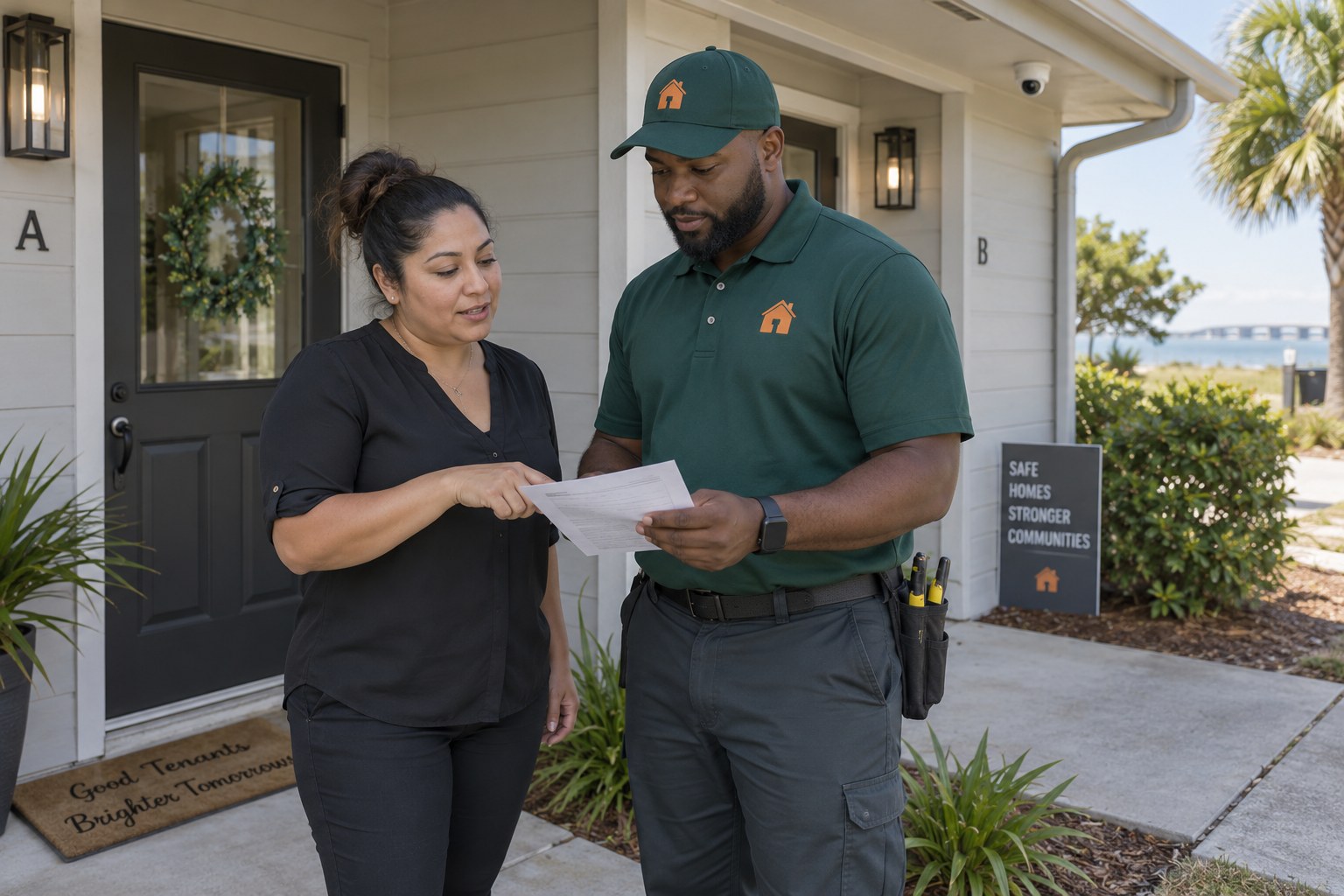
Why a rekey belongs in every turnover checklist
A tenant who moves out takes with them whatever keys they never returned, and perhaps copies cut for friends, relatives or partners. None of that is necessarily malicious, but it creates an unmanaged set of people who can enter a unit the next tenant has paid to live in. Rekeying at turnover closes that gap in a single short visit, and it removes the need to track down every duplicate.
It also protects the owner. If something goes missing from a unit after a new tenant arrives, a landlord who has rekeyed can show that access was controlled. A landlord who has not rekeyed may struggle to explain. Many property managers treat the rekey as a basic duty of care, similar to testing smoke alarms and cleaning the unit before handover.
In a market with seasonal demand, military postings, university terms and vacation rentals, turnover is frequent. A property can change hands several times in a year. Building the rekey into the standard routine means it happens without debate, and tenants arrive knowing that the locks are new to them and that nobody from a previous lease has a way in.
Planning a multi-door visit
Landlords rarely have only one lock to deal with. A typical rental has a front door, a back or patio door, possibly a garage entry, and often a mailbox, a storage room or a laundry closet. Listing every key operated lock before calling lets the technician bring the right parts and allot time properly. A short checklist avoids trips back for forgotten items.
For portfolios of several units, it is efficient to schedule rekeys in blocks. A technician who moves from one unit to the next in a single visit saves travel and keeps results consistent. Tell us how many units, how many locks per unit, and the brand of hardware. If locks are uniform across the portfolio, the work goes faster, because parts and pin kits are matched in advance.
Allow access for the technician. Coordinate with tenants moving out so the unit is empty and the technician can work without interruption. If a tenant is still present, give proper notice according to your lease and local rules. Call us to confirm availability for your dates, and mention any tight turnover windows so the work can be fitted in sensibly.
- Exterior doors and deadbolts
- Patio, balcony and garage entry locks
- Mailboxes, storage rooms and laundry closets
- Gate and fence locks serving the unit
Authority and documentation
A locksmith checks authority before rekeying, and for rentals that means confirming that the person requesting the work is the owner or the owner's authorized agent. A property manager may be asked to show a management agreement or an authorization letter. An owner might show a deed or a tax record. This is routine, and having the paperwork to hand speeds everything up.
Good documentation matters beyond the first visit. Keep a record of the date of each rekey, which doors were included, how many keys were cut, and who received them. This record helps if a dispute arises about access, a lost key or a deposit. A dated receipt from the locksmith is useful evidence, and a simple spreadsheet extends that into a proper key log.
Where tenants are involved, communicate clearly. Let them know that locks will be rekeyed before they move in and how many keys they will receive. Ask them to sign for the keys at handover. It reduces confusion and provides a record. Some landlords include a short clause in the lease about not duplicating keys without permission, which supports the whole system.
Key control: how many keys and who holds them
Key control is the quiet discipline behind secure rentals. Decide beforehand how many keys each tenant receives, typically one per adult resident, and keep one set for the landlord or manager in a controlled location. Avoid leaving spare keys in lockboxes at the property unless they are properly managed. Every additional key is another point of risk.
Restricted keyways help. With a restricted system, duplicate keys can only be cut by an authorized source, which limits casual copying at a hardware counter. They cost more and take a little longer to obtain, but for landlords who care about control, they are a meaningful step. They are most useful when a property has frequent turnover or when many people have legitimate access.
Label keys by code, not by address. A tag that reads the full street address of a unit tells anyone who finds it exactly where to use it. Use a neutral code and keep the key to the code in a separate record. This old fashioned habit is among the simplest ways to reduce harm from a lost key ring.
Master key systems for landlords with several doors
A master key system lets one key open many locks, while each lock also has its own individual key. For a landlord with several units, this allows access for maintenance or inspection without carrying a bunch of keys. The tenants keep their own key, which opens only their unit. It is a convenient arrangement when set up well.
The tradeoff is complexity and risk. A master key is powerful, and losing one means every connected lock is exposed. Master systems also tend to reduce the number of possible key combinations, which in theory slightly changes the security profile of each cylinder. Careful design and strict control over who holds the master key are essential. Not every landlord needs one.
For a small number of units, simple rekeying with a well kept key log is often enough. For larger properties or managers who handle many doors, a master system can save time. A locksmith can explain what the system would look like, what it requires of you, and whether it fits your portfolio. Do not adopt one casually, because changing it later is not trivial.
Rekey, replace or switch to keypads
Rekeying is usually the economical choice at turnover, since it reuses existing hardware. But some locks reach the end of their life. If a lock is sticking, loose, corroded or damaged by a tenant, replacement is the sensible step. Dealing with it at turnover is better than waiting for a complaint in the middle of a lease.
Keypad deadbolts are an alternative that appeals to some landlords, especially for properties with frequent changeover. A code can be changed in moments, and there are no physical keys to lose. The tradeoffs are battery maintenance, the need to manage codes carefully, and the importance of choosing a lock robust enough for coastal humidity. A mechanical key backup is still valuable.
For vacation rentals, a keypad or key safe often fits better than traditional keys, since guests come and go quickly. Managers can assign a new code for each stay. For longer term rentals, tenants may prefer a conventional key and feel more comfortable with it. Matching the hardware to the type of tenancy keeps both landlord and tenant satisfied.
Condition checks done during the visit
While the cylinders are out, the technician sees things a landlord might miss. Locks that look fine from outside can have broken internal parts, worn springs or heavy corrosion. Strike plates may be loose, hinges may sag, and the door may no longer close properly. These are the small faults that turn into complaints from tenants later in the lease.
Rental properties near the coast are tough on hardware. Salt air, humidity and the wear of different occupants combine to age locks faster than in a private home occupied by an owner. A quick check of each lock at turnover helps catch problems early. Replace what is failing and rekey what is sound, to keep the property in a reliable state.
Document what you find. If a tenant has damaged a lock or door, photographs and a note from the technician support any claim against a deposit. Be fair and accurate about normal wear versus damage. A well documented condition report at both move in and move out protects landlord and tenant alike, and the lock record is one part of that picture.
Changing keys without disrupting tenants
Sometimes a rekey is needed while a tenant lives in the unit, for example after a lost key, a worker finishing a project, or a legitimate change of management. In those cases, notice and coordination matter. Give the tenant reasonable warning according to your lease, explain the reason, and provide new keys promptly. Never lock a tenant out or leave them without access.
Tenants can also request rekeys. A tenant who loses a key or ends a relationship with a partner may ask the landlord to reset the locks. Responding quickly and fairly keeps a good relationship and prevents tenants from changing locks themselves without permission. A clear policy on who pays, set out in the lease, avoids arguments at the time.
When a tenant wants to rekey on their own, they need written permission, and the landlord typically requires a copy of the new key. Agree this in advance. The locksmith will check authority before proceeding, and may ask to see the landlord's consent. It keeps everyone aligned and prevents the confusion of a unit that no one but the tenant can enter.
Dealing with abandoned units and lost keys
Occasionally a tenant leaves without returning keys, or a unit is vacated in a hurry. The landlord still needs to regain control. Rekeying is the straightforward way to do this, but the landlord must follow the legal process for recovering the property and handling any belongings. A locksmith will want to see that authority is in order before opening or rekeying.
Lost keys are another frequent issue. A tenant who loses a key should notify the landlord promptly, so a rekey can be arranged if there is a security risk. A lost key attached to an address label is a bigger concern than one on an anonymous ring. Make it easy for tenants to report, without fear of fuss.
Keep an emergency plan for lockouts. A tenant locked out at night will call someone, and it is better that the landlord has a reliable contact arranged ahead of time. Call us to confirm availability and discuss the setup. Having a relationship with a locksmith before you need one makes the stressful moments considerably easier.
A turnover workflow that keeps keys under control
A reliable workflow has a few repeating steps. When the outgoing tenant gives notice, schedule the inspection and the locksmith visit together. On the move out date, collect every key and record how many came back compared with how many were issued. Any shortfall tells you how many unknown copies may exist, which strengthens the case for rekeying promptly.
After the rekey, test every key in every lock before the unit is shown or handed over. A key cut slightly off can pass a quick glance and fail on the day the tenant arrives, which makes a poor first impression. Ask the technician to label each key set by door code and to hand them over together, so the bundle stays organized from the start.
Finally, close the loop. Record the date, the doors, the number of keys and who received them. Store the manager's set securely, ideally in a locked cabinet with a sign out sheet, so any use is traceable. The routine takes minutes, and over many turnovers it builds a record that makes disputes shorter and rarely necessary.
Hurricane season and rental readiness
Pensacola landlords think about storm season each year. After a significant weather event, doors may swell, locks may stiffen, and units may be left unattended while tenants evacuate. A quick check of locks after a storm helps spot problems before tenants return. If you manage several properties, inspect them in order of exposure.
Evacuating tenants often leave in a rush. Make sure they know how to secure a unit properly, and that you know how to reach them. Have a spare key set in a secure location so that emergency access is possible. Post storm access, for example to check for damage, depends on having working locks and the right keys.
If a unit is damaged, locks may need repair or replacement before a new tenant can take over. Building that into your recovery plan is wise. A locksmith can assist with replacing damaged doors hardware, rekeying after repairs, and securing a unit that cannot be locked in the usual way. Planning ahead makes recovery smoother and shorter.
Handling a vacant unit that is hard to schedule between tenants
A unit that sits empty between leases creates a quiet security gap. Contractors, cleaners, painters and showing agents all pass through, and each one may leave with a key or a code. Timing the rekey after the last trade has finished, and before the next tenant receives keys, closes that gap. Scheduling it too early means the new keys circulate among workers, which defeats the purpose.
Coordinate the visit with a lockbox or a supervised entry so the technician is not left waiting at a locked door. Give the technician a list of every lock that needs attention: entry, back door, patio slider, garage entry, mailbox and any storage closet. Mention which doors have already been rekeyed in the past year so nothing is repeated, and which ones have a different brand of hardware so the right parts are on hand.
If a unit has been vacated suddenly, gather what you know about missing keys before the visit. A technician will still check that the person requesting the work has authority over the property, and the owner or manager should be ready to confirm that. Once the new cylinders are in, test each key from the full set at the door, label the envelope for the incoming tenant, and keep a small spare set under your own control.
Getting a quote and organizing the work
Quotes are given by phone. Tell us how many units and locks you have, what type they are, and what dates you need. Describe any known problems. We can then explain what to expect. If the job is complicated, a technician visits and the service call charge is explained before dispatch, so you know the basis before committing.
Have your authorization ready, whether you are the owner or an agent acting for the owner. Provide access arrangements and notify tenants where required. Call us to confirm availability for your schedule, especially if you have a tight turnover window. Early booking lets the work fit into your timeline, rather than the other way round.
After the visit, update your key log and file the receipt. Hand the keys to the new tenant and record their acknowledgement. Review the process occasionally and refine it. A rental business that treats keys as a controlled asset has fewer disputes, fewer emergencies and tenants who feel their home was handed over properly.
Questions people ask us
Do I need to rekey between every tenant?
It is strongly recommended. Previous tenants may hold copies you do not know about, and rekeying ends their access in a short visit. It also gives you a clean record of who holds current keys. Many managers make it a standard part of every turnover.
Can several units be rekeyed in one visit?
Yes, scheduling multiple doors or units together is efficient. Tell us how many locks and what types, and we can plan the parts and time. Call us to confirm availability for your dates and any tight turnover window.
What paperwork does the locksmith need?
Authority to change the locks. Owners may show a deed or tax record, and managers may show a management agreement or letter of authorization. The locksmith checks authority before rekeying, so having documents ready speeds things up.
Is a master key system a good idea?
It can save time for landlords with many doors, but a lost master key exposes every connected lock. It needs careful design and strict control. For a few units, simple rekeying with a good key log is often enough.
Would keypad locks suit my rental?
They can, particularly for frequent changeover or short stays, since codes change in moments. You need to manage batteries and codes and choose hardware suited to coastal humidity. A mechanical backup key is still wise.