
How each type actually works
A traditional key lock uses a cylinder with spring-loaded pins. The right key lifts each pin to the correct height, letting the cylinder turn and the bolt move. It needs no power, has few moving parts, and has been refined for generations. If it is well made and cared for, it can last for decades.
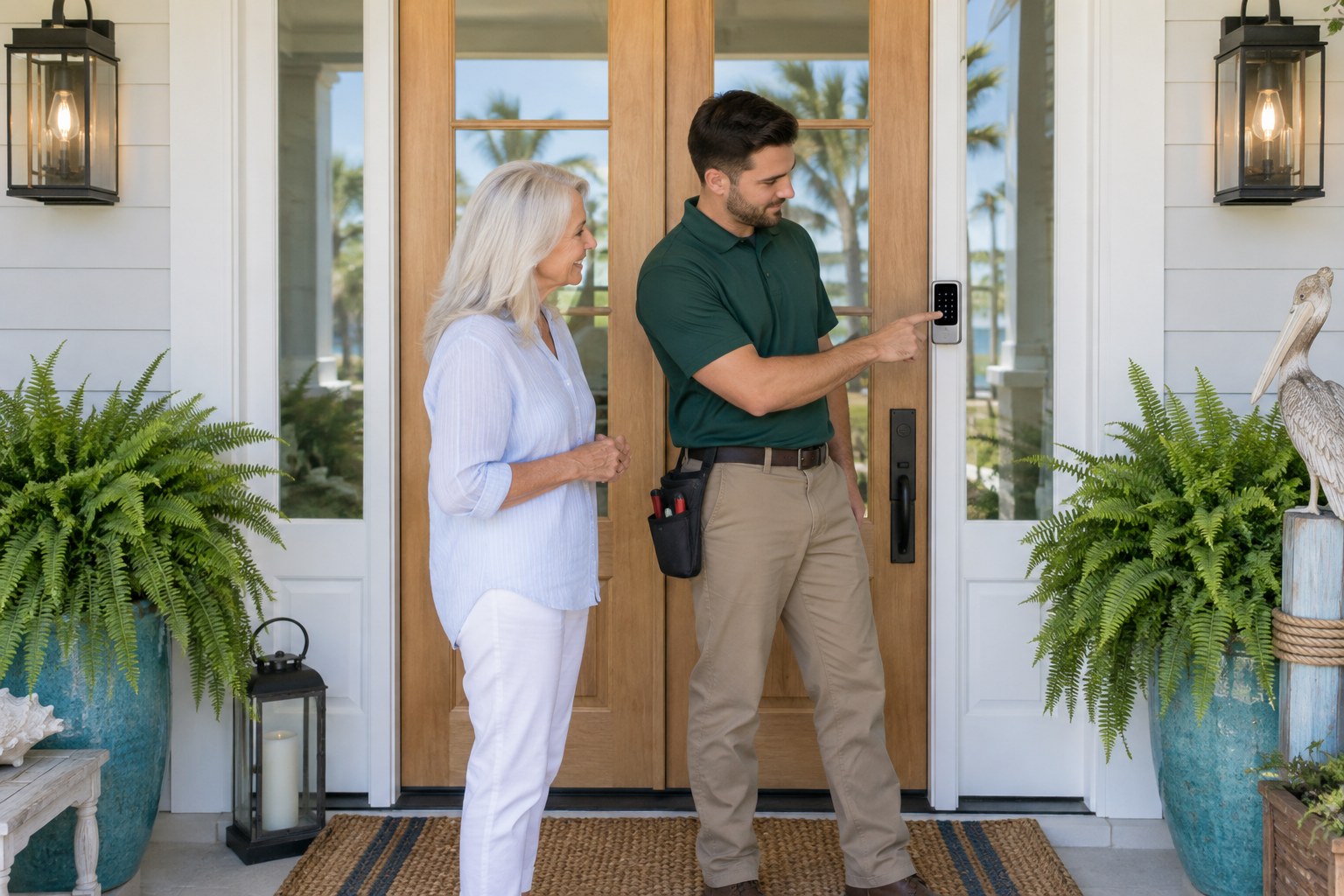
A keypad lock replaces or supplements the cylinder with a set of buttons and a small motor. You enter a code, the electronics check it, and the motor moves the bolt. Power usually comes from batteries. Many keypad models also keep a key cylinder as a backup, which makes them a hybrid rather than a pure replacement.
The difference lies in what you are trusting. With a key lock, you trust a piece of metal that you carry and a mechanism that needs nothing else. With a keypad, you trust a code in your memory and an electronic device that depends on power and sound firmware. Each trust has a failure mode.
The bolt that holds your door closed is similar in both cases. Whether the lock is a keypad or a cylinder, the strength of the door depends on the bolt, the strike plate, and the frame. Keep that in mind as you compare features.
Some people mention a third type: the lock that opens with a phone or a card. These sit between the two, using a keypad or key as backup. They add convenience for some and complexity for others. The questions in this guide apply to them as well, especially the question of what you do when the electronics fail or the phone is not with you.
Kids, teenagers, and the lost-key cycle
For families with children, the main appeal of a keypad is that a code cannot be left on the bus or at a friend's house. A child who forgets a key has to wait outside, but a child who remembers a code walks right in. Many parents find this removes a daily source of stress.
Teenagers often lose keys, lend them, or copy them. A keypad lets you give each teen a personal code and remove it if needed. It also avoids the cost and worry of rekeying every time a key goes missing. That said, a code can be shared by a teen with a friend, so conversation about responsibility matters.
Younger children may struggle with a code, especially a long one. Test whether your child can enter it reliably, in daylight and in the dark. Some families keep a simple key lock for that reason. If you choose a keypad, pick a code that is memorable but not obvious.
Think about independence and safety together. A child who can let themselves in after school is a practical benefit. A code that other kids can see over their shoulder is a downside. Teach children to shield the keypad and not announce the code.
Set simple family rules around the lock. Agree that nobody shares the code outside the household, that a lost phone or a forgotten code is reported right away, and that the door is locked behind everyone. Rules like these matter more than which lock you pick, because habits decide whether any lock does its job.
Guests, sitters, cleaners, and relatives
Visitors are where a keypad shines. You can give a cleaner a code that works on set days, give a sitter a code for the week, and delete both afterward. There is no need to meet people at the door, hide a key, or chase down copies. For households with regular helpers, this is a major convenience.
With a key lock, each helper needs a physical key. Keys can be copied without your knowledge, and you must remember to collect them. If a key is lost or not returned, you face the question of rekeying. Some people accept this and track keys carefully. Others find it a constant chore.
Be thoughtful about who gets a code. A code is just as shareable as a key, and easier to pass along by text. Use unique codes for each person, so you know who did what and can cancel one without affecting others. Keep a simple list.
Relatives who visit often may prefer a key because they do not like to remember codes. Others find a code easier than carrying a key. Ask the people involved. A lock that nobody wants to use gets propped open or left unlocked.
Short-term rentals and vacation properties around the beaches lean heavily toward keypads for these reasons. Guests get a unique code for their stay, and it ends at checkout. If you own such a property, remember that heavy use wears buttons quickly, so check the lock between stays and keep spare batteries on hand.
Lockouts and what happens when something fails
Key locks fail in simple ways. A key can be lost, bent, or snapped. A cylinder can wear or jam. When a key lock fails, the cause is usually visible or noticeable beforehand, such as a stiff key or a rough turn. A locksmith can usually open and repair it without replacing everything.
Keypad locks fail in different ways. Batteries run down, buttons wear, electronics glitch, or the motor stalls. Most give warnings, but warnings can be ignored. When a keypad fails, you need a backup, such as a physical key, an external power contact, or another door.
Think about your tolerance for risk. A household that is often away, or that has relatives who cannot easily reach the home, should have a solid plan for failures. A key lock has fewer things that can fail. A keypad has more, but also gives you more ways in.
The best arrangement for many families is a hybrid: a keypad with a key backup, or a key lock on one door and a keypad on another. This spreads risk and gives flexibility. A technician can help you decide based on your doors and routines.
Practice the backup. Once a year, enter the house using only your emergency method, whether that is the physical key or a battery contact. Doing it calmly in daylight shows whether the backup works and whether everyone knows where it is. Discovering a problem during a rehearsal costs nothing, and discovering it at midnight is a lot worse.
Weather, humidity, and the Gulf Coast
Coastal conditions test both types. A key lock suffers from salt and humidity through corrosion in the cylinder, leading to stiff keys and sticking bolts. Regular dry lubrication and a rinse after storms help. A mechanical lock in good condition can handle a lot of weather.
Keypad locks have seals, circuit boards, and contacts that moisture can reach. Cheap units may fail early near the water. Look for models built for outdoor use, with weather gaskets and sturdy housings. Wipe the keypad, check battery contacts for corrosion, and test after heavy rain.
Heat matters too. A keypad in direct afternoon sun can overheat, shortening battery life and fading displays. Shade or a lighter finish helps. A mechanical lock is less sensitive to sun, though the metal can get hot to the touch.
After a hurricane or flood, check both types. A key lock that was wet may need cleaning and lubrication. A keypad that was submerged generally should be replaced. Keep a mechanical backup so a storm does not leave you outside.
If you choose a key lock for a door that faces the water, pick a cylinder with corrosion-resistant internals and a solid brass or stainless exterior. These cost more at purchase but save repeated service. A technician can tell you what is inside a given model and whether it is a sound match for your exposure.
Security: codes, keys, and the door itself
A key can be copied if someone gets hold of it, and it can be picked or bumped in some cases, depending on the lock quality. A good cylinder with security pins resists many attacks. A keypad lock cannot be picked in the same way, but codes can be observed, guessed, or shared.
Choose a code that is hard to guess, and change it periodically. Wear on the buttons can hint at which digits are used, so some owners choose models with scrambling or add random digits before the code. Keep the keypad clean, because smudges also show where fingers touch most.
Neither type protects a weak door. A hollow door, a short bolt, a thin strike plate, or a split frame defeats both. Before spending on a new lock, check the opening. Reinforce the strike, use long screws, and make sure the bolt extends deep into solid framing.
Think about the weakest link. If a thief can force the door or break nearby glass, the lock type matters little. Combine good hardware with lighting, visibility, and good habits. Security is a set of layers, not a single gadget.
Consider the human side of security. A code written on a sticky note, a key left under a mat, or a door propped open all defeat the best hardware. Whatever lock you use, build routines that are easy to follow and hard to forget, and teach them to everyone who lives in or visits the house.
Another point is physical wear. Over years of use, the same few buttons on a keypad may show shine or scuffs while the rest stay dull. That pattern tells an observer which digits are in your code. Replacing the keypad cover or switching to a lock with a scrambling feature reduces that clue.
Convenience, habits, and daily life
A keypad frees your hands when you carry bags or hold a child. It removes the habit of checking pockets for keys. Many people enjoy not carrying a house key at all when they jog or go to the beach. Those moments of convenience add up.
Key locks have their own comfort. A key is reliable and familiar, and you can feel it in your pocket. Some people dislike the idea of memorizing codes or maintaining batteries. For them, a plain deadbolt in good condition is just fine, and a sensible habit of keeping a spare with a trusted person covers the lockout risk.
Consider how your household lives. If many people come and go, a keypad can reduce friction. If it is just a couple with a quiet routine, a key lock may serve well for years. Be honest about your habits rather than chasing a trend.
Also consider how you want to feel when you leave. A keypad that auto-locks after a delay may calm the worry of an unlocked door. A key lock requires you to remember. Choose the system that you will actually use properly every day.
Think about older family members as well. A large-button keypad may be easier than a small key for stiff or arthritic fingers, while others dislike remembering codes. Ask them, watch them use the lock, and choose what is comfortable. A lock that is awkward for the person who uses it most is not a good fit.
Cost, upkeep, and the long run
Keypad locks tend to cost more than comparable key locks, and they have recurring costs such as batteries. They also may need replacement sooner than a mechanical deadbolt, particularly in harsh conditions. Weigh whether the features you will use justify those costs.
Key locks are inexpensive to maintain. A drop of dry lubricant now and then, tightened screws, and occasional rekeying are the main needs. Rekeying after lost keys or a change of occupants is simple and quick. The technician confirms ownership or authority before starting.
If you are undecided, you can start with a hybrid, or try a keypad on a secondary door. Living with it for a season will tell you more than a list of features. If it suits you, extend it. If not, you have lost little.
Think of the lock as a tool that serves your routine. The right choice is the one that fits your family, your doors, and your climate, and that you will maintain without complaint.
Resale and rental matter a little too. A keypad is a visible upgrade some buyers like, but an unmanaged one can trouble a new owner if old codes remain. Whichever lock you leave behind, reset or rekey it, and give the next person a clean starting point with a list of what is installed.
Living with both: a hybrid approach for households that cannot decide
Many households do not have to choose. A common arrangement uses a keypad on the door that sees the most daily traffic, usually the one nearest the kitchen or garage, and a traditional key lock on the front door, which is used less often. Family members get the convenience of a code for everyday comings and goings, while the front door keeps the familiarity of a key and a deadbolt. If something goes wrong with one, the other remains a way in.
Another approach pairs a keypad with a physical key on the same door. Many keypad deadbolts include a keyway for exactly this reason. The code handles routine use, and a key kept by an adult serves as a backup when batteries run out or someone forgets the code. The tradeoff is that the keyway is a spot where picking or bumping can be attempted, so choose a cylinder with some resistance and keep the key somewhere sensible rather than hidden outside.
Whichever mix you choose, keep records. Write down which door uses which method, who has codes, and where spare keys live. Review the list a couple of times a year and after any change in the household. A technician can help set up matching keys across doors so that one key still opens everything it should, and can recommend a keypad model that fits your door preparation. The aim is a setup the whole family can actually use without thinking.
Getting help choosing
If you are weighing the two, call us and describe your household: how many people, how often guests visit, how the doors face the weather, and what troubles you now. We can suggest options that match, and tell you honestly when a plain key lock is the better choice. Quotes are given by phone, and call us to confirm availability.
A technician can also inspect your doors, advise on reinforcement, and rekey or replace hardware as needed. If the job is complicated, a technician visits and the service call charge is explained before dispatch. Before any installation, rekeying, or programming, the locksmith confirms that you own the home or have the owner's permission.
Whichever you choose, keep a plan for failures and review it each year. A good lock, well installed and well maintained, is quiet and dependable. That is what you want from the door your family uses every day.
To prepare for a call, note the door type, the lock you have now, the age of the hardware, and any problems you notice. Photos help if you can describe them. With that, a technician can usually tell you quickly whether you need a new lock, a rekey, a repair, or only an adjustment to the door.
Questions people ask us
Is a keypad lock safer than a key lock?
Neither is automatically safer. Security depends on the bolt, strike, frame, and how the lock is managed. A keypad avoids lost and copied keys, but codes can be shared or observed. A key lock avoids batteries and electronics.
What happens if the keypad batteries die?
Most models warn first and offer a backup such as a key cylinder or an external power contact. Replace batteries on a schedule and know your backup before you need it.
Are keypad locks good for kids?
They remove the lost-key problem, but children must remember the code and shield it from others. Test that your child can enter it reliably, and consider a hybrid with a key backup.
Do keypad locks last in coastal weather?
Models built for outdoor use with good seals do better. Salt, humidity, and sun still take a toll, so wipe the keypad, check battery contacts, and test after storms.
Can I use both on one house?
Yes. Many households put a keypad on a main door and a traditional lock on others, or choose a keypad with a key backup. A technician can help match the setup to your doors.