
A commuter community and its door habits
Midway sits in a part of the region where many households have two working adults, a garage and a daily routine that starts early and ends late. That pattern shapes how locks fail. Doors get used in a hurry, keys get shoved into pockets and bags, and the garage entry takes more punishment than the front door. A lock that is slammed shut every morning will loosen its screws long before a lock that is opened carefully once a day.
When you call about a sticky or loose lock, tell us which door is used most. That is usually the one with the worn latch, and it often needs more than a quick spray of lubricant. Tightening the mounting screws, checking the strike plate and replacing a tired latch bolt are small jobs that restore a solid feel.
We also see keys lost in the daily shuffle. If you have lost a key and cannot be sure where, a rekey is the cleanest answer, because it makes the lost key useless. Replacing the lock is rarely necessary unless the cylinder is also worn.
The goal is a door that closes, latches and locks on the first try, even when you are juggling a bag and a coffee.
Apartments, townhomes and shared buildings
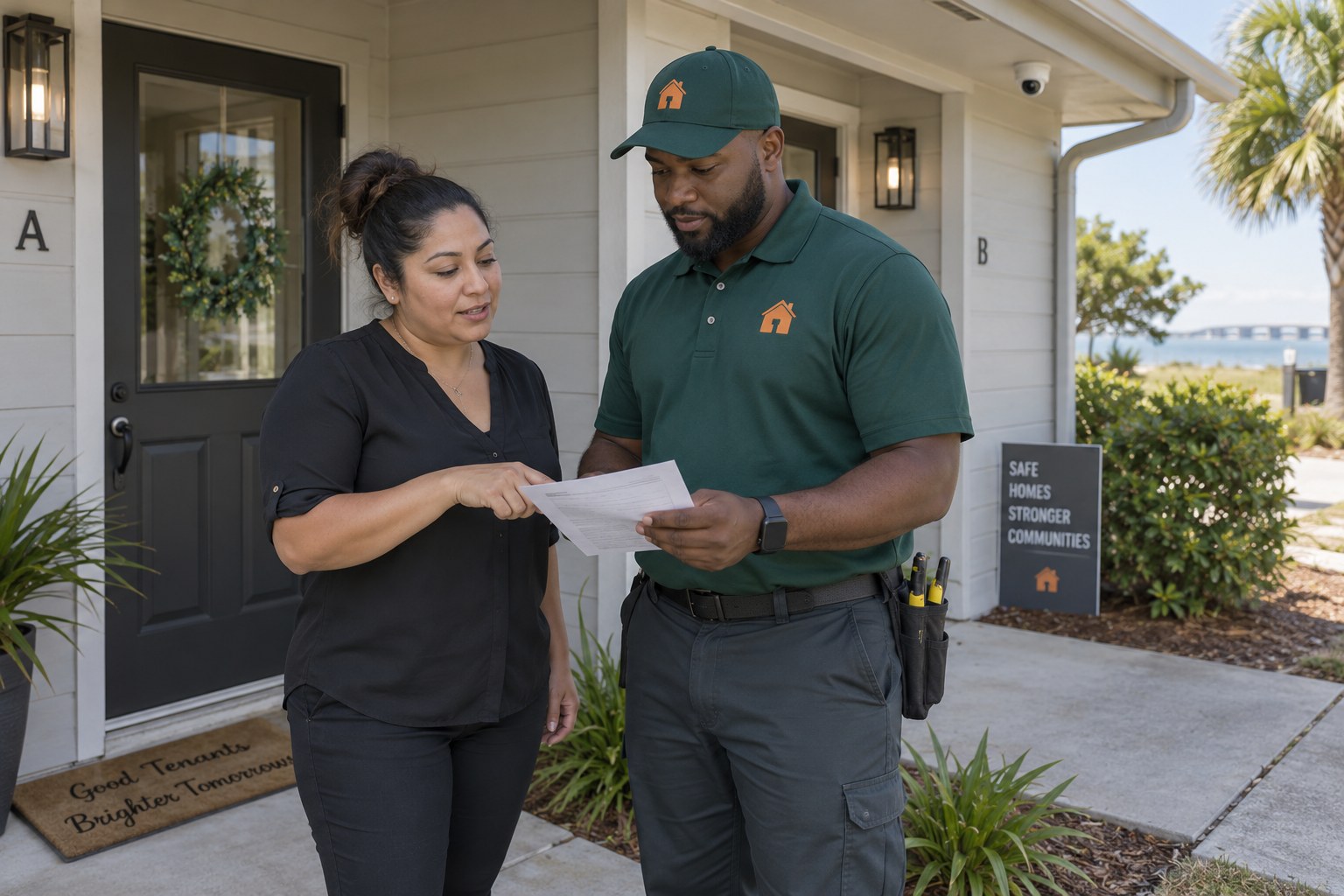
Apartment and townhome living adds rules. Management usually controls the entry hardware, and tenants may be restricted in what they can change. If you are a tenant locked out, the first call may be to the office. If no one answers or the situation needs a locksmith, we can help, provided we can confirm that you live there and that opening the door is permitted.
Landlords and property managers often need a unit rekeyed between residents. This is routine work. The technician rekeys each exterior lock, tests every key and labels the set. For a building with several units, we can discuss keyed-alike options for common doors and individual keys for each unit.
Shared doors, such as a courtyard gate or a mail room, often have heavier hardware than a unit entry. Those may need a different approach, and we ask for details before arrival.
When a tenant moves out and leaves keys behind, the next occupant deserves a lock that those keys no longer open. Rekeying handles that without replacing the whole door set, which keeps costs and waste down.
Rekeying versus changing the whole lock
Many people assume a security problem means buying new locks. In most homes, a rekey does the same job for the access question. The pins inside the cylinder are rearranged to match a new key, so the old key stops working. The lock body, handle and finish stay as they are, and the door looks the same from the street.
A full replacement is a different decision. You choose it when the lock is damaged, when the finish has deteriorated, when you want a stronger grade of hardware or when you want a different style. The technician measures the door, selects a lock that fits the bore and backset and installs it with the correct strike.
There is also a middle option. A cylinder replacement swaps only the keyed part while keeping the handle set, which can suit a lock whose outside is fine but whose inside is worn.
Ask us which fits when you call. We describe the options in plain terms and give a quote by phone for each, so you can choose without feeling hurried.

Garage doors, side entries and the forgotten door
Most break-ins happen at doors people do not think about. In Midway, as elsewhere, the entry from the garage into the house, the back door onto a patio and the side door near the driveway are the usual weak spots. They often have single-cylinder locks with short strike screws and a hollow door that flexes under pressure.
The fix is not complicated. A solid or reinforced door, a deadbolt with a proper throw and long strike screws into the framing greatly improve resistance. If the door has glass near the lock, a double-cylinder style or a film on the glass may be worth discussing, although a double-cylinder lock has safety implications in a fire, so we talk through the tradeoffs before recommending it.
Garage keypads and remotes belong in the conversation too. If you have lost a remote or the garage has been left open while you were away, resetting the keypad code is a good habit.
We are happy to look at each entry and rank them by risk, so you can spend where it matters most.
Lockouts when you are in a hurry
A lockout often happens when you are late, distracted or carrying too much. The door closes behind you and the key is inside. Before calling, check whether any other door or window is already unlocked and whether someone else has a key. If none of those work, call us and describe the lock.
We ask the type of door and lock, whether it is a deadbolt or only a latch, and whether the door was locked with the key or just closed. If it only latched, entry may be simpler and less invasive. A deadbolt thrown with a key takes more care, and we choose a method that suits.
We will also ask you to show that you live at or own the home. That might be a license with the address, a lease or a bill. This step is not optional for us. It is how we protect the people whose homes we enter.
Call to confirm availability for your area. We give a phone quote, and if the situation is complex, a technician visits and explains the service call charge before dispatch.
Hurricane season preparation for doors
Anyone living near the Gulf learns to take storm season seriously. A door that does not latch firmly under normal conditions is not ready for wind. Check each exterior door by closing it gently. If it needs a hard push to latch, or if the bolt scrapes the strike, call for an alignment check before the season gets busy.
Hinges matter too. Loose hinge screws let the door sag, which stresses the lock. A technician can replace short hinge screws with longer ones that bite into the framing, and adjust the strike so the bolt slides in cleanly. These are quick fixes that improve both security and comfort.
If you board up or install shutters, plan how you will lock the doors behind you. Make sure all keys are accounted for and that someone who might return first can get in. After the storm, test every lock before you need it in a hurry.
Humidity and heavy rain can swell doors afterward. If a lock that worked fine suddenly binds, do not force it. Call us and describe what changed.
Keypads and app locks for Midway homes with a crowded daily routine
Keypad deadbolts are popular with families who juggle schedules, dog walkers and contractors. Assigning codes removes the need to hide a key outdoors, and a code can be changed in seconds when circumstances change. The tradeoff is power: batteries run down, and cheap units struggle in humid air.
If you consider a smart lock, we start by checking the door. A lock cannot work well on a door that rubs or sags, and many failed installations trace to alignment. Once the door is right, we install the lock, program it and show you how to manage codes. We also keep a mechanical backup key in the plan.
Not every door needs electronics. For a rarely used side door, a good plain deadbolt may be a better choice. We will tell you honestly, even if that means a simpler job.
Before you buy, call and describe the door. We can tell you whether the model you have in mind fits the bore and the door thickness.
Seasonal residents and homes left empty
Some Midway homes sit empty for weeks while owners travel or spend part of the year elsewhere. An empty house needs sound locks and a careful key plan. Make sure a trusted person holds a key, that the spare is not hidden outside and that anyone with access is known to you.
If you return to find a lock tampered with, do not enter. Call the authorities first, and then call us to secure the door. A technician can assess damage, replace a compromised cylinder and make the door secure again.
Before you leave, test every lock. Cycle the deadbolt, check the garage entry and try the keypad. If anything feels rough, schedule a fix before you travel rather than after.
A rekey before a long absence is also worthwhile if you have recently had contractors or guests. It limits access to people you know.
What the technician checks before leaving
At the end of a job, the technician runs through a short list. Each lock is cycled several times with the door open and then closed. The bolt should extend fully, retract without catching and enter the strike without scraping. Keys are tested, including every copy you receive.
We check for loose screws, wobble in the handle and any gap around the door that suggests the frame has shifted. If something looks wrong, we tell you, even if it is outside the scope of the job.
You get a clear explanation of what was done, what was replaced and how to care for the lock. If you have questions about codes, spare keys or future maintenance, ask before the technician leaves.
Afterward, if you notice anything odd, contact us. A good lock job should feel smooth and solid, and we want it to stay that way.
Matching hardware to how your household lives
Choosing a lock is partly about security grade and partly about daily habits. A household with small children benefits from a lever handle at an adult height and a deadbolt that is easy to turn without a key from the inside. A household with elderly relatives may want larger thumb turns and handles that do not require a tight grip. A household with pets that push on doors needs latches that hold when bumped. These details sound minor, yet they decide whether a lock is a help or an irritation.
Finish and style matter too, because the door is the first thing a visitor sees. Matching the new hardware to existing fixtures, such as the porch light and house numbers, makes the entry look cared for. We carry or can source common finishes and will tell you honestly when a match is not available in the grade you want.
Consider where the key will live. If you keep keys on a hook just inside the door, a double-cylinder lock that needs a key from both sides could trap you in a fire. We explain why that choice carries risk and suggest alternatives, such as a single-cylinder deadbolt with a heavy-duty strike.
Tell us on the phone who lives in the home and what frustrates them about the current lock. Often a small change in hardware solves a daily annoyance and improves security at the same time.
Securing a Midway house after a forced or attempted entry
If someone has tried to force a door, the damage is not always obvious. A splintered jamb, a bent strike plate, a lock that now turns oddly or scratches around the keyway all suggest an attempt. First contact the authorities and document what you see with photos. Do not clean up before they have looked. Once they have finished, call us to secure the opening.
A technician assesses what has been affected. Often the lock cylinder is compromised, the strike plate is bent and the door frame has cracked around the screws. We replace or repair what can be restored, reinforce the frame where possible and rekey so any keys that went missing during the incident are no longer useful. If the frame needs carpentry, we tell you and help you decide what to do in the meantime.
Temporary measures are available when a door cannot be fully repaired immediately. A securing method that holds the door closed overnight is better than leaving it loose, and a technician can advise on the safest option for your situation.
We will also ask about authority and identity before working on a door after an incident, because the same steps that protect a normal customer protect you here. Call us, explain the situation as much as you are comfortable doing, and we will plan the visit around it.
Reworking door habits for shift schedules and school runs
Households in a commuter community often have people leaving and arriving at different hours, and the front door has to cope with all of it. One adult leaves before dawn and tries not to wake anyone. A teenager comes in after practice with both hands full. Someone else works nights and sleeps through the day. Each of these routines puts a different demand on the lock, from a quiet latch that does not slam to a handle that can be worked with an elbow. We ask about the routine first, then match the hardware to it.
Small changes make a real difference. A lever handle is easier than a knob when your arms are full of bags. A deadbolt that throws smoothly encourages people to actually use it, whereas a stiff one gets left open. A strike plate that lines up properly means nobody has to shoulder the door shut. If keys are being passed between family members each morning, a keypad can end the shuffle altogether, though it brings its own habits, such as changing the code when a household member moves out.
Think about the least reliable person in the chain, the one who forgets, runs late or loses things, and design around that person. Ask yourself what happens if they come home to a locked door with no one else in the house. If the answer is a long wait on the porch, the system needs another layer, whether that is a second key kept with a trusted neighbor, a keypad, or a clear plan for calling us. A good routine is one that still works on the worst day of the week.
Keys, copies and who really has them
Every household has a quiet inventory of keys it has never counted. There may be a copy with a neighbor, one with a dog walker, another with a relative who visited last year and a spare that a former roommate never returned. Writing the list down is a revealing exercise. If you cannot account for every key, you do not fully control access to your home, and a rekey resets the count to the keys in your hand.
When you receive new keys, make copies deliberately rather than casually. Cutting a few extra from the original and labeling them by holder lets you recall them if circumstances change. Avoid stamping the address on a key, since a lost key with an address is an invitation. Use a colored cap or a small mark instead.
Some keys are restricted or patented and can only be copied by an authorized dealer with proof of ownership. If you have one, the technician can explain how copies are ordered. It takes longer, but it keeps unauthorized duplicates from circulating.
Finally, think about spare strategy. A spare with a trusted neighbor or family member beats one under a pot. A lockbox with a code you can change beats a spare key that never leaves the hiding place. We can install a sturdy lockbox and explain how to manage the code.
Questions people ask us
Do you cover Midway and nearby neighborhoods?
Our mobile service covers Midway and the broader Pensacola area, including parts of Santa Rosa and Escambia counties. Because availability changes, please call to confirm for your address. Describe the problem, and we will give a phone quote before dispatch.
I lost a key. Do I need new locks?
Usually not. Rekeying makes the lost key useless by changing the pins inside the existing cylinder, and you receive new keys. Replacement is only necessary if the lock is also worn or damaged. The technician checks and explains before starting.
Can a tenant call you to change locks?
A tenant can call for a lockout, and we confirm residency first. Changing locks is a different matter: many leases require landlord permission. We ask about authority before rekeying or replacing hardware, which protects both the tenant and the owner.
How do I prepare for a visit?
Clear the path to the door, bring any working keys and broken pieces, and have proof that you live at or own the property. Tell us if pets are inside. Photos of the lock are helpful if you can share a description by phone.
Do you install keypad locks?
Yes. We check the door alignment first, install the keypad deadbolt, set the codes and keep a mechanical backup key in the plan. We also explain battery care. If a simpler lock suits your door better, we will say so honestly.