

Doors you find near the water
Holley homes range from older cottages to newer raised houses and townhome style buildings, and the front doors reflect that. Raised homes often have exterior stairs and a landing where the door is exposed to wind and spray, while ground level homes may have a garage entry and a side door that gets used more than the front. Each of those doors wears differently, and the lock on the busiest one usually fails first.
Doors near the water often face the weather directly. A steel entry door can show rust at the edges, and a wooden door can swell against its frame. The lock inside is only as healthy as the door around it. When a technician arrives, the first look is at how the door hangs, how the latch lines up with the strike and whether the finish has begun to flake.
Tell us on the phone whether the door is steel, wood, fiberglass or a glass sliding panel. That one detail changes the tools we bring and the way we approach a lockout or a replacement, and it keeps the visit short.
Condos and townhomes add another layer. Shared hallways and association rules sometimes limit what can be changed on an entry door, so ask your management if you are unsure. We can still rekey or repair within the existing hardware.
Salt air and what it does to a lock
Salt carried by wind settles on door hardware and works into places you cannot see. Over months, it dulls the finish, stiffens springs and leaves a fine crust in the keyway. A lock in this setting rarely fails suddenly. It starts to feel different: a key that needs a nudge, a deadbolt that takes two tries, a knob that rattles a little more each season.
A technician can often rescue a lock at that stage. Cleaning the keyway, working a suitable dry lubricant into the cylinder and tightening loose mounting screws can restore smooth action. If the pins are corroded or the cylinder is scored, rekeying or replacing the cylinder is the better answer, and we will tell you that plainly rather than selling a repair that will not last.
Material choice matters when you replace hardware. Finishes designed for harsh exposure hold up better than the thinnest plated sets. Ask us what we recommend for a door that takes spray, and we will talk through the options without pushing the most expensive one.
Rinsing the outside of the lock with fresh water and drying it now and then is a small habit that extends its life, especially after a windy week.
- Key needs wiggling to turn
- Deadbolt needs two tries
- Visible crust or green tint on brass
- Knob feels loose or rattles
Move-ins and the first week in a new place
When you buy or rent in Holley, a security reset is one of the best early tasks. You cannot know how many keys exist for the previous occupant's locks. Rekeying every exterior door, including the garage entry, the side door and any sliding door lock, closes that question for good. It is usually quick, and you leave with a single key that works throughout.
Do not forget the small things. Garage door keypads, mailbox keys, storage closet locks and a gate latch can all hold old codes or old keys. We can rekey the mailbox lock or advise you on resetting a keypad, though the mailbox itself may belong to the postal service or the property manager, so check who is responsible.
If a seller or landlord gave you a mixed handful of keys, test each one before the technician arrives and note which doors still need keys. It helps us plan.
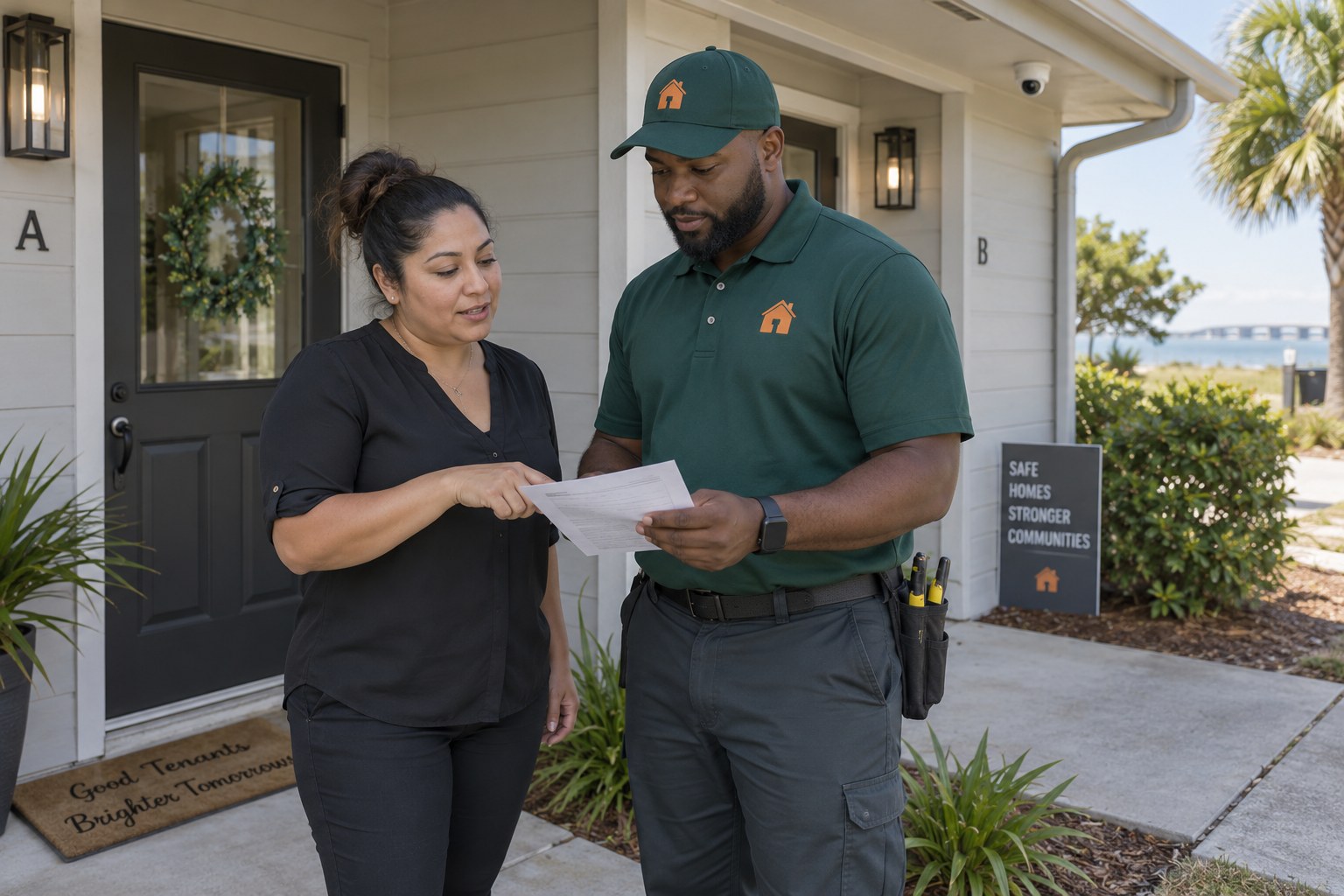
We confirm that you own the home or have authority to make changes. Bring your closing paperwork, lease or another document showing your connection to the address.
Vacation rentals and weekend guests
Holley draws visitors who come for the water, so some homes work as rentals for part of the year. A property that welcomes guests faces a particular problem: keys wander. Guests leave with them, cleaners misplace them and a lockbox code can be shared without anyone knowing. Rekeying between seasons is a reasonable routine, and keypad deadbolts let an owner change a code without handing out metal keys.
Owners should think about what happens when a guest is locked out late in the evening. A clear plan, such as a lockbox with a code shared at check-in and a call number for help, avoids panic. If the owner authorizes our visit by phone, we confirm the arrangement and verify authority before opening a door that is not the caller's own.
For rental doors, hardware that is simple to use matters more than features. Lever handles, clear thumb turns and a deadbolt that glides all reduce guest mistakes. We can help match hardware to the way your property is used.
If you manage several units, tell us how many doors and whether you want them keyed alike. We can sort out a schedule by phone.
Lockouts: what to tell us and what to expect
If you are locked out, take a breath and look at the door. Is it a knob lock, a lever, a deadbolt, a sliding door or a keypad? Is anyone inside? Did a key snap off in the lock? Tell us. A short description lets us choose the method and bring the right tools to your address.
We prefer non-destructive entry, which leaves the lock and door unmarked. On some hardware that is simple, and on high security hardware it takes more time. If a lock must be drilled, we explain why and ask for your approval first, then replace the cylinder as part of the job so the door can be secured again.
We always confirm ownership or authority before opening. Identification with your name and the address, a lease or a utility bill all work. If you are outside and have nothing with you, tell us and we will talk through what is reasonable.
Call to confirm availability for your location. We give a quote by phone, and if the job is more involved, a technician visits and the service call charge is explained before dispatch.
Sliding doors, garage entries and side gates
Coastal houses lean heavily on sliding glass doors for light and views, and those doors are not always as secure as the front entry. The factory latch on many sliders is a thin hook that can be lifted by wiggling the panel. A simple add-on lock or a bar cut to length for the track improves things immediately, and it costs little to install.
Garage entry doors are another weak spot. The door between the garage and the house is often a plain hollow door with a basic lock, even though the garage itself may be left open during the day. Upgrading it to a solid door with a deadbolt and a strong strike makes sense, particularly if the garage holds tools or boating equipment.
Side gates and storage doors collect corrosion fast. A padlock that looks fine can be seized inside. We can replace weak latches, install a proper hasp or rekey a gate lock so you hold one key for the whole property.
If you are not sure which of these deserves attention first, we can walk through them in order of risk during a visit.
Getting ready for storm season
People in this part of Florida watch the weather from late spring through fall, and preparing the house includes the doors. Check that each exterior door latches without you leaning on it. A door that needs force to latch is a door that is already misaligned, and wind will exploit it. A technician can adjust strike plates, replace worn latch bolts and tighten hinge screws so the door sits properly.
After a storm, swollen wood, shifted frames and debris in the lock are all common. If a key suddenly turns hard, do not force it. A broken key in a cylinder turns a small problem into a bigger one. Call us, describe what happened and let us look.
If you plan to evacuate, make sure every household member who might return first has a working key, and think about who else needs access. A keypad code can be shared and then changed later. A physical key is harder to take back.
We can talk through a quick pre-season check by phone and decide whether a visit is warranted.
Choosing between repair, rekey and replace
Customers often ask which option makes sense. Repair fits when the lock is basically sound and something small has gone wrong, such as a loose screw, a sticky bolt or a misaligned strike. It is the most economical path and usually keeps the existing keys working.
Rekeying fits when the lock itself is fine, but you want to control who has access. It changes the pins inside so previous keys fail. It does not fix a worn cylinder or a damaged latch, so a technician first checks the lock is healthy.
Replacement fits when the lock is badly worn, corroded, broken or too basic for what you need. It is also the moment to step up to better hardware. We choose a replacement that matches the door's bore and finish, and test it before we leave.
Whichever you choose, you get a quote by phone first. For more complex jobs, a technician visits and explains the service call charge before dispatch.
Details worth gathering before you dial for Holley service
A few details make the call efficient. Give the general location, say whether it is a house, condo or apartment, and name the problem in plain words. Mention the lock type if you know it and whether anyone is inside. If a key is broken, say so.
Have proof of your connection to the property ready. That might be an identification showing the address, a lease, a closing document or a bill. If someone else is authorizing the visit, let us know and we will confirm with them.
Think about what outcome you want. Some customers only want to get inside. Others want to leave with a new key and a lock that will last. Tell us, and we can plan accordingly and price accordingly by phone.
We keep the process simple and the explanation honest. If something is beyond what a locksmith visit can fix, such as a rotted frame, we will say so and suggest the right next step.
Keys for boats, trailers and outdoor storage
Waterfront living brings a surprising number of small locks into a household. There is the shed with kayaks and fishing gear, the trailer hitch lock, the lockable box on the dock or deck and the gate to the yard. These are often cheap padlocks or latches that live in salt spray, and they tend to seize at the moment you want to head out for the day. A seized padlock is usually cut off, and the better answer is a replacement made for outdoor exposure.
If you would rather carry fewer keys, a locksmith can often rekey several compatible padlocks or replace them with a matched set that opens with one key. That keeps your ring light and your gear secure. Tell us how many locks you have and what they protect, and we can suggest a sensible plan by phone before arriving.
A word of caution about vehicle and boat ignition keys: we handle home and property locks on this site, and we check ownership before opening anything. If you have an item that belongs to someone else, we will ask for authority from the owner. That protects everyone involved, and it is the same standard we apply to a house.
Whatever you lock up, keep a spare key stored inside the house, not in the shed or on the dock, so that one lockout does not lead to another.
Keeping keys straight in a Holley household that shares a boat, a car and a shed
Life near the water multiplies the number of keys a household carries. A single family in Holley might keep house keys, truck keys, a shed padlock key, a dock gate key, and keys for a trailer or boat. Without a simple system, keys end up on one oversized ring that wears out the ignition and falls off the hook. A short inventory of what each key opens, written once, makes lost-key decisions much easier.
Splitting the ring is the easiest improvement. House keys travel on one small ring, vehicle keys on another, and the rarely used keys stay at home on a labeled hook. If one ring is lost, the whole household is not exposed. Labels should be coded and not spell out an address, so a finder cannot walk straight to your door. A locksmith can also cut matching copies so each adult has a set without borrowing.
Where keys are lost for good, the house cylinder should be rekeyed so the lost key no longer works, and the matching padlocks can be rekeyed or replaced. Salt exposure shortens the life of outdoor locks, so check them each season. The technician confirms ownership or authority before rekeying anything. Call us if your key collection has outgrown your system, and we can help sort out what to rekey and what to leave alone.
If a lost key could have been picked up by someone who knows where you live, rekeying is the sensible response. It makes the lost key useless without changing the whole lock. A boat key or a dock gate key is easy to leave on a seat, and the same logic applies to the padlock it opens. Keep a record of which key goes with which lock so you can decide quickly what to change.
Older locks, worn keys and copies of copies
A key that has been copied from a copy, then copied again, gradually drifts from the original cut. Each step adds a tiny error, and in a worn lock that is enough to make the key bind or fail. If a lock works for one family member and not another, compare the keys. Often one is a poor copy, and a fresh duplicate from the original or a key cut by code solves the problem without touching the lock.
On older homes, the lock may be tired in a different way. Brass pins inside the cylinder wear, springs lose tension and the keyway gets a polished, rounded look. The lock might still turn but gives you little security and sometimes fails when humidity changes. Rekeying will not fix a worn cylinder. Replacing it will.
When you call, mention how old the lock seems and whether keys have started to feel rough. Bring the key that gives you the most trouble and the one that works best. A technician can compare them under good light and show you where wear has crept in.
If you decide to replace hardware, we can match the bore, backset and finish on your door. We confirm the new lock fits before cutting any keys, so you leave with a working door rather than a promise.
Questions people ask us
Do you serve Holley homes and condos?
Yes, our mobile service reaches Holley along with the surrounding Santa Rosa and Escambia County area. Availability changes, so please call to confirm it for your address. Describe the door and the problem, and we will give you a quote by phone before sending a technician.
Can you rekey a rental between guests?
Yes, if you own the property or have written authority from the owner. We confirm that before any work. Rekeying all exterior locks to one key is common, and we can discuss keypad deadbolts if you prefer to change codes instead of handing out keys.
My lock feels gritty near the water. Is that salt?
It often is. Salt and humidity corrode small internal parts and leave residue in the keyway. A technician can clean and lubricate the lock, or rekey or replace the cylinder if parts are corroded. We explain which fits your lock before starting.
Will you damage my door to open it?
We aim for non-destructive entry first. Drilling is a last resort, only with the owner's agreement, and the cylinder is replaced so the door can be secured again. We will explain the reason before we proceed with any destructive method.
What happens if the job is complicated?
A technician visits first and the service call charge is explained before dispatch, so you know the cost of the visit up front. After assessing, we explain the options and the quote for the work, and you decide whether to proceed.