
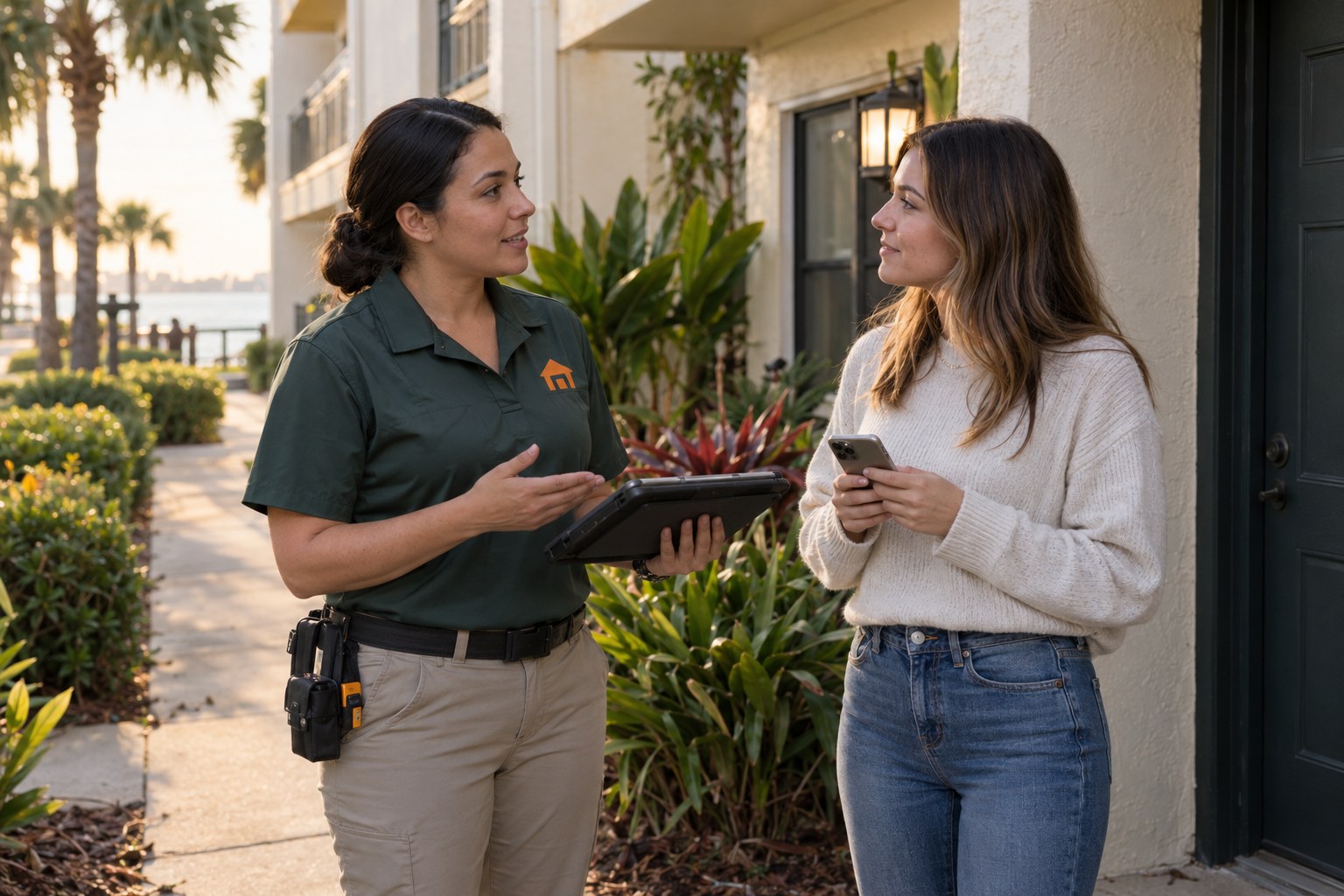
A community where people come and go
Anyone who has spent time near the naval air station knows the housing rhythm. Families arrive, settle for a few years, then pack up for the next assignment, and the home goes to a new tenant or buyer. That cycle means keys change hands constantly. Every move leaves behind a set of copies that nobody tracks, which is why locks near a military installation get rekeyed more often than in many other places.
The people moving in are usually busy. They are unpacking, enrolling children in school, learning a new area, and a lock appointment is one more item on a long list. A mobile locksmith helps by coming to the house, doing the work at the door, and leaving the household with a single set of keys that matches the new situation.
Landlords and property managers see the same pattern from the other side. Between tenants there is a short window to prepare the home, and a rekey is part of turning it over. A technician can work through several doors in a single visit, so the unit is ready without extra trips or guesswork about which keys still exist.
Move-in rekey, step by step
A move-in rekey begins with a conversation. The technician asks how many exterior doors there are, whether any are keyed differently, and how many keys each adult needs. Then each cylinder is taken out, its internal pins replaced to match a new key pattern, and the cylinder reinstalled and tested with the new key several times.
While the lock is apart, the technician looks for wear. A deadbolt with a sloppy bolt, a knob that wobbles, or a strike plate held by short screws gets mentioned right then. You decide whether to correct it during the same visit. Many people choose to do so because the technician is already at the door with tools open.
At the end, old keys should stop working entirely, and the technician demonstrates that. You get a clear count of new keys and a suggestion to store one spare somewhere safe, away from the front steps. Before work starts, the technician checks that the person requesting the rekey is the owner, tenant with approval, or manager with authority.
Salt air and the Gulf side of town
Warrington is near water, and moist salty air quietly attacks metal. Brass holds up reasonably, but plated finishes pit, springs rust, and steel parts in cheaper cylinders seize. The earliest sign is often a key that goes in rough or a lock that needs force to turn on humid mornings.
The technician can usually tell by feel how far along the damage is. A cylinder with light surface corrosion can be cleaned and lubricated with a dry-film product, which gives a season or two of smoother operation. A cylinder that is pitted inside is better replaced, since cleaning only delays the failure.
For homes that face open air, ask about exterior-grade hardware with sealed finishes. They cost more to buy but resist the Gulf environment better. Interior doors in the same house rarely need the same treatment, so a sensible plan upgrades exterior doors and leaves bedroom and closet locks alone.
- Rinse and wipe exterior hardware when salt crust appears, then dry it
- Avoid wet oil sprays inside the keyway
- Replace a lock that grinds rather than waiting for it to snap a key
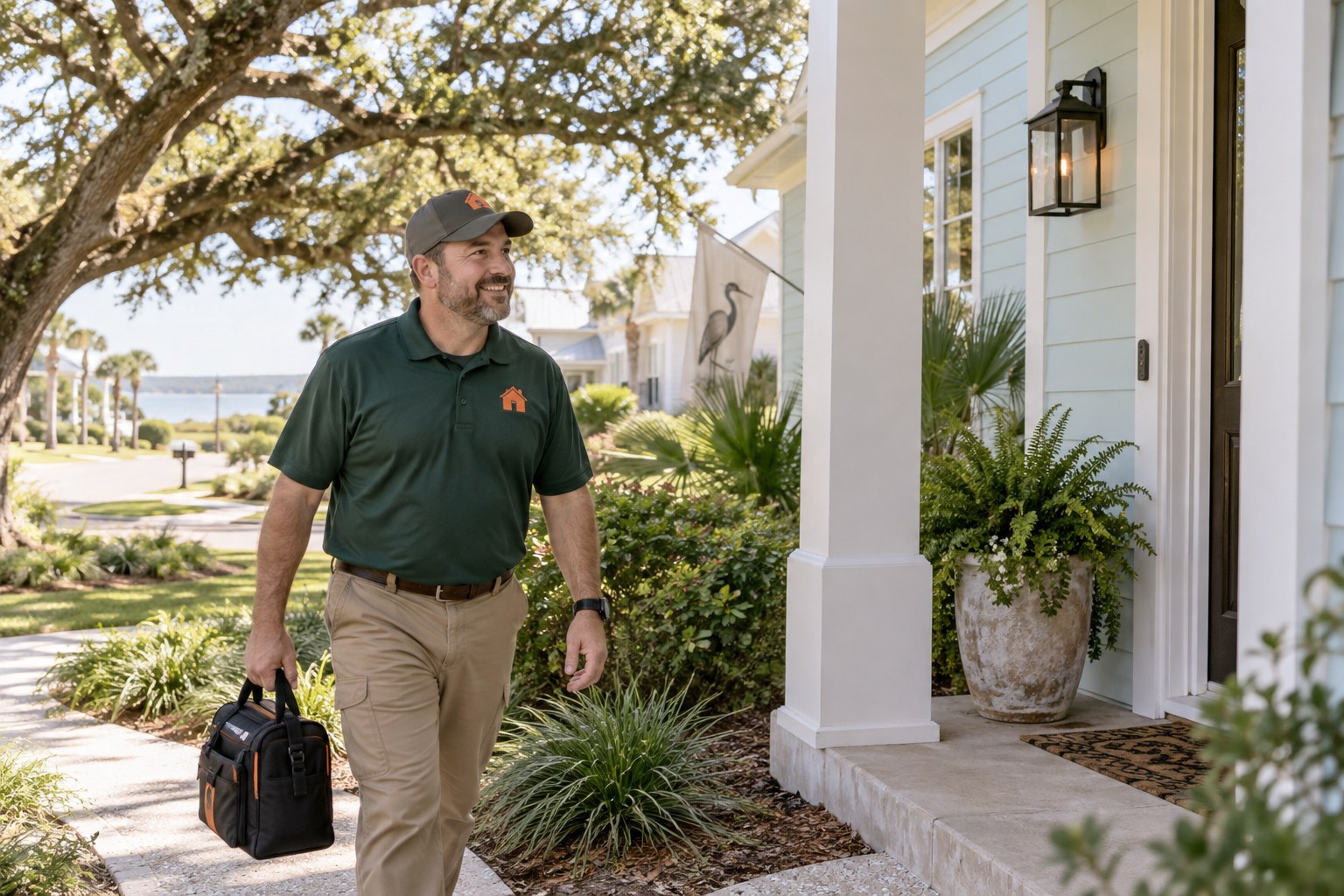
Lockout calls at a rental or a family home
Lockouts are a normal part of life in a place with frequent moves. New residents do not yet have habits about where keys live, children get home before parents, and spare keys are often still in a box that has not been unpacked. When you call, expect questions about the door, the lock type, and who is at the house.
The technician checks authority before opening anything. For an owner that may be a document with the address. For a tenant it may be a lease. For a visitor or friend it is not possible to open the door without the occupant's confirmation. This protects the household as much as it protects the property.
Entry is attempted without damage first. Residential deadbolts can usually be opened by picking or bypass, and those methods are tried before anything destructive. If the lock is broken or the bolt is jammed, the technician explains the next step and the likely effect on the hardware before proceeding.
Sliding doors and patio access
Many homes in this part of the Gulf Coast have sliding glass doors opening to a back patio or porch. The factory latch on a typical slider is a small hook that engages a catch in the frame, and it can be lifted or jostled loose in some doors. A secondary lock, such as a pin through the frame or a bar in the track, improves the security considerably.
A technician can assess the slider on site. Track dirt, worn rollers or a bent frame prevent the latch from catching, and a door that looks shut might not be locked. Cleaning the track and adjusting the rollers sometimes restores a tight fit at little cost in time.
For families with small children or pets, the lock on the slider deserves thought as well. A high-mounted secondary latch keeps young ones from opening the door unaided, while allowing adults to unlock it quickly in an emergency. The technician can suggest placements that balance both needs.
Apartments, duplexes and shared walls
Smaller multifamily buildings in the area typically use standard residential locks, often a knob with a separate deadbolt. The management may keep a master key or a set of keys for maintenance. If you want any change to those locks, the first step is to check with management, because tampering with a lock without permission can violate a lease.
Where the tenant has permission, a locksmith can add a deadbolt, a door viewer, or a reinforced strike. These are small additions that make an apartment feel more secure without altering the structure. For lasting security the strike plate matters as much as the lock: a short screw into thin trim holds almost nothing.
Property managers who want a regular rekey schedule can arrange visits to multiple units. The technician keeps notes by door so keys are tagged correctly and cannot be confused between units. That attention to labeling is plain but valuable, and it prevents a lot of frustrating mix-ups later.
Keypad and smart options for busy households
Keypad deadbolts suit households where several people come and go on different schedules. A code for each adult, a temporary code for a visitor, and the ability to remove a code when the visit ends are practical features. They also remove the problem of forgetting keys, which is a common cause of lockouts for families with active children.
A good installation matters more than a premium model. The technician measures the door, checks that the bolt lines up with the strike, and tests the lock repeatedly with the door closed. Weather stripping and door sag can cause electronic bolts to bind, and finding that early prevents repeated battery changes.
Honest tradeoffs apply. Batteries run low, keypads wear, and some models behave poorly in heavy humidity if they are not rated for it. Ask the technician about models suited to coastal conditions, and keep a mechanical key as backup. If you prefer a conventional lock, that is a reasonable choice.
Preparing your doors for storm season
During hurricane season, doors are part of the plan. Before a storm, the sensible checks are simple: does every exterior door close without being pulled, does the deadbolt extend fully into the frame, and are the hinge screws tight. A door that rattles or flexes in calm conditions will struggle under wind load.
After a storm, humidity and shifting can leave doors sticking. If a deadbolt becomes hard to turn, avoid forcing it, since a stressed bolt can bend or break inside the door. A technician can realign the strike and check the latch without replacing perfectly good hardware.
If your family evacuates and returns, consider whether anyone else had access to the house during that time. A rekey on return resets control, especially for a rental where several people might have been through. As always, the technician confirms authority before working on any lock.
Garage entry points and detached storage
Garages are the weakest point in many homes. The door between the garage and the house is often thinner than the front door and fitted with a basic knob lock. A deadbolt on that door, backed by a solid strike, closes a gap that opportunists check first.
Detached sheds and storage closets need padlocks and hasps that suit the weather. Coastal air chews through cheap padlocks, and a lock that cannot be opened because of corrosion is as bad as one that is cut. A technician can recommend hardened shackles with weather-resistant bodies.
If you keep tools, bikes or boating gear in storage, it is worth reviewing the whole arrangement. Sometimes a single higher-grade lock, mounted on a reinforced hasp, does more than several flimsy ones. Ask during any visit, and the technician will give an honest view.
Scheduling a visit
To arrange work, call us and tell us what you need: a lockout, a rekey, a repair, or an installation. Describe the door and the lock if you can, and mention if there is anything unusual such as a damaged frame. We confirm availability by phone, and quotes for routine work are given during the call.
For jobs that cannot be quoted without seeing the door, a technician visits first. The service call charge is explained before dispatch so nothing is a surprise. Work that follows is agreed with you at the door before it begins.
Have proof of residence or authority ready, along with any existing keys, and make sure the technician can reach the door. If you are a landlord or manager and cannot be present, tell us in advance so authority can be confirmed and access arranged.
What to do with the old keys
After a rekey, the old keys no longer open the lock, but they still sit in drawers and on key rings, and they can cause confusion. Collect them and set them aside. Some people keep one as a memento of the old house, others drop them in the trash. Either is fine, but it is worth making sure the old key really is dead by testing it in the door before you discard anything.
If you are a landlord, label and store old keys separately from active keys so that nobody grabs the wrong one during a busy turnover. A small tagged envelope per unit is plain, cheap and effective. Mixed-up keys waste a surprising amount of time, especially when a tenant is waiting at the door for access.
Keep new keys in a predictable place at home, not under a doormat or in a fake rock near the entry. Those hiding spots are the first places anyone checks. A trusted neighbor or a keypad code that can be changed later is a safer way to let a friend in when you are away.
Tools and methods you may see the technician use
Customers sometimes wonder what is happening at the door. Picking uses thin tension and pick tools to set the pins of a cylinder one at a time, much as a key does. Bypass uses a feature of the lock or door, such as a latch that can be pushed back with a thin shim, to open it without turning the cylinder at all.
For rekeying, the technician uses a plug follower, a small tool that holds the pins in place while the cylinder core is removed, then a set of replacement pins and a key machine to cut the new key. It is precise, quiet work that takes only a few minutes per lock once the cylinder is out.
Drilling is rare and happens only when a lock is broken or jammed. The technician drills at a precise point to disable the internal mechanism, then replaces the cylinder. It is explained beforehand, because it permanently ends the use of that lock. Most residential lockouts never reach that point.
Reading the doors on a typical Warrington street
When a technician walks up to a Warrington house, the first look is at the front door itself, before any tool comes out. Is it a solid wood door, a steel skin over a foam core, or a lighter door that has been repainted many times? The material tells you how well screws will hold, how much the door has moved with the seasons, and whether the hardware was ever replaced. Houses in this part of the Pensacola area often carry a mix of original and later parts on the same door, so the lock, strike and hinges may each have a different age.
Next comes the side or back door, which gets less attention than the front. Many households use the carport or kitchen door every day and rarely touch the front lock, so the back door lock is often the more worn of the two. Checking both gives a realistic picture of what needs rekeying and what only needs a tightened screw. It also shows whether any door still has a lock from a previous owner that nobody has a key for.
Finally the technician checks the garage entry and any storage room that opens to the outside. These are easy to forget during a move-in rekey, and they are often the weakest point because a basic knob lock may be all that protects them. Writing a short list of every keyed opening before the visit keeps the appointment tidy, and it lets you ask for one key pattern across the whole house if that suits the way your household lives.
A final habit worth borrowing is photographing each door after the work is finished. A quick picture of the lock, strike and hinge side gives you a reference if something loosens later, and it helps the next technician match parts without guessing. Families who relocate often can keep these photos with their move paperwork. If a previous resident left unusual hardware behind, the photos also make it easy to explain the layout when you call us to talk through a rekey.
Small signs that a lock is near the end of its life
Locks wear gradually and give warnings. A key that turns only after jiggling, a bolt that extends slowly, a handle that spins without engaging the latch, and a thumbturn that feels gritty all indicate that parts inside are worn or dirty. A short inspection can sometimes reverse the problem with cleaning and adjustment.
If the wear is mechanical, though, replacement is the honest answer. Springs lose tension, pins wear flat, and plated surfaces peel. A technician will not push you to replace a lock that still has years of use left, and will also say plainly when a lock has stopped being worth maintaining.
The best time to book a visit is while the lock still works. You choose the time, you are present to discuss options, and nobody is locked out at the end of a long day. If you notice any of these signs, call and describe what you see.
Questions people ask us
Why do locks near the coast corrode so quickly?
Salt in the air settles on metal surfaces and holds moisture, which speeds up rust and pitting. Cylinders and springs inside the lock are affected first. Cleaning exterior hardware, using a dry lubricant and choosing coastal-rated products slows the damage, but a pitted lock will eventually need replacement.
Can I rekey a rental I just moved into?
Usually only with the landlord or manager's approval, since the lock belongs to the property. The technician will ask for that approval or proof of authority before working. Owners and managers can book rekeys between tenants, and one visit can cover several doors.
Do I need new locks after buying a house?
Not always new locks. A rekey changes the internal pins so old keys stop working while the existing hardware stays, which is often enough. If the hardware is worn or damaged, replacement makes sense. The technician will look at each lock and advise honestly.
Will opening my door damage the lock?
Usually not. Picking and bypass methods leave most residential deadbolts intact. If a lock is broken or jammed, drilling may be necessary, and the technician explains that before doing it. Ownership or authority is confirmed first in every case.
How do I get a price for a job?
Call us and describe the work. Routine jobs are quoted by phone. If the job is complicated, a technician visits and the service call charge is explained before dispatch. Call to confirm availability, since we do not promise arrival times.