
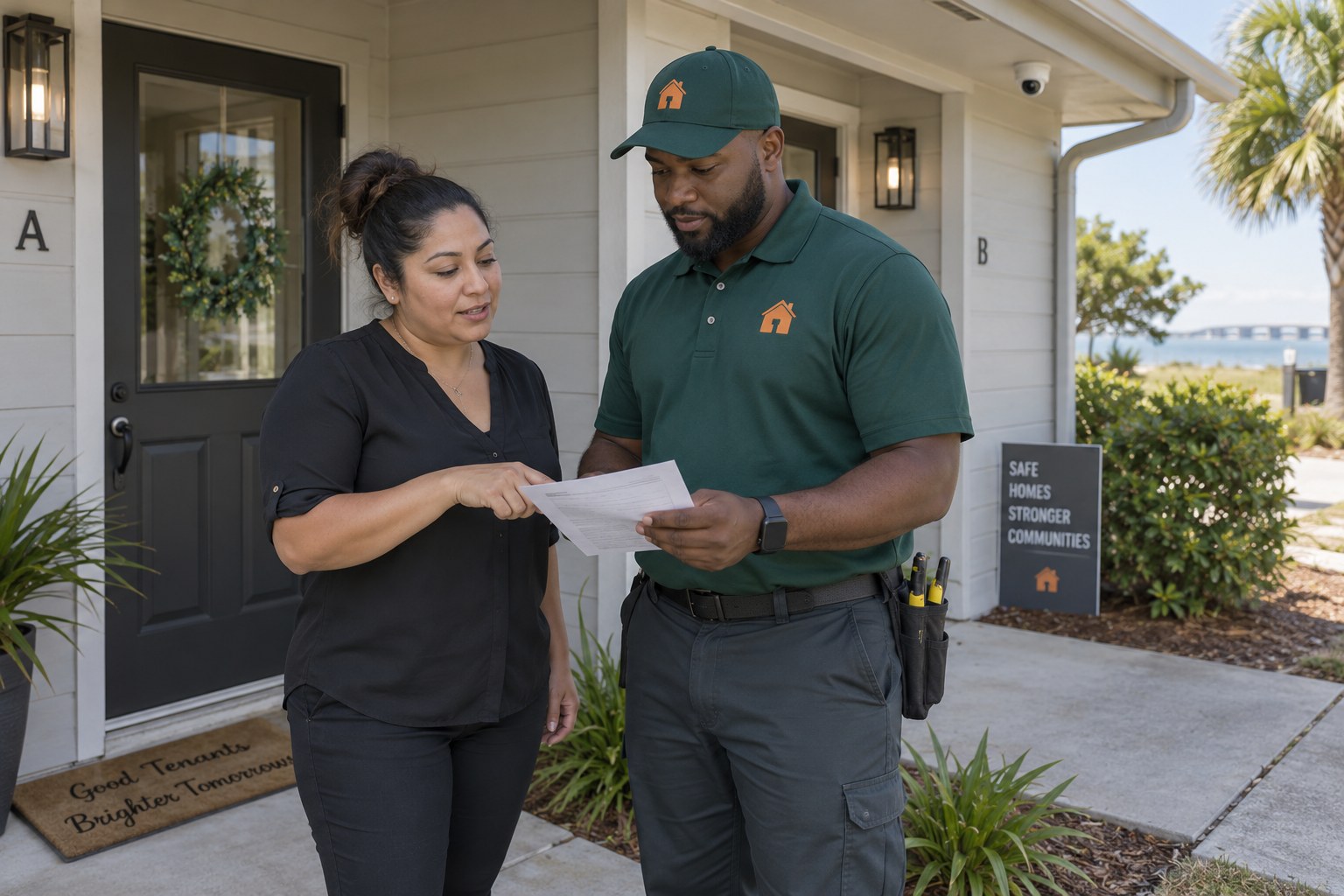
A corridor of renters, owners and everyone in between
Areas along a main road tend to collect a wide mix of housing: garden-style apartments, rows of townhomes, single-family streets behind them and the occasional older home on a larger lot. The people who live in each are as varied as the buildings. There are students from the nearby university and college, families connected to the naval air station, workers who commute across the region and retirees who have been in the same house for decades. Each group has different lock needs, and a good locksmith pays attention to those differences rather than offering one answer for all.
Renters usually want a fast and clear way to deal with a lockout, and a straightforward path to getting their locks rekeyed if they move into a unit with unknown keys. Owners care about durability and the look of their hardware. Landlords care about control and consistency across many doors. When you call, tell us which of these describes you, and we will explain what we can do and what we need from you.
We keep our explanations plain. If a repair is enough, we say so. If replacement is a better path, we explain why. The quote is given by phone from your description, so you can compare options without waiting for a technician to arrive and then feeling pressured on the doorstep.
For complicated jobs, a technician visits first and the service call charge is explained before dispatch. That keeps everything transparent.
Apartment doors: what a tenant can and cannot do
An apartment door belongs to the building, not the tenant. The management company or owner decides what lock is installed, who holds keys and whether a tenant may change anything. Many leases forbid replacing or rekeying a lock without written permission, and some require tenants to provide a copy of any new key. Reading your lease before calling a locksmith can save a dispute later.
That said, tenants have real needs. If you are locked out late in the evening and management is unreachable, a locksmith can help you in, provided we can confirm that you live there. We ask for identification showing the address, a lease or a similar document. If you cannot provide it, we discuss alternatives, such as having the management office confirm your residency by phone.
If you want better security, ask management first. Many will agree to a rekey, a better deadbolt or a door viewer, and some will pay for it. Portable measures that do not alter the door, such as a door stop alarm or a travel lock, can add comfort without breaching a lease.
When a manager authorizes our visit, we confirm authority with them, and we document what was done so the unit records stay accurate.
Move-in week: a security checklist for new residents
The first week in a new place is the best moment to deal with security because nothing is yet routine. Begin by counting the keys you received and testing each one on each lock. If any key fails or sticks, report it right away. Next, ask whether the locks were rekeyed after the previous resident left. If the answer is no or uncertain, request a rekey or arrange one with permission.
Check the deadbolt on the main door. It should throw smoothly and the bolt should extend about an inch into the frame. Look at the strike plate and the screws. If the screws look short, ask management to replace them with longer ones. Test any sliding door lock and any window latches that you can reach from the floor.
Decide how you will handle spare keys. A trusted friend or family member is better than a hiding spot outside. If you must have a lockbox, check the lease for rules about attaching things to the door or railing.
Finally, keep a list of the key numbers or markings in case you need to request copies from management. A little organization in week one prevents confusion later.

Roommates, partners and changing households
Shared housing is common near campuses and military installations, and it creates lock problems that are more social than mechanical. When a roommate leaves, they sometimes keep a key, intentionally or by accident. When a partner moves out, trust may not be intact. In both cases, a rekey is a quiet, practical solution.
If you are on the lease, you may have the right to ask for a rekey, and the landlord may agree. If you are the landlord, rekeying between occupants is a simple discipline that avoids disputes. We handle the technical side and ask for proof of authority before doing the work.
Safety is the top concern if a relationship has ended badly. Call the authorities if you feel threatened. When you are ready to secure the home, we can rekey or replace locks after confirming your authority over the property, and we will explain what we can do within the lease.
Interior bedroom locks are another point. Many leases allow a simple privacy lock on a bedroom door, and a keyed lock may be allowed with permission. We can install either, and we will tell you how emergency access works.
Working from home and the home office door
More people work from home than before, and many have turned a spare room into an office with equipment worth protecting. A laptop, a monitor, documents and sometimes client files all live in that room. If visitors, contractors or roommates come and go, a lock on the office door gives peace of mind.
A keyed entry set on the office door is the simplest answer. It looks like any other door hardware and can be keyed differently from the front door. For extra control, a keypad lever lets you change the code when circumstances change. Both are installed in a short visit.
Remember that an interior lock should not trap anyone in a fire. Choose a lock that can be opened from inside with one motion and does not need a key. We explain which models meet that need.
For documents, a small safe or a locking filing cabinet may be better than a room lock. We can rekey or replace cabinet locks, which are often overlooked, and match them to a single key.
Packages, doorbells and the front step
Busy corridors see a lot of deliveries. Packages left at the door are visible to anyone passing by, and thieves know it. Rather than relying on luck, think about how to get packages in sooner. A neighbor who is home during the day can accept them, a delivery locker at a store or a carrier hold reduces the exposure.
Doorbell cameras have become common, and they do help, though they cannot lock a door. The lock itself still matters. A camera that records someone opening a weak lock does not undo the loss. Treat cameras and locks as partners.
Make sure the door is always locked when you are away, even briefly. Many opportunistic entries happen through unlocked doors. If you tend to forget, a keypad that locks automatically after a set time is a good habit builder.
We can help choose and fit hardware that suits your door and your habits.
Lockouts at odd hours
Lockouts do not keep office hours. They happen after late shifts, after a night out or while taking out the trash in slippers. Before calling, look at the situation. Is another door unlocked? Does a neighbor or property manager have a key? Is a window accessible and safe to use? If not, call us.
Describe the door and lock. Tell us whether it is a deadbolt, whether it was locked with a key or just latched and whether anyone is inside. If a child or pet is inside, say so. We cannot promise an arrival time, but we will tell you honestly what we know about availability and quote by phone.
At the door, we verify that you live there. Identification with the address is ideal. If you have nothing, tell us what you do have, and we will discuss what is reasonable.
We use non-destructive methods first and only drill when necessary and with your agreement. Afterward, we test the lock and check that it still works properly.
Storm season in a busy area
Storm season affects renters and owners alike. Doors need to latch firmly, windows must be secured and everyone should know where the keys are. Take a few minutes to check each door in your unit or house. Close it gently, then lean on it. If it flexes or the latch rattles, ask for an adjustment.
In apartments, report problems to management early. A door that does not close properly is a safety issue as well as a security issue. Management may call us or another contractor, and we are happy to coordinate when authorized.
After a storm, look for swelling, water damage and debris in the keyway. Do not force a key that sticks. Call us and describe what you see.
If you evacuate, make sure someone trustworthy has access to your home or unit afterward.
Moving out and leaving things in order
When you move out, return every key to the landlord and keep a record of the handover. If you changed a lock with permission, give the landlord the new keys or restore the original hardware, as the lease requires. If you left a lockbox, remove it.
Landlords should rekey after move-out. It takes little time and gives the next resident a clean start. We can handle a whole building in one visit and label each set.
If a tenant has left without returning keys, the landlord should assume the keys are out there. A rekey closes that question.
We verify authority for every such job and keep our records tidy.
Master keys, keyed-alike sets and managing many doors
Anyone who manages more than a couple of doors eventually meets the question of key systems. There are three basic arrangements. In a keyed-different system, every lock has its own key, which gives the best separation and the most keys to carry. In a keyed-alike system, a group of locks shares one key, which is convenient and means a lost key affects every lock in the group. In a master key system, each lock has its own key and one master key opens them all.
Each has tradeoffs. Master systems are powerful but more complex, because they are built by layering pin combinations, and every extra layer slightly reduces the number of unique combinations. They should be designed carefully, documented and kept under tight control. Keyed-alike is simpler and fits a single household with several exterior doors, or a small landlord who wants one key for all common doors.
If you manage rental units, think about who needs which access. Maintenance staff may need all units, tenants need only their own and a shared laundry or mail room needs a key that everyone has. A well-planned system gives each person the least access they need.
We can talk through your layout by phone and suggest an approach. We confirm authority over the property, since a master system gives broad access, and we keep the key records accurate.
Door viewers, chains and other small tools of caution
Not every security improvement is a lock. A wide-angle door viewer lets you see who is outside without opening the door, and it costs little to install in a solid door. A door chain or limiter lets you open the door a few inches to speak to a visitor, though a chain is only as strong as its screws and the frame behind them, so it is a courtesy more than a barrier.
A strike plate with long screws and a reinforcing plate around the lock are sturdier measures. A door stop alarm, a small wedge with a sensor, is a portable option for renters who cannot alter the door. A bar that braces under the handle is another portable choice, popular for travel and temporary stays.
None of these replaces a good deadbolt, and none of them should make you feel invulnerable. They work as layers. The more layers a would-be intruder meets, the more likely they are to give up. A calm routine, such as checking who is at the door before opening, is just as valuable.
Describe your situation to us, including whether you rent, and we will suggest practical measures that fit your lease and your door.
Duplexes, townhomes and the shared wall that changes the lock conversation
Attached homes create a particular set of questions. When two units share a wall, you also share a certain amount of sound, and a locked door matters more because a neighbor can hear when someone fumbles at your entry. Start with the basics: confirm your front door and any back door have solid deadbolts, and that the frame is firm. In a duplex, ask whether the units share a back yard, a gate or a utility room, since those shared spaces can be accessed by people other than you.
Landlords and owners handle lock changes differently in attached housing. If you rent, ask the owner what is permitted before any work begins, and ask who holds spare keys. If you own a townhome in an association, check whether the community has rules about exterior hardware, door color or lock style. A technician can work within those limits, and may be able to match the existing finish so the front of the building keeps a uniform look from the street.
A good plan for attached homes also includes the small things. Keep your address visible so help can find you. Avoid leaving keys with a neighbor you do not know well. If you need to leave a spare for family, a small lockbox with a code you change regularly is more controlled than a hidden key. When you call us, tell us the layout of the building and where your unit sits, which helps a technician find the right door quickly and saves everyone time.
Understanding the quote and the service call charge
People sometimes worry that a locksmith call will end with a surprise bill at the door. The way to avoid that worry is to understand the process. First, you describe the problem on the phone. We ask about the door, the lock, the symptoms and the location, and we give you a quote based on that description. If the job matches the description, the quote holds.
Some jobs are not clear from a phone call. A door that will not close, a frame that appears damaged or a high security lock that does not match anything common may need a look before anyone can price the work. In those cases a technician visits, and the service call charge for that visit is explained before dispatch. You then decide whether you want us to come out for that assessment.
Once the technician has looked, the options and the quote for the work are explained. You can accept, decline or ask questions. If you decline, the service call charge you were told about is what applies. If you accept, the work proceeds.
We never ask you to agree to a price you have not heard. If anything changes during the work, the technician stops and explains before continuing. Clear communication is how we keep the process fair.
Questions people ask us
Do you serve the Nine Mile Road area?
Yes, our mobile service covers the Nine Mile Road area as part of the wider Pensacola region. Availability changes, so please call to confirm for your address. Describe the door and problem and we will quote by phone before dispatch.
Can a tenant rekey an apartment?
Only with permission, since most leases reserve lock changes for the landlord. We confirm authority before any rekey. If the landlord authorizes it, we handle the work and document it. A tenant can still call for a lockout after confirming residency.
What proof do you need to open my door?
Identification showing the address, a lease, a closing document or a utility bill usually works. If you have none immediately, tell us and we will discuss what is reasonable. We do not open doors without being satisfied that you have the right.
Can you add a lock to a home office door?
Yes. We can fit a keyed entry set or a keypad lever and key it separately from your front door. We choose a model that opens from inside with one motion so no one is trapped in an emergency.
How do you handle a landlord with many units?
We rekey each unit, test and label every key set, and can discuss master key options. We confirm authority with the owner or manager and quote by phone. For complicated buildings, a technician visits first and the service call charge is explained before dispatch.