
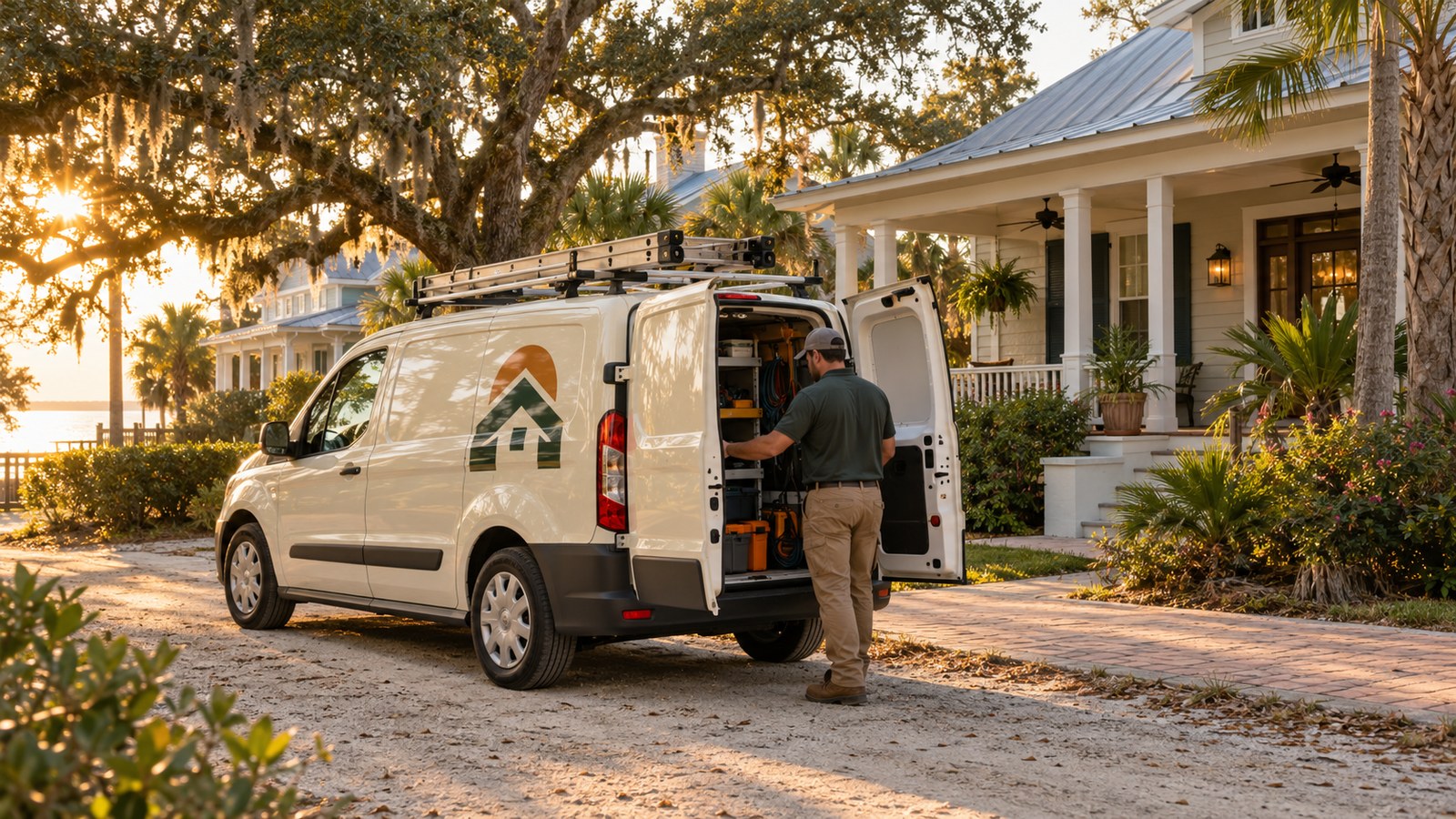
Why a mobile setup works for home jobs
Most household lock problems are small, repeatable jobs: a door that will not open, a key that snapped, a lock that needs rekeying after a move. A mobile locksmith builds a vehicle around those jobs so that the technician does not need to leave and fetch parts. The result is a visit that is more likely to end with a working lock instead of a promise to return.
The alternative, a shop-only model, would mean you drive to the work or wait for parts. For a family locked out of a house, or a tenant with a broken deadbolt on a Sunday evening, that is not practical. Mobile service moves the workshop to the problem, which is why the contents of the van matter so much.
A well stocked vehicle is also a sign of preparation. It shows that the technician expects the typical Gulf Coast home with its mix of older knob locks, modern deadbolts, sliding doors and storm doors. Everything below exists because those situations come up repeatedly.
Space is limited, so the stock is chosen carefully. A technician cannot carry every lock ever made, so the van holds the most common items in depth and relies on ordering for the rare ones. Understanding that tradeoff helps you set realistic expectations for what can be done on the spot.
Opening tools: picks, bypass tools and wedges
The tools most people imagine are lock picks, and a technician does carry a range of them. Picks and tension wrenches let a trained person manipulate the pins inside a standard cylinder without damaging it. Different cylinders respond to different tools, so a set might include dozens of shapes for small variations in the same basic job.
Alongside picks sit bypass tools, which exploit how a latch or door is built rather than the cylinder. Thin shims, air wedges and long reach tools can open a door that has been shut but not locked, or one with a simple latch. These methods are quick and leave the lock untouched, which is why they are often tried first.
Wedges deserve a special mention. Inflatable wedges gently create a small gap between the door and frame so that a tool can reach a handle or lever without bending anything. Used carefully, they protect paint, weatherstripping and the frame. Used carelessly, they can bend a door, which is why experience matters more than the tool.
None of these tools should be thought of as a trick. They are precision instruments, and the technician who uses them confirms ownership or authority first. A homeowner or tenant who can show they belong at the address benefits from the same careful, low damage methods.
Experience shows in the order of attempts. A careful technician starts with the least invasive method, reads how the lock responds, and only escalates when needed. That patience is what keeps most lockouts from turning into lock replacements, and it is the main reason a skilled hand matters more than the size of the tool bag.
Key cutting equipment on board
A portable key cutting machine is one of the most valuable items in the van. It lets the technician cut a new key on the spot from a lock's code, from an existing key, or by reading the pin heights of a cylinder after it is opened. For a lost key situation, that means working keys in your hand before the visit ends.
Alongside the machine, the van holds a large selection of key blanks. These are uncut keys in the common profiles used by household brands, along with a few less common ones. Matching the blank to the lock is part of the work, because the wrong profile will not enter the keyway, let alone turn the cylinder.
Technicians also carry files, deburring tools and calipers so that a freshly cut key operates smoothly. A key that is rough or slightly off size will wear the lock and may stick in humid weather. Taking a minute to finish a key properly is part of why a professional cut feels different from a rushed one.
Some keys cannot be cut in the field. High security keys with special profiles or restricted blanks may require ordering, and keys with tricky features may need extra steps. A good technician will tell you this honestly rather than promise something the van cannot deliver.
Blank keys are not all equal. Quality blanks cut cleanly and hold their shape through years of daily use, while cheap ones can flex or wear quickly. Technicians who care about their work stock blanks they trust, because a key that fails in a humid Pensacola summer is a callback they would rather avoid.
Rekeying kits and pin sets
Rekeying changes how a lock works so that old keys no longer fit and a new key does. It is a very common home job after a move, a breakup, a lost set of keys or a tenant turnover. To do it in a driveway, the technician needs a rekeying kit, which is mostly small, precise parts.
The core of the kit is a collection of pins in many sizes. Each size corresponds to a depth on the key, and by swapping them in the right order inside the cylinder, the technician makes the lock respond to a different key. Springs, retaining clips, plug followers and tweezers round out the set.
A plug follower is a small tube that holds the pins in place while the cylinder is removed and turned. Without it, the pins and springs would spill out. It is a humble tool, but it is the reason rekeying a dozen locks in one visit is practical rather than chaotic.
Because rekeying uses the lock's existing hardware, it is generally gentler on the budget and the door than replacement. The technician will tell you if the lock is too worn or cheaply made to rekey reliably, and the quote for any extra work is explained before that work starts.
One practical point for landlords and property managers: if you manage several doors, tell the dispatcher how many cylinders are involved and whether they share a brand. A technician who knows the count can bring enough pins and blanks to finish the whole set in one stop rather than splitting the work.
Replacement locks and hardware
Sometimes a lock cannot be saved. It might be broken, severely worn, corroded by salt air, or simply not secure enough for the home. For these jobs, the van stocks a range of replacement deadbolts, knobs and levers in common finishes and sizes, so that a worn lock can be swapped during the same visit.
Strike plates, latches and screws are equally important. A new deadbolt sitting in a weak strike plate secured with short screws is only partly an upgrade. Technicians carry longer screws and reinforced strike plates so that the new lock is anchored into the framing, not just the thin door jamb.
Some vans also carry smart and keypad deadbolts, though these tend to be fewer in number because they are more varied and more sensitive to the door preparation. The technician can explain whether a smart lock suits your door and your habits, and order a specific model if the one you want is not on board.
Coastal living adds its own wrinkle. Humid, salty air attacks bare metal, so finishes matter. Technicians who work near the Gulf are likely to stock hardware with finishes that resist corrosion, and they can explain which ones are better suited to doors that face open air.
Finish matters on the Gulf. Salt air and humidity pit cheap plating, leaving a lock that looks tired within a season or two. Ask the technician which finishes hold up on exposed entries, and consider choosing a tougher finish for doors that face the weather, even if the interior doors use something simpler.
Power tools and door repair supplies
A lock is only as good as the door around it. Many service calls involve door preparation, such as enlarging a bore, adjusting a latch hole or repairing a splintered edge. For this, the van carries a drill, hole saws, chisels, a router jig and sometimes a small saw, along with the bits to match.
Door repair supplies include wood filler, edge repair plates, shims and screws in many lengths. A kicked-in door, a warped older door or a failed strike area can often be repaired right on site. The technician will tell you whether a repair is practical or whether a carpenter should take over.
Technicians also carry lubricants made for locks, such as dry graphite or specialty sprays that do not attract grit. Used sparingly, they quiet a sticky cylinder and extend its life. Sprays that gum up the pins are avoided, and a good technician will explain why a general purpose oil is not ideal.
Safety gear completes the picture. Gloves, eye protection, drop cloths and a vacuum or brush for metal shavings keep your entryway tidy. Cleaning up after drilling or filing is part of the job, and a careful technician leaves a doorstep cleaner than they found it.
Door prep tools are most visible when a lock goes into a door that was drilled for something different. Matching the bore and backset takes patience, and a clean result looks as if the lock was always there. Rushed work leaves gaps, rattles and a latch that never feels quite right.
Specialty tools for unusual situations
Beyond the basics, a mobile locksmith carries tools for less common problems. Broken key extractors pull the remains of a snapped key out of a cylinder. Thin hooked tools reach into a mailbox or a gap in a door. Magnifiers and small lights help read tiny markings on lock bodies.
Security upgrades have their own kit. Door reinforcement plates, longer strike screws and door jamb shields are used on doors that have been kicked or are prone to flex. Patio and sliding door tools include replacement pins, secondary bars and track stops that help secure the glass doors common in Florida homes.
Some technicians carry a small selection of mailbox locks and cabinet locks, since these tend to come up on the same visit. A tenant may mention a stuck mailbox key while the technician is already working on the front door, and having a replacement lock on board turns a second appointment into a quick add on.
Specialty items are not always present on every van, and no technician carries everything. When a job needs something unusual, an honest locksmith says so, explains what has to be ordered and when it is likely to arrive, and does not pretend a quick fix exists when it does not.
Specialty tools also include inspection items, such as small scopes and mirrors that let a technician see into a stuck lock or a hollow door. Looking before acting avoids guesses, and guesses are what damage hardware. A technician who asks to look closely at your door is doing the job well.
Supplies for paperwork, safety and customer care
Not everything in the van is metal. A professional also carries a means of recording the job: receipt paper or a digital device, a way to take a card payment, and a notebook for details like lock brands and key codes. Those records help later if you need a duplicate key or want to remember what was changed.
Identification checking is another part of the process. Technicians may carry a form to note the proof of residence they were shown, and they may photograph a lease or a utility bill with your permission. This is not bureaucracy for its own sake. It protects you from someone else using the same service on your door.
Customer care items are small but telling: shoe covers for entering a clean home, floor protection when drilling, and a flashlight for dim porches. A technician who treats your entry with this much care is likely to treat the lock the same way.
Communication matters too. A well run service explains the plan, the quote and any change before work begins. If a job is complicated, a technician visits and the service call charge is explained before dispatch. You should never be surprised by what you are told after the work has started.
A practical note on payment and receipts: the equipment that records the job also protects you. Ask for a receipt showing the work performed, and keep it with your home records alongside appliance manuals and the paperwork for your hurricane preparations.
What you can do to make the visit smoother
You can help the technician help you. Before the visit, find the make of your existing lock if you can, note how many doors are involved, and gather any keys that still work. A photo of the lock or door sent while describing the problem can help the dispatcher prepare the right parts.
Have your proof of residence ready: a lease, a utility bill or identification with the address. If you are renting and the job goes beyond opening the door, have your landlord's contact information close by in case permission is needed. A little preparation prevents a lot of waiting.
Clear the area around the door so that the technician can work comfortably. Move planters, doormats and pets out of the way. If the lock is in a covered entry, a bit of light is helpful. Small details make the work faster and the result cleaner.
Finally, call and confirm availability for your area before you count on a particular time. Availability changes through the day, and a short call lets you know what is realistic. A technician who sets honest expectations is a better partner than one who promises everything.
Questions people ask us
Can a mobile locksmith make a new key at my home?
In many cases, yes. Technicians carry key cutting equipment and a stock of common blanks, so a standard house key can usually be cut on site. Unusual or restricted keys may need to be ordered. The technician will tell you honestly which situation applies before any work begins.
Will the locksmith bring replacement locks if mine is broken?
Most vans stock common deadbolts and knobs in popular finishes, along with strike plates and screws. If your lock is an unusual style or finish, it may need to be ordered. Call ahead, describe the lock, and the dispatcher can tell you what is likely on board.
Do I need to be home for the work?
Someone with authority over the property needs to be present or reachable, because the locksmith checks ownership or authority before opening, rekeying or making keys. For rentals, landlord permission may also be needed for changes beyond opening the door. Discuss the arrangement when you call.
Why would a technician need to come back a second time?
Usually because a part has to be ordered, such as a specific high security cylinder, a special key blank or a particular finish. A complicated job may also need a technician visit and an explained service call charge before dispatch. Your locksmith should explain this clearly in advance.
Do all locksmith vans carry the same tools?
No. Stock and equipment vary by technician and by the type of work they focus on. A van aimed at home jobs will emphasize residential deadbolts, rekeying kits and door repair supplies. Ask what a service typically carries and call to confirm availability before relying on it.