
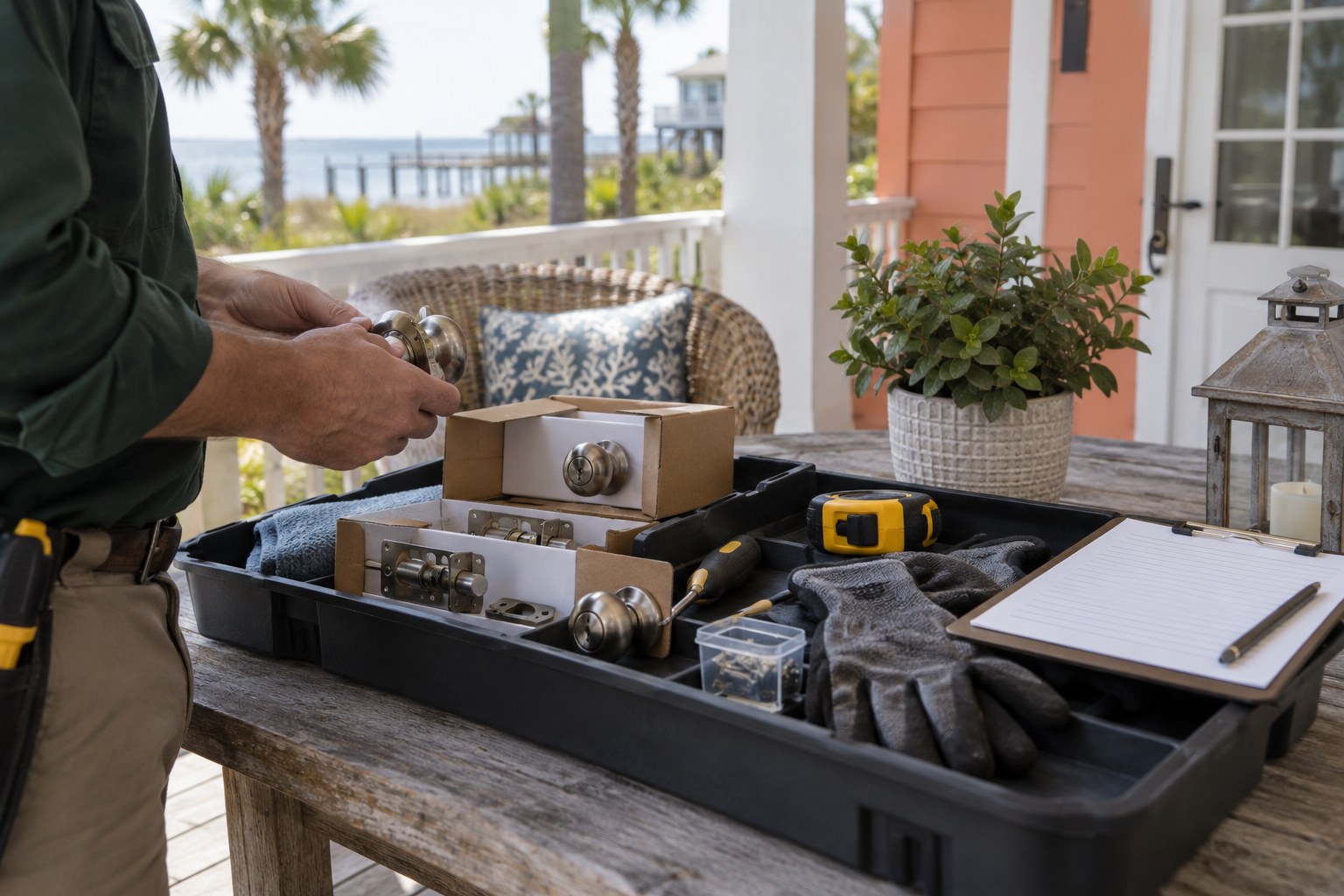
How many people used keys during the build
During construction, homes are accessed by a long list of trades. Many builders use a construction key or a temporary core that opens every door in a development, so crews can work without carrying dozens of keys. After the sale, the permanent keys are given to you, but the construction keys may still exist, and the cylinders may still respond to them.
Even when a builder is careful, keys get copied. A subcontractor might have a key cut for convenience, a realtor might keep a copy for showings, and a follow-up or service department might keep a record. None of this is necessarily bad, but you cannot know who has what, and neither can the builder.
The simplest and most reliable response is to rekey the locks after closing. This changes the internal pins so that every earlier key stops working. It takes little time and gives you full control from the first night in the house.
Rekeying versus replacing
Rekeying keeps the existing hardware and changes only the pins and the key. It is the economical way to cancel old keys. If the locks are decent and you like the look of them, this is usually enough. A technician can rekey all the exterior doors to match, so one key opens everything.
Replacing is a bigger step. It makes sense when the existing hardware is poor, damaged, or not to your taste. Builders often install basic, lower cost locks to keep budgets in line. A new lock set can improve security, durability and the appearance of the entry.
Many owners do a mix: rekey the garage and back doors and replace the front door set with a better one. A technician can look at what is installed and give an honest view of what is worth keeping. There is no need to replace good hardware just because the house is new.
What builder grade hardware means
Builder grade usually means hardware chosen for price rather than longevity. Common features include thin metal parts, short bolts, lightweight strike plates and short screws that barely reach the frame. The locks work well enough on day one, and they may wear out sooner than a higher grade product.
Grades are often described with a classification. Residential locks are commonly graded from basic to higher, with differences in how many cycles they are tested to and how much force they resist. A higher grade lock tends to cost more and feel heavier. A technician can read the markings and tell you where your locks stand.
This does not make builder grade hardware dangerous. It means it was built to a budget. If you want better resistance to force, smoother operation and longer life, upgrading the main entry doors is a sensible investment, especially in a damp climate where cheap finishes wear quickly.
- Short screws in strike plates
- Thin, lightweight metal parts
- Finishes that tarnish in humid air
- Basic deadbolts with short bolts
Strike plates, door jambs and framing in a fresh build
A lock is only as strong as the frame that holds it. In many new homes, strike plates are fastened with short screws into the soft door jamb. A hard kick can split the frame at that point. Replacing the plate with a heavy duty strike and installing three inch screws that reach the wall stud makes a big difference.
The same applies to the hinge side. Long screws in at least one hinge anchor the door to the framing. This is a minor job that costs little and adds real resistance to force. A technician can do it during a rekey visit.
Check the frame for gaps, shrinkage or poor fit. New wood dries and shifts during the first year, and a door that fit well in the builder's walkthrough may rub or gap later. Adjusting the strike and hinges keeps the lock working smoothly.
Doors, glass and weak points
New homes often have doors with sidelights, glass panels or transoms that look attractive and create weak points. Glass near a lock can be broken so a hand can reach the thumb turn. If your door has glass near the deadbolt, consider a keyed lock inside, security film, or laminated glass. A technician can discuss what suits your layout.
Garage entry doors are another weak spot. They are sometimes hollow and lightly hung. A solid core door and a good deadbolt are worth considering. Garage doors themselves have emergency releases that can be hooked from outside, and a small fix can reduce that risk.
Sliding glass doors should be checked too. Builders often install basic latches. A secondary lock, a bar in the track or a pin can add resistance. These items are inexpensive and easy to install.
Smart locks and wiring in new homes
New homes are often built with smart home features in mind. Pre-wired doors, strong Wi-Fi coverage and standard door preparations make installing a smart lock simpler. If you plan to add one, tell the technician so the rekey or installation can be coordinated.
Remember that a smart lock sits on top of a good mechanical lock. The electronics add convenience, but the deadbolt, door and frame still do the physical work. Choose a model with a solid mechanical backup, and check how it handles power and network failures.
Think about codes for the new household: family members, helpers, and the people who may come to deliver or repair. Set them up from the start, and keep a record. A clean beginning is the best time to build good habits.
Keys the builder may still hold
Ask the builder for a list of keys given to you and any that remain with them. Some builders keep a master set for follow-up visits. If they do, ask how those keys are stored and who can use them. A reputable builder will answer plainly.
If you want to allow follow-up access, you can provide a temporary key or a lockbox code at the time of service, rather than leaving a permanent key. Change the arrangement afterward. This keeps control with you.
Even with answers, rekeying remains the safest step. It gives you certainty rather than trust alone. You do not need to be suspicious of anyone; it is simply a good habit when taking over a property.
Humidity, salt and new finishes
New hardware faces the same coastal conditions as old. Cheap finishes can pit and tarnish within a year or two. Look for hardware with finishes rated for exterior use in humid environments, such as PVD coatings or solid brass. Stainless steel is excellent near the water.
New wood doors also react to humidity. They swell, shrink and warp in the first seasons. Make sure the door is sealed on all edges, including the top and bottom, to limit moisture. A door that swells may bind the lock, and a technician can adjust the alignment.
Establish a simple maintenance routine from the start. A touch of dry lubricant twice a year and a check of screws keeps new hardware working. It is much easier to maintain good locks than to repair neglected ones.
Rentals and investor-owned new builds
Investors who buy new homes to rent face the same issue and a few more. Each tenant turnover is a chance for keys to remain in circulation. Rekeying between tenants is a standard practice. A new build with a consistent lock system makes this easy.
Keypad and smart locks can simplify turnover, since codes can be changed without cutting keys. They need batteries and maintenance, but for rental properties, the flexibility is often worth it. A technician can help set up a system that suits your needs.
Landlords should keep records of keys and codes, and tenants should be told clearly what is allowed. Lease terms normally require approval for lock changes. A locksmith will confirm authority before working.
Arranging a new construction lock check
When you call, tell us the type of home, how many exterior doors, what locks are installed, and whether you have received all your keys. Mention any special requirements such as a smart lock or keyed alike doors. We confirm that you own the home or have authority before work begins.
Quotes are given by phone. If the job is complicated, a technician visits and the service call charge is explained before dispatch. Please call to confirm availability. A good time to do this is right after closing and before moving day.
During the visit, the technician checks each lock, the strike plates and the frames, rekeys what you choose, and replaces what you decide to upgrade. You leave with a clear set of keys, a record of the work, and the confidence that only you control the house.
The first-week checklist for a new owner
The first week in a new home is busy, and the locks are easy to forget. A short checklist keeps them on the list. Count the keys you received and make sure each works in its lock. Test every exterior door, from both sides, in daylight and at night. Check that deadbolts extend fully and that doors close without rubbing.
Next, arrange rekeying or replacement. Doing it before you move in, while the house is empty, is the easiest time. Decide on your key plan: one key for all exterior doors, or separate keys for the garage and shed. Make spares and decide where they will be kept and who will hold them.
Finally, walk around the outside. Look at gates, sheds, mailbox locks and garage doors. Check that windows latch properly and that sliders have a working lock. Write a short list of anything that needs attention. The effort of a few hours at the start gives you months of calm.
Garage doors and remotes on a new build
A new home usually comes with garage door openers and remotes, but you do not know how many remotes exist or who has them. Reprogramming the opener to new codes cancels old remotes. This takes minutes and is a standard step in taking over a home. Keypad codes on the garage exterior should also be changed from the factory or builder default.
Check the emergency release cord on the garage door. If it can be reached through a gap at the top of the door, a thief could pull it from outside. Shielding the release or securing the gap is a simple measure. A locksmith can advise on garage entry hardware, while the opener itself may be a job for a garage door company.
Inside, the door between the garage and the house deserves a solid lock. This door is often overlooked because it feels like an interior door, yet it is the entrance if the garage is breached. Make sure it has a deadbolt, a reinforced strike plate and a door that fits well.
Planning for the first hurricane season in a new home
A new home near the Gulf brings new routines. Before your first season, test your locks, make sure you know how to operate every door and window, and set up spare keys with someone outside the area. Doors and windows in new builds are often rated for wind, and their hardware should be maintained so they close and latch fully.
If you evacuate, you may leave the house closed for days. Check that all locks are engaged and that any keypad or smart lock has fresh batteries. Take your key set with you, and let a trusted person know how to access the house if they need to. After a storm, inspect the doors and frames before relying on them.
New construction in damp climates can show swelling and movement in doors during the first year. Do not force a sticking door. Call to have it adjusted before the lock or frame is damaged. Small fixes early prevent bigger repairs later.
Questions worth asking your builder
A good builder will not mind questions about keys and locks. Ask which brand and model of locks were installed, and whether the cylinders were keyed at the factory, rekeyed on site, or fitted with temporary construction cores. Ask how many keys were cut, and where the others are. The answers tell you how urgent a rekey is, though most owners rekey regardless.
Ask also about the doors themselves: are the exterior doors solid core, steel or fiberglass, and how are the frames reinforced? Do the sliding doors have secondary locks? Are the garage entry doors rated for exterior use? You are not looking for faults so much as a clear picture of what you own, so you can plan upgrades sensibly.
Keep the paperwork you receive: hardware schedules, key tags and any instructions for smart devices. File them with your closing documents. If you later hire a locksmith, these details save time and help the technician bring the right parts to the first visit.
Reading the paperwork that comes with a new home before you rekey
A new home comes with a stack of documents, and some of them matter for locks. Look through the closing folder for any hardware information: manufacturer names, model numbers, key codes and installation notes. Some builders include a key code card for the locks, which is convenient but also means that anyone who handled that card could order keys. Knowing whether such a record exists helps you decide how to proceed, and a technician can often tell from the brand which type of cylinder is installed.
Also check the information about doors and windows. Care notes and builder instructions from the builder may describe how to adjust doors, what to expect as the house settles and what maintenance is suggested. Settling is normal in the first year, and doors can shift slightly as the structure adjusts. A technician can adjust strike plates and hinges to compensate, and that is a routine part of a lock check rather than a sign of a defect.
Finally, make a simple inventory. List each exterior door, its lock type, the number of keys you received and any extra openers or fobs. Compare that with what you expected to receive. If keys or remotes are missing, ask the builder or sales office where they went. Once you know what you have, schedule the rekey or hardware changes that suit your plan. Having a clear list at the start makes the visit efficient and helps you check each item off as it is completed.
Mailboxes, side gates and the rest of the property
A new build usually includes a mailbox, side gates, a fence and perhaps a shed or a pool enclosure, each with its own lock or latch. Builders often use basic hardware on all of them, and keys for these items are frequently the ones that end up scattered. Ask which locks exist on the property beyond the main doors, and collect every key.
Mailbox locks in a neighborhood are often keyed by the postal service or the development, and you may need to follow their process for changes. Gate latches and pool enclosure locks are within our work, and they benefit from corrosion resistant hardware near the coast. Plan for these early, before the first rainy season shows how the cheap finishes hold up.
Make a list of every lock on the property and note its key. Decide which ones should be keyed alike to your house key and which should stay separate. A short list at move-in time becomes a valuable reference later, when a key is lost or a lock fails.
Questions people ask us
Do I really need to rekey a brand new home?
It is strongly recommended. Many people used keys during construction, and copies may exist. Rekeying cancels every earlier key, and it is quick and economical compared with the uncertainty of not knowing.
What is the difference between rekeying and replacing locks?
Rekeying changes the pins inside the existing lock so old keys no longer work. Replacing installs new hardware. Rekey if the locks are decent; replace if they are poor quality, damaged or you want a better lock.
Is builder grade hardware unsafe?
Not unsafe, but built to a budget. Short screws, thin parts and basic finishes are typical. Upgrading the main entry hardware and reinforcing strike plates is a sensible improvement.
Should I let the builder keep a key for follow-up work?
It is better to provide access when needed with a temporary key or code. A permanent key outside your control reduces your security. Ask the builder how any retained keys are stored.
How do I get a quote?
Call us with the number of doors, the locks you have and your goals. Quotes are given by phone. If the job is complicated, a technician visits and the service call charge is explained before dispatch. Please call to confirm availability.