
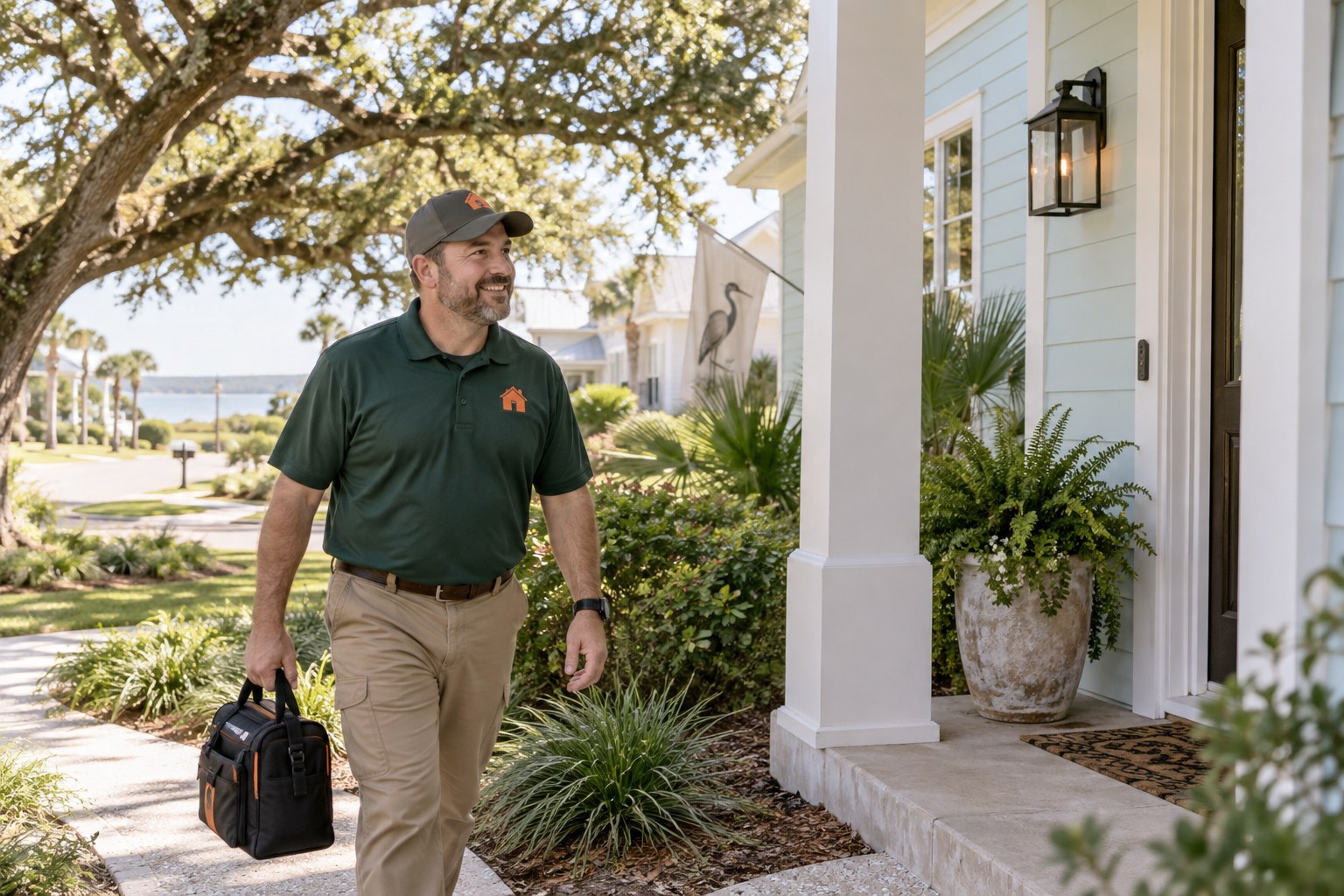
Two weeks before: decide who can enter
Start by deciding who, if anyone, will have access while you are gone. A neighbor to collect mail, a friend to water plants, a family member to check on things, a pet sitter. Each person is a trust decision, and fewer is better. Choose people who are reliable, who live nearby, and who understand what normal looks like at your house.
Decide how each person gets in. Handing over your personal house key is the simplest option but the hardest to undo. A spare key marked and returned later is better. If you have a keypad lock, a temporary code that you delete when you return is cleaner still. Never hide a key outside, even for a trusted helper.
If you are unsure how many copies of your keys exist, now is a good time to rekey. A technician changes the inside of the locks so old keys stop working, and you hand out only the new ones. The locksmith will confirm that you own the home or have the owner's permission before starting, and the job often takes less time than people expect.
Write a short instruction sheet for your helper. List what you want done and how often, which doors to check, where the light switches are, and whom to call if something looks wrong. Keep it on a single page so it actually gets read.
Military families and frequent travelers around Pensacola often have a standing arrangement for exactly this reason. If deployments or training trips are part of your routine, keep a ready folder with your helper contacts, instruction sheet, key list, and the names of local trades. Having it prepared in advance turns a stressful departure into a calm checklist, and it lets a spouse or family member act on your behalf without guesswork.
One week before: test everything
Spend an evening walking through every door and window. Lock each deadbolt and make sure the bolt extends fully. Close and latch every window. Check sliding doors for their bars or pins. Fix what you find now, not the night before you leave, when time is short and help may be hard to schedule.
Look for the things that fail quietly. A deadbolt that needs a shoulder to turn, a window latch that has stopped catching, a keypad lock with a faint display, or a door that rubs the frame. Humidity on the Gulf Coast makes these problems common, and a minor annoyance during a normal week can become a real vulnerability during a long absence.
Replace batteries in keypad locks, smoke alarms, and any sensors. Fresh batteries last far longer than you might guess, and a dead lock battery on day ten could leave your helper stuck outside. Keep a mechanical key as backup in case the electronics fail, and make sure your helper knows how to use it.
If you have an alarm system, confirm that the codes are current and the monitoring contact list is right. Tell the provider your travel dates if that is part of their process. Check that the panel shows no faults, and that every sensor, including those on the garage door, reports in.
While you are testing, also look at the frame around each exterior door. Hairline cracks near the strike plate, loose hinge screws, and gaps along the latch edge are all signs of a door that has moved. Tighten what you can with a screwdriver and longer screws where the old ones have stripped. If the frame is split, ask a technician to reinforce it before you go.
The few days before: make the house look lived in
An empty house gives itself away through small signals. Mail piling up, newspapers on the driveway, the same curtains drawn for days, and a dark house every night. Break these patterns. Stop or redirect deliveries, ask a neighbor to bring in packages, and set lights on timers that vary slightly.
Use timers on a couple of lamps in different rooms, and consider a device that turns a radio or a television on at times. Avoid timers that switch every light at the exact same moment each night, since that looks mechanical. Motion-sensing lights outside add another layer. They are especially helpful at doors that face away from the street.
Keep the yard tidy. Arrange for lawn care if you will be away over a growing season, which on the Gulf Coast means almost the whole year. A cut lawn and a clear driveway say that someone is looking after the property. A neighbor parking in your driveway now and then also helps.
Think about what is visible from outside. Close blinds partially rather than fully, so the house does not look shut up, but make sure valuables are not in view. Move expensive items away from windows and out of sight of sliding doors.
Decide what to do about the garage if you have a car staying behind. A vehicle in a closed garage looks different from one parked outside, and either choice sends a message. Whichever you choose, lock the car, take the keys inside, and remove anything of value from view. Keys left in a vehicle are among the most common ways a house and a car are lost together.

The last day: lock up in a set order
On departure day, follow a fixed sequence so nothing gets missed. A good order starts at the back of the house and ends at the front door. Check the windows first, then sliding doors, then the garage entry, then the side doors, then the front. Walking the same path each time builds a habit.
At each door, lock the deadbolt, not just the knob. Pull the door to confirm the bolt holds. Place bars or pins in sliding doors. Check that pet doors are locked or blocked. If the house has a garage, close the overhead door and confirm it is down, using the wall button and your eyes. Do not rely on the remote alone.
Take the garage remote with you or leave it somewhere safe. Do not leave it in a car parked at the airport, where it could be taken along with the car. Put spare keys where you cannot lose them, not under a flowerpot. If anyone is picking you up, ask them to wait outside rather than coming in.
Photograph the house as you leave. A quick set of photos of each room shows the state of the home on the day you left, which is helpful if there is ever an insurance question. Store them online, not only on the phone you are carrying.
While you are away: communication and discretion
Be careful about what you share. Posting vacation photos in real time tells the world your house is empty. Wait until you return to share, or limit posts to close contacts. The same goes for voicemail greetings and out-of-office emails that announce your dates and city.
Keep a simple way to be reached. Give your helper your travel dates, your phone number, and an alternate contact. Agree on how often you will check in. A short message every few days is enough to keep the connection alive. If your helper sees a problem, they should know what to do and whom to call.
If you have a smart lock or cameras, check them occasionally. Make sure the device is online, the batteries are fine, and nothing unusual has happened. Do not rely on cameras alone, since a determined person may avoid them. They are a tool, not a replacement for lock quality and neighbors who care.
Prepare for the unexpected. A storm, a power outage, or a burst pipe may require someone to enter. Make sure your helper can reach a plumber or electrician and knows how to shut off the water and power. A technician can help if a lock fails, though the person requesting entry will need to show they live there or have the owner's authorization.
Ask your helper to vary the time of their visits. A predictable pattern is easy for an observer to learn. Also remind them to avoid leaving notes on the door or announcing on social media that the house is being watched. Quiet, regular, unremarkable activity is exactly what a house needs when its owners are far away.
Hurricane season and long absences
On the Gulf Coast, a long trip between June and November must account for storms. Before you go, decide what you would do if a storm threatened. Who would install shutters, secure outdoor furniture, and check on the house afterward? Leave clear instructions and make sure that person can get in.
Door hardware matters in storm conditions. Wind pressure tests every door and latch. Check that deadbolts are tight, hinges are solid, and weatherstripping is intact. A door with loose screws or a worn strike plate may give way under heavy wind. Fix these items before you leave, not after the first warning.
After a storm, someone should inspect the house, with attention to doors, locks, and windows. Water, salt, and wind-driven debris can damage hardware. Test each lock. If a lock feels stiff, sounds gritty, or does not turn smoothly, have it checked. Replace anything that has been submerged.
Keep your insurance and contact information in a place where a helper can find it. Know your policy's requirements about securing the home and reporting damage. A well-documented, well-secured house is easier to recover after bad weather.
Consider which doors would be hardest to secure in a hurry. A heavy swollen door that needs a shoulder to close, or a sliding door with a worn track, is the one that will slow you down when a storm is approaching. Having those repaired well before the season starts is far easier than doing it with a warning on the radio and a line at the hardware store.
Pets, plants, and household routines
Pets are a common reason for helpers to enter. A sitter who visits twice a day must be able to enter and leave without leaving the door unlocked. Show them how the lock works, and watch them use it once. A deadbolt that sticks in humid weather is a recipe for a door left unlatched.
If you rely on a pet door, think about what comes in as well as what goes out. A pet door large enough for a person is a security weak point. Lock it from inside while you are away, and board your pets or have them stay inside with a sitter if possible.
Plants and irrigation systems raise their own issues. A person watering the garden may leave side gates open or move furniture that provides a step to a window. Give clear instructions on which doors to use and which to keep locked. Ask them to lock behind them each visit.
Think about the fridge, the trash, and the thermostat. A house with spoiled food or a malfunctioning air conditioner suffers quickly in Florida humidity. A little routine maintenance before leaving prevents trouble that might draw a visit by someone who does not know your home well.
Keys on your trip
Keep your keys safe while traveling. A key ring with your house address on a tag is a serious problem if lost. Remove tags that show your name and address, and take only the keys you need. Leave the rest at home in a secure place, or with a trusted person.
If you carry a spare, keep it separate from the main set. Do not store keys in a bag left unattended or in a hotel room safe with the door open. If you rent a car, never leave your house key on the same ring as the rental key that gets handed to a valet.
If you lose a key on the trip, tell your helper right away. Consider whether the lost key could be linked to your address. If there is any chance of that, ask for a rekey on your return. Many people feel uneasy until they do it, and the work is straightforward.
For electronic lock owners, remember that your phone may be your key. A lost phone becomes a lost key. Know how to remove it from the lock's account remotely, and keep a recovery plan that does not depend on the phone you may have lost.
Finally, think about what happens if you are delayed. A trip that stretches by a week should not leave your helper guessing. Tell them to expect that dates can change, and agree on a simple message you will send if they do. Clear communication keeps the arrangement steady and avoids a helper entering the house at an unexpected moment.
Handing the house to a caretaker without handing over everything
If someone will be checking on your home while you are away, the arrangement works best when it is specific. Decide exactly what you want them to do: collect mail, water plants, turn lights on and off, look inside once a week. Then give them only the access that task needs. A person who only needs to check the porch does not need a key to the safe room, and a person who comes twice a week does not need a permanent code.
Put the details in writing. List which door they should use, which light to switch on, where the mail goes and who to call if something looks wrong. Include a phone number for a local tradesperson, and make sure your caretaker knows the house rules, such as which doors stay locked and how the alarm or keypad behaves. A short checklist prevents guesswork and prevents someone from propping a door open while carrying bags.
Think about what happens when the trip ends. If you gave out a key, collect it. If you set a temporary code, delete it the day you return and test that the deletion worked. If the caretaker made a copy, you want to know. For a longer absence, you might consider having the locks rekeyed on your return, particularly if several people had access. That gives you a clean slate, with a known list of key holders and no leftover unknowns.
The day you come home
Approach the house with attention. Before you go in, look at the doors and windows. Is anything broken, open, or out of place? Do the locks work as usual? If something looks wrong, do not enter. Call a neighbor or the authorities and wait for help. Your safety comes first.
If all looks well, enter and walk through the house. Check each room, then each door and window. Run the faucets and test the lights. Look at the locks and note any that feel different. After a long trip, humidity and heat may have changed how things fit.
Collect any keys or codes you issued, and delete temporary codes from keypad locks. Thank your helper and ask what they noticed. Update your key list. If anything seems off, or if a key is missing, call us and describe the situation. Quotes are given by phone, and call us to confirm availability.
For more complicated problems, a technician visits and the service call charge is explained before dispatch. Before any rekey or lock change, the locksmith confirms that you own the home or have the owner's permission.
Questions people ask us
Should I rekey before a long trip?
If you are unsure who holds copies of your keys, yes. Rekeying makes old keys stop working before you hand a helper access. The locksmith confirms ownership or authority before starting, and you can arrange the visit before you leave.
Is it safe to leave a spare key with a neighbor?
It can be, if you trust the person and the arrangement is short term. Keep a note of who has the key, avoid hiding keys outside, and consider a temporary code on a keypad lock instead. Ask for the key back when you return.
How do I make the house look lived in?
Use varied lamp timers, stop mail and package buildup, keep the yard tidy, and have a neighbor park in the driveway now and then. Avoid posting travel plans publicly, and partly close blinds so valuables are not visible.
What should I check on a lock before leaving?
Test each deadbolt, window latch, and sliding door bar. Replace batteries in keypad locks, and keep a mechanical backup key. Humid weather can swell doors, so fix any that stick before you go.
What if I find something wrong when I return?
Do not enter if a door is open or damaged. Call a neighbor or authorities and wait for help. Once the home is safe, call us to repair or replace damaged locks. A technician confirms ownership or authority first.