
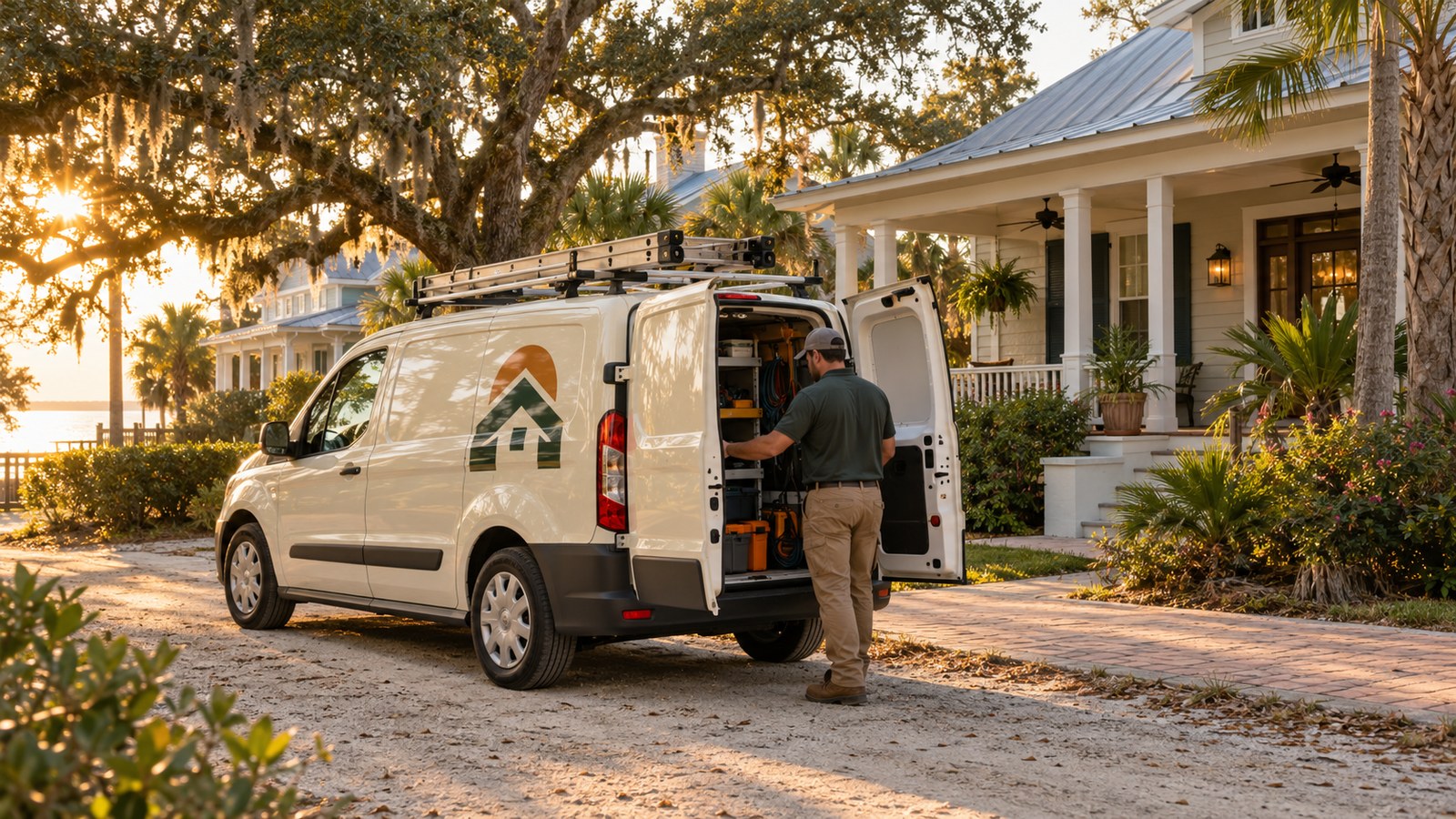
A small town, a long drive and honest scheduling
Distance is simply a fact here. Jay sits well north of the main Pensacola area, and a technician must travel a good way to reach it. That means we cannot promise that someone will arrive within a particular time, and we say so openly. When you call, we talk through what is possible and confirm availability before anything is arranged.
For the household, this makes planning more valuable. A lock that is working poorly today can be dealt with on a calm day, rather than at night when you are locked out and the road is dark. A single visit that addresses several doors or buildings is more practical than repeated trips for small things.
If you do face an urgent situation, call right away and describe it clearly. Tell us where you are, who is with you and what lock is involved. We will explain what we can do and when, and whether it makes sense to arrange help locally in the meantime.
Farm and rural properties
Many properties around Jay are working land, with houses, barns, equipment sheds and fields. The house is only one of many doors, and often the least valuable thing on the property. Tractors, tools, feed and supplies sit in buildings far from the road, and their locks deserve as much thought as the front door.
The first job is a walk around. List every building and gate, and note what each protects. A technician looking at the same list can suggest where a better hasp, a stronger padlock or a new lock would make a difference. Most improvements are modest and affordable in effort.
A common plan keys the house on one pattern, the barns and sheds on another, and gates on a third. If a worker or helper needs access to one group, you give them only that key. If a key goes missing, only one group needs attention.
Barn doors, sliding doors and large openings
Barns and equipment sheds often have large sliding or swinging doors. These cannot take a standard deadbolt, and a simple padlock on a light hasp is the usual arrangement. Such a setup is easy to defeat with a pry bar or bolt cutters.
Better options include a heavy hasp bolted through the door, a drop bar across the inside, or a surface-mounted lock designed for heavy doors. Choose padlocks with shrouded shackles and weather-resistant bodies. A technician can help you decide based on the door and its use.
Think about how often you use the door. A door opened many times daily needs a lock that is quick, such as a keypad. A door opened weekly can use a more cumbersome but stronger arrangement. Match the lock to the habit.
Gates and long driveways
Many rural homes have a gate at the end of the drive. It deters casual visitors, keeps livestock in and signals that the property is private. The lock on the gate is exposed to weather and frequent use, so it wears out faster than most.
Use a latch that cannot be lifted by an animal or a stranger, and a lock with a shrouded body. A keypad or combination lock avoids keys and suits households with many visitors. Check that the gate swings freely and the latch aligns, because sagging gates are a common cause of failure.
Emergency access matters too. Fire and medical crews need to reach your home. Consider a lockbox with a code, or leave the gate unlatched when someone is home. Discuss with your local responders what works for them.
House doors in older rural homes
Older farmhouses and cottages have wood doors that have seen decades of weather. Their hardware ranges from original brass to modern replacements. The best approach is to keep what works and improve what does not.
A modern deadbolt added discreetly, a long-screw strike plate and tightened hinges transform an old door. The technician bores carefully to avoid splitting aged wood and sets the strike into solid framing.
If a lock is a mortise or rim type, take photographs and describe them when you call. Parts for older locks may take time to find, and a clear description lets us prepare.
Rekeying after a change in ownership or household
Rural properties often pass between family members, or are sold to newcomers. The keys to the old locks may be in many hands, from relatives to neighbors to workers. A rekey ends the uncertainty.
The technician rekeys each exterior lock and any outbuildings you choose. Old keys stop working, and new keys go to the people you select. The hardware stays in place.
Authority is confirmed before work. A deed, a tax notice, a utility bill or other document tied to the address is usually enough. If the situation involves an estate, call and explain.
Lockouts when no neighbor is close
In a rural area, there may be no neighbor within sight to call. A lockout can be more than a nuisance, particularly in extreme heat or cold. Call, explain where you are, who is with you and whether anyone is inside.
The technician checks authority on arrival. A document, ID or call to the owner will do. Non-destructive methods come first. If a lock is jammed or broken, the technician explains the options.
Because of the distance, we confirm availability by phone and do not promise times. Where practical, we help you make a plan for the wait, such as shelter and safe access.
Planning a bundled visit
Given the distance, bundling work makes sense. Before calling, walk through your house and property and list everything that needs attention: loose knobs, sticking doors, padlocks that no longer turn, missing window latches. One visit can cover all of it.
Take photographs of anything unusual. A clear picture of a lock, a door edge or a hasp helps the technician choose parts and tools. It reduces the chance of a second trip.
Tell us how many doors and buildings are involved. We can then give a more accurate quote and plan the time. For complicated work, a technician visits first, and the service call charge is explained before dispatch.
Humidity, heat and rusted padlocks
Padlocks on farm buildings endure rain, sun, dust and temperature swings. They corrode and jam. A padlock that is stiff today may be seized next season.
Apply a dry lubricant once or twice a year and cover keyways with a cap if possible. Replace padlocks with outdoor-rated models when they show rust. Keep spare keys in a safe place.
If a padlock has seized, tell us when you call. Removing it without damaging the hasp or door takes patience. Sometimes cutting the lock is the only option, and the technician will explain.
Storm season in the north
Storms reach inland, and wind and falling branches damage buildings. Before a storm, secure gates and sheds and check that doors latch firmly. After a storm, inspect every lock and latch.
If a door or gate is damaged and cannot be secured, call and describe it. A locksmith can arrange temporary protection and replace hardware. Bring proof of ownership or authority.
If many people had access during cleanup, consider a rekey. It is a quiet way to reset control.
Keypad locks where power can be unreliable
Rural areas can lose power for long periods. Battery-powered keypad locks that work without a network keep operating. Avoid models that depend on internet to unlock.
Install quality matters. A dragging bolt drains batteries. The technician adjusts the strike and tests the lock repeatedly.
Keep a mechanical key and spare batteries. Store the key with a trusted person or in a secure place.
Booking a visit in Jay
Call us and describe the property and the problem. Mention the buildings and gates involved and give clear directions. We confirm availability by phone and give a quote for routine work during the call.
When a problem cannot be sized up from a description alone, such as a lock that binds only in certain weather or a door that has shifted on its frame, a technician makes an initial visit to inspect it. The charge for that trip is explained to you in advance. Anything beyond the original scope is talked through at the entrance, and nothing proceeds until you have agreed to it.
Gather something that shows you live at or manage the property, plus every key you still have, including worn ones. Before touching the hardware, the technician looks over that paperwork to confirm who is asking. Once the job is finished, you watch the lock operate several times together so you can see that it works smoothly before the visit ends.
Seasonal workers, hired help and shared equipment
Agricultural properties often rely on seasonal workers, contractors and neighbors who share equipment. Each needs access to something, and it is easy for a key to travel with them when the work ends. The result is a quiet accumulation of copies that nobody can account for.
The cleanest approach is to give each person a key to only what they need, and to track those keys in a short written list. When the season ends, collect them. If one is not returned, rekey that group rather than hoping. A rekey of a few padlocks is a small job and gives you a full reset.
Keypad locks on frequently shared buildings are especially handy. A code can be assigned for a season and changed afterward, and nobody has to hunt for a returned key. The technician can advise on which doors and gates suit that approach and which are better left with a mechanical lock.
Fuel tanks, chemical storage and safety locks
Farms and rural homes may hold fuel, fertilizer, pesticides and other materials that should not be accessible to children or strangers. These storage areas need locks for safety as much as for theft. A cabinet or small building with a good lock and a clear label is a basic responsibility.
A technician can fit locks to storage cabinets, tank housings and utility sheds using outdoor-rated hardware. For tanks and pumps, a lock that resists cutting and prying protects against both theft and tampering. Check local rules about storage, and follow them regardless of what the lock does.
Keep keys for hazardous storage separate from the general farm keys. Store them where responsible adults can reach them quickly in an emergency and where children cannot. A short conversation at the visit can settle where each key lives and who is responsible for it.
Hunting seasons, visitors and borrowed land
Rural areas draw visitors in certain seasons, and some land is lent or leased to others for hunting or recreation. Gates and cabins are then used by people who are not family. A lock plan helps keep the arrangement clear and your property safe.
A combination padlock on the gate, with a code changed each season, is a common solution. Cabins can have keypad locks with codes for each visitor. Written agreements about who may enter and when are worth having, and the locks support what the agreement says.
If a visitor loses a key or a code is shared too widely, change it promptly. Rekeying a cabin or resetting a gate code is a small task, and it restores control. The technician confirms your authority as owner before any change.
Preparing for the technician's arrival
A rural visit goes more smoothly with preparation. Make sure the route is clear, gates are unlocked or someone is there to open them, and dogs are secured. If your driveway is long or unmarked, give clear directions and consider leaving a light on in the evening.
Gather proof of residence or authority, and have the keys you do have ready, including any broken or worn ones. If there are several locks to deal with, label or list them. The more organized you are, the more the technician can accomplish in one trip.
Finally, be reachable by phone. Reception can be poor in rural areas, so share a number that works and say where it is reliable. A technician who cannot reach you may be unable to proceed, and a wasted trip helps nobody.
School, church and community ties
In a small town, people know each other, and locks are sometimes treated casually because everyone is trusted. That trust is a strength, but it does not replace sensible hardware. Keys still wander, circumstances change and homes still sit empty during funerals, vacations and hospital stays.
Neighbors often watch each other's houses, and that is valuable. A good lock does not replace it; the two work together. A neighbor with a code can check on your home, and you can remove the code when you return. No physical key is left lying around.
If you are helping an older relative in town, a visit to check their locks is a kind and practical gift. A rekey, a better deadbolt or an easier handle can make their home both safer and more comfortable. The technician confirms authority with the resident, and explains each change clearly.
Workshops, feed rooms and the doors that work harder than they look
On a working rural property, the doors people think least about often face the heaviest use. A workshop door opens dozens of times a day, a feed room door is pushed with a wheelbarrow or a hip, and a tack room door sits in dust and heat. Hardware here wears faster, and the latch may become loose or the strike chewed up by repeated slamming. A lock that sticks only once in a while can fail completely at the worst moment, such as when you are carrying something heavy.
Choose hardware for the job. A heavy duty latch with a solid strike and a deadbolt of a robust grade suits a door that sees constant use. Hinges should be thick and fastened with long screws into the frame. In dusty rooms, a keyway cover or a cylinder with a built-in dust shield keeps debris out. If you have animals nearby, rounded corners and no sharp edges on hardware are kinder to them, and a latch that animals cannot nudge open is worth having.
When you call about a rural door, describe how it is used rather than only what is wrong. Mention the weight of the door, the weather it faces and how often it opens. That context helps a technician bring appropriate parts to the property, which matters when the drive is long. A bundled visit that addresses several doors and gates on the same trip tends to be more practical than separate visits, and it lets you review the whole property in one conversation.
Small repairs that keep a rural home secure
Out in the country, the small things matter, because help is not close. A strike plate that has loosened, a hinge screw that has stripped, a latch that no longer catches: each is a minor repair that can be made in minutes during a visit and avoids a bigger problem later.
Walk through your home once a season and test every door. Lift the handle, push on the door, turn the key. Note anything loose, stiff or noisy. Write it down and tell us when you call. A technician with the list can plan the right parts and finish the work in one trip.
Do not wait for a lock to fail completely. A door that cannot be secured at night is a problem you do not want in a rural setting. Fixing it on a quiet afternoon is far better than managing a crisis at dusk, with the nearest help many miles away.
Questions people ask us
Do you serve Jay and the northern part of the county?
Call us with your address or directions, and we will tell you what is possible. We confirm availability by phone and do not promise arrival times, because distance and scheduling vary. Bundling several jobs into one visit makes sense.
How do I secure a barn with large sliding doors?
Use a heavy hasp bolted through the door, a drop bar or a surface-mounted lock, with a shrouded padlock. The technician looks at the door and suggests what fits.
What should I do about a seized padlock?
Tell us when you call. Removing it without damage takes patience and the right tools. If it must be cut, the technician explains first and can fit a weather-resistant replacement.
Can several buildings use one key?
Often yes. Locks can be rekeyed or replaced with matching ones. For buildings others use, separate key groups are wiser. The technician can plan groups that suit you.
How is the cost handled for a long trip?
Routine jobs are quoted by phone. If a technician must visit first, the service call charge is explained before dispatch. Added work is agreed at the door before it begins.