
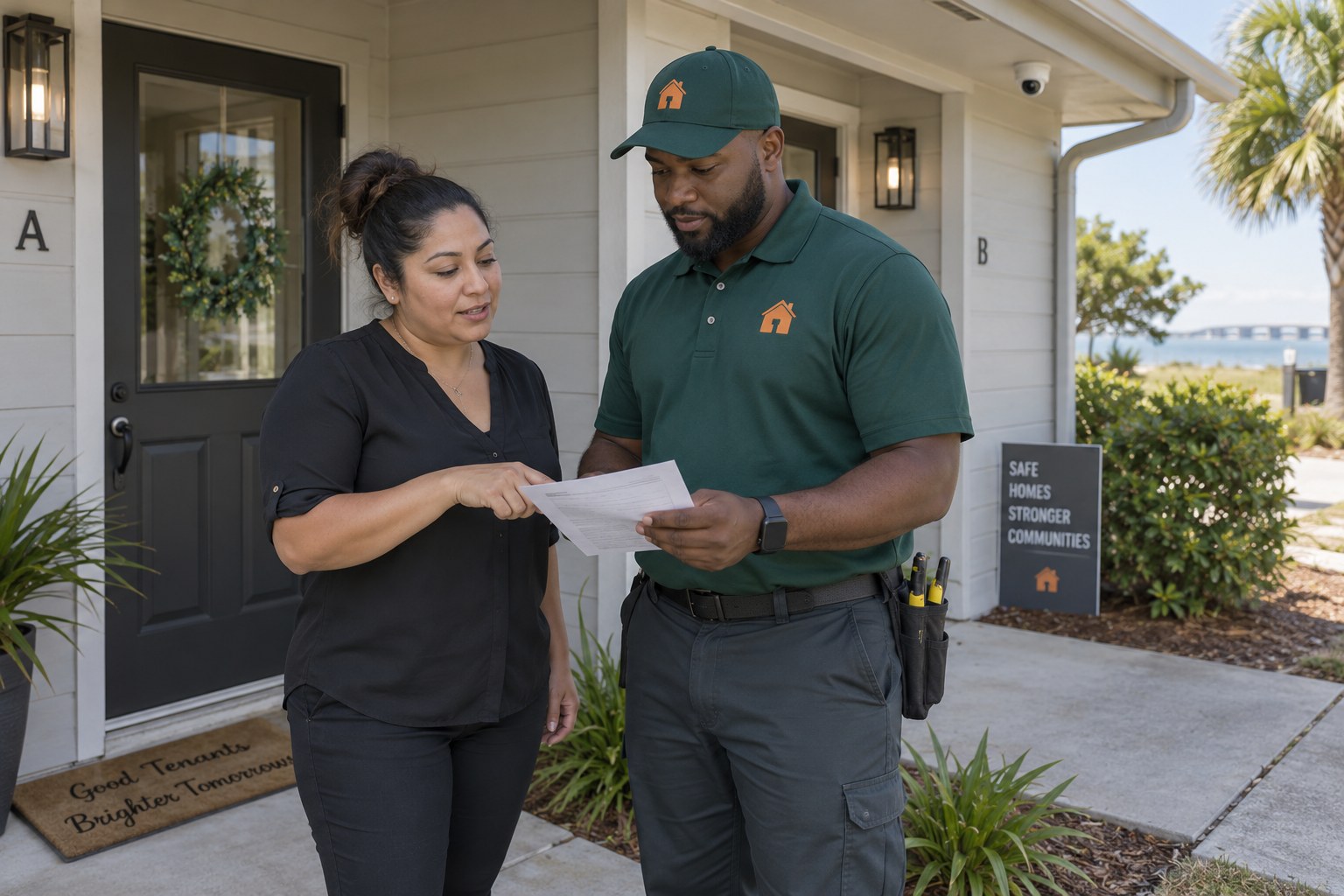
Start with the lease, not with assumptions
Your lease is the first place to look when a lock question comes up. Many leases say who may change or add locks, whether the landlord keeps a copy of every key, and who handles lockouts. Read the clauses about entry, alterations, and key return before you do anything to the door. A few minutes with the paper can prevent a dispute that costs far more time later.
If the lease is silent, that does not mean anything goes. It means you should ask in writing and keep the answer. A short message to the landlord or property manager, saying what you want to change and why, creates a record. A reply that says yes is worth saving. A reply that says no tells you where the line is without any guessing.
This page cannot tell you what the law says about your situation, and rules can differ depending on the type of tenancy and the terms you signed. For legal questions, a tenant resource or an attorney is the right contact. What a locksmith can do is explain the hardware and the practical consequences of the choices in front of you.
Why you cannot simply rekey on your own
It is tempting to rekey as soon as you move in, especially if you do not know how many people have had keys. The concern is understandable, but a rental door belongs to the owner. Changing the lock without permission can put you in breach of your lease, even if your motive was safety. The better path is to raise the concern and ask for a rekey.
A locksmith will also ask about authority before working on a rental. A tenant who lives there may be able to show proof of residence, but a technician generally wants to be sure the owner or manager has agreed to the work. This is not a hurdle placed in your way. It protects you and the landlord from an action that either of you could later dispute.
Many landlords are open to rekeying once asked, since it improves security for the unit and costs less than a problem later. When you ask, say plainly that you want to be sure no old keys still work. Framing it as a shared interest tends to get a quicker, friendlier response than framing it as a complaint.
Lockouts: who to call and who pays
Being locked out is the most common lock problem a renter faces. The first question is who is responsible for the cost, and the answer usually lives in your lease or in what your landlord has told you. Some landlords keep a spare key and will let you in. Others expect you to arrange and pay for a locksmith yourself.
If you call a locksmith, expect to be asked who you are and whether you live at the address. Be ready to show identification and something connecting you to the unit, such as a lease or mail. If the lock belongs to the landlord, the technician may want to confirm with them. This can add a few minutes, but it prevents a stranger from entering someone else's home.
Once you are back inside, think about why it happened. A key that sticks, a worn thumbturn, or a latch that fails to retract can lead to repeated lockouts. Report those faults to the landlord. Fixing a faulty lock is usually cheaper than paying for repeated openings, and a documented report shows you raised it promptly.
Lost and extra keys
When a key goes missing, do not wait. A lost key with your address anywhere near it, or a key lost in a place where someone could connect it to your door, is a genuine risk. Tell the landlord quickly and ask about rekeying. The sooner the lock is changed, the shorter the window in which a stranger could use the lost key.
Copies are another matter. Many keys can be duplicated at any hardware counter, which means a tenant, a former tenant, or a visitor could have extra copies without anyone knowing. Some keys are restricted and need authorization to copy. If your door uses a restricted key, ask the landlord or manager before trying to get extras made, because an unauthorized copy may simply be refused.
Be honest about how many keys you hold at move-out. A landlord who gets fewer keys back than they gave out may need to rekey, and being upfront about a lost key is better than leaving the question hanging. Keeping your keys on a ring that does not display your address and has no obvious label is a simple habit that costs nothing.
- Tell the landlord quickly when a key is lost
- Never label keys with your address
- Ask before copying a restricted or marked key
- Return every key at move-out and keep a note of the count
Adding your own security safely
Renters often want more security than the unit came with. A portable door brace, a window pin, or a chain can be added without drilling anything and removed at move-out. These are low-risk, easy to explain, and often fine without special permission, although checking your lease is still wise.
Anything that alters the door, such as a new deadbolt, a keypad lock, or a smart lock, is a bigger step. It may require permission, and it should be keyed or coded so the landlord can still open the door when properly allowed. A lock that only you can open creates trouble during emergencies, inspections, or if you lose your own key.
If you want an upgrade, propose it. Some landlords will pay for a better deadbolt or agree to a keypad lock if it reduces their key-management work. Offer to return the original hardware at move-out if they ask, and keep the old parts safe. A written agreement about who owns the new hardware avoids a dispute when you leave.
Emergencies and safety exits
Every home needs a way out in an emergency. A lock that needs a key to open from the inside can trap people during a fire. If your door has a double-cylinder deadbolt, raise it with the landlord, since it is a safety concern worth discussing. A thumbturn on the inside is usually the safer arrangement.
Think also about hurricane season, which is a reality for anyone renting on the Gulf Coast. Doors and frames matter in a storm, and a door that does not latch fully may fail under wind pressure. If your door does not close firmly into its frame, tell the landlord. This is a repair question, not a lock-picking matter, but it affects how well the lock can do its job.
After a storm or flooding, check that your locks still turn smoothly. Moisture and debris can leave a cylinder stiff or a latch sticking. If something feels wrong, report it before it fails. A lock that works today but grinds in your hand is often a lock that will leave you outside next week.
Short stays, roommates and sublets
If you share a rental, the key situation gets more complicated quickly. Each roommate usually needs a key, and when one leaves, the question of whether that person still holds a copy matters. Ask the landlord about rekeying when a roommate moves out, and agree among yourselves how many copies exist.
Subletting or hosting short stays raises the same issues in a sharper form. Giving a stranger a key to a rental is a risk to the landlord and to you. Check whether your lease allows it at all. Where it is allowed, codes or lockboxes that can be changed are often safer than handing out a physical key that might never come back.
In a college town like Pensacola, with students and military families moving in and out, these arrangements are common. A short conversation at the start about who has keys and what happens when someone leaves is far easier than sorting it out after a missing key turns up.
Documenting the condition of your locks
At move-in, take photos of the door, the lock, and the strike plate. Note any stiffness, loose handles, or damage, and send the notes to the landlord. This record protects you from being charged later for wear that was already present. It takes ten minutes and may save considerable argument.
If a lock develops a fault during your tenancy, report it in writing with a date. Describe what you notice, such as the key needing a jiggle, the bolt dragging, or the handle sagging. A written report shows you acted responsibly, and it gives the landlord a chance to repair before the problem becomes a lockout.
At move-out, take photos again. Return every key and keep a note of the number you returned. If the landlord later claims a key is missing, your record gives you something to point to. Clear, dated notes are more persuasive than recollection when a deposit or a repair cost is under discussion.
Questions worth asking before you sign
The best time to settle lock questions is before you move in. Ask whether the locks were changed or rekeyed since the last tenant, and if not, whether the landlord would do so before you take possession. A landlord who has a routine for this will answer easily. One who has never thought about it is worth noting.
Ask how many keys come with the unit, whether a spare is kept on site, and who has access to it. Ask what happens if you are locked out after hours, and whether there is a number to call. Ask whether the building uses a master key arrangement, since that affects who could open your door.
Ask also about the condition of the hardware. A deadbolt that sticks, a strike plate that is loose, or a door that does not line up with its frame are things to raise at the walkthrough. Getting them noted before you move in puts the responsibility where it belongs and keeps your first month calm.
Smart locks, codes and landlord-installed systems
Some rentals now come with keypad or app-based locks installed by the landlord. These can be convenient, since there is no key to lose, but they bring new questions. Who sets the codes? Is there a log of entries? Who else knows the code? A tenant has every reason to ask these things plainly and expect a plain answer.
Codes need to change between tenants and when anyone who had one no longer needs it. Ask whether the landlord does this, and when it was last done. If your code is shared with a cleaner, a friend, or a family member, remember that it can spread, and ask for it to be changed if you lose track.
Batteries and power matter too. A keypad lock that dies can lock you out as surely as a lost key. Ask whether there is a backup key, and keep it somewhere safe and not obvious. A system with no fallback is a lockout waiting to happen, and Gulf Coast humidity is not kind to electronics.
Keeping a good relationship with your landlord
Most lock disputes come down to communication rather than bad intent. A tenant who reports problems early, asks before altering anything, and returns keys cleanly is easy to work with. A landlord who responds promptly and explains their reasons builds the same goodwill in return. Treat lock matters as shared maintenance.
Be specific when you report something. Saying the front door lock is broken helps little. Saying the key turns only halfway and the bolt does not fully extend tells a technician what to look for. Detail speeds up repair, and it shows that you have paid attention to the unit.
If you disagree about who should pay for something, keep the tone calm and put your points in writing. Reference the lease, not feelings. If the disagreement stays unresolved, an attorney or tenant resource can explain the options. A locksmith can describe what work is needed, but cannot decide who owes what. Keeping copies of every message about the door in one folder helps whoever eventually reviews the matter, whether that is you, the landlord, or a third party.
Documenting lock requests so a misunderstanding does not follow you out
Lock issues between tenants and landlords are easier to settle when there is a written record. If a lock is broken, stiff or compromised, send the request in writing, whether by message or email, and keep a copy. Describe what is wrong, when you noticed it, and whether it is a security concern, such as a door that no longer latches. Dates matter because they show when the landlord was informed and how long the issue went unresolved.
Photos help too. A picture of a damaged strike plate or a loose cylinder takes a minute and removes any argument about its condition. If you pay for a repair because the situation was urgent, keep the receipt and the technician's note describing the work. Do not change or rekey a lock yourself without checking your lease first, because many leases require approval, and unapproved changes can lead to a dispute over keys or deposits.
This page is general information, not legal advice. Rules vary by lease and circumstance, and anyone facing a serious dispute should read their lease carefully and consider asking a local housing resource or attorney. A locksmith can document the condition of hardware and carry out approved work, and will ask who has authority before changing anything. Call us if you are unsure what a landlord must do or what a tenant may do, and we can at least explain the lock side of the situation.
When you move in, walk through each exterior door with the landlord or manager and note the condition of the locks, including how many keys were handed to you. Signing a short checklist or sending a photo to confirm the count creates a baseline. If a problem arises later, you can show what you received. Remember that this is general information only, and the lease and local rules are what actually apply to your situation.
When a locksmith can help a renter
A locksmith can help with lockouts, with diagnosing a lock that sticks, and with explaining what kind of hardware is on your door. Before any work, ownership or authority is checked. If you are the tenant, expect to show that you live there, and expect the technician to confirm with the owner if the work goes beyond opening a door.
For changes such as rekeying or replacing a lock, the landlord generally needs to approve. A locksmith can speak with the landlord by phone to confirm, which often settles things quickly. If you want to propose an upgrade, a quote by phone gives you a concrete number to show the landlord.
If the job is complicated, a technician visits first and the service call charge is explained before dispatch. Call us to confirm availability in your area. Bring the address, a description of the problem, and proof of residence, and the conversation will move faster.
Questions people ask us
Can I change the locks on a place I rent?
Usually not without the landlord's permission. Changing a lock on your own can break your lease, even when your reason is safety. Ask in writing for a rekey, explain your concern, and keep the reply. Check your lease and, for legal questions, an attorney or tenant resource.
Will a locksmith open my rental door if I am locked out?
Often yes, after confirming you live there. Expect to show identification and something linking you to the address. If the lock belongs to the landlord, the technician may confirm with them first. Call us to confirm availability for your location.
What should I do if I lose my key?
Tell your landlord right away and ask about rekeying, so a stranger holding the lost key cannot use it. Do not leave it for later. Also check your lease for who pays and what steps are expected.
Can I add a smart lock to a rental door?
Only with permission, and it should still allow the landlord entry when properly allowed. Propose it in writing, offer to restore the original hardware at move-out, and agree who owns the new lock. Portable braces and window pins are lower-risk options.
Is this page legal advice?
No. It covers practical lock and key matters and suggests questions to raise. Rights and duties depend on your lease and local rules, so confirm anything legal with an attorney or a tenant assistance service.