
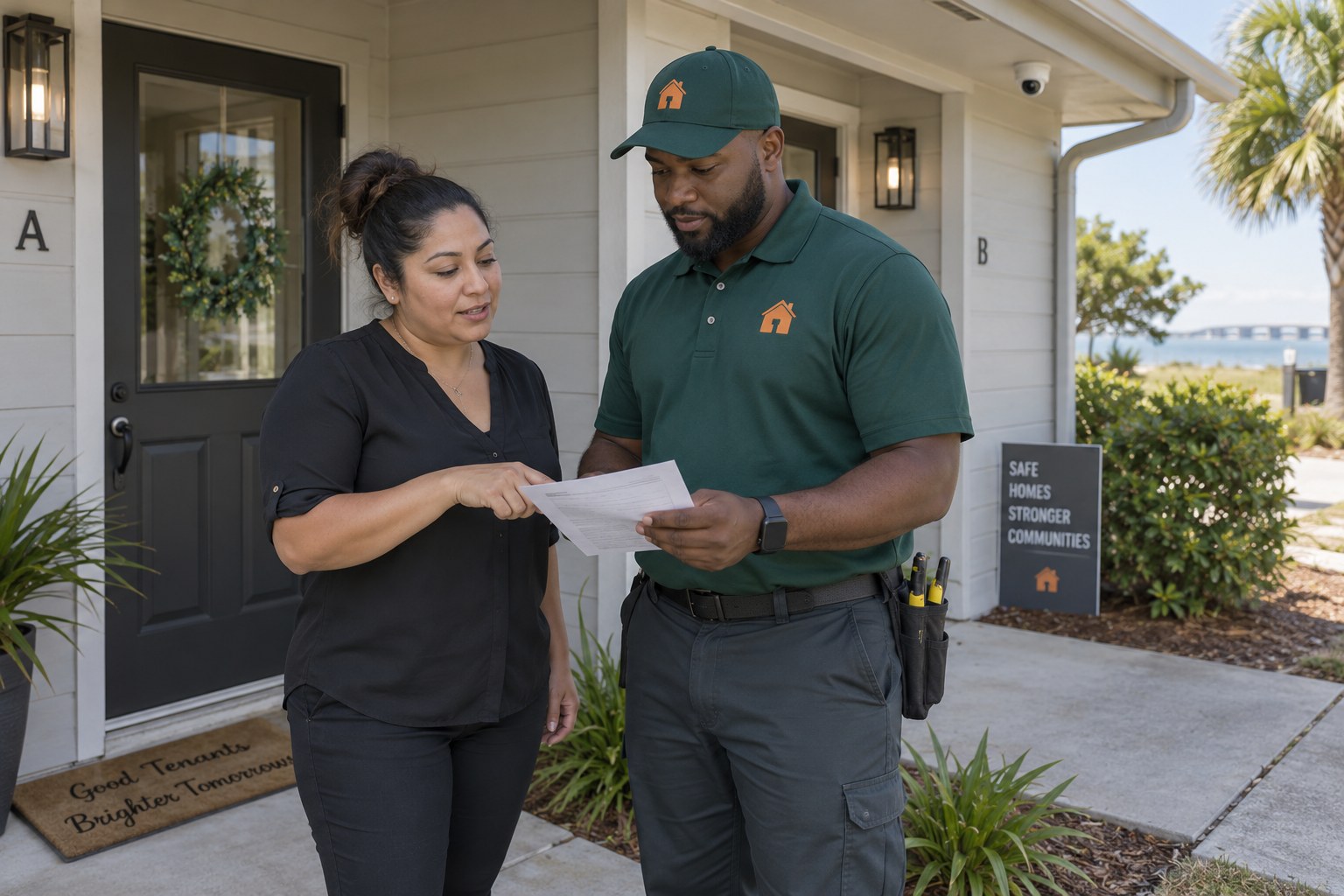
The handoff problem every host faces
A guest books a stay, the flight is delayed, the host is at work, and the property is empty. Somehow the guest must get inside without anyone being there. Traditional answers, such as hiding a key under a mat, leaving it with a neighbor or meeting in person, all have flaws. Hidden keys are easy to find, neighbors become unpaid property managers, and meeting guests limits when you can accept bookings.
A good handoff system has three qualities. It lets the right person in at the right time. It prevents the wrong person from getting in, now or later. And it is simple enough that a tired traveler can use it at night. If any of these fails, the host either has a security gap or a stream of frantic phone calls.
Because the Pensacola area attracts beachgoers, families visiting the naval air station, students and event visitors, rental demand varies widely. Hosts may have one guest for a weekend and another the next day. The routine must work smoothly across many turnovers, and with different guests who know nothing about the property.
Key safes: how they work
A key safe, often called a lockbox, is a small, sturdy container that holds a physical key and opens with a code. The host sets the code, shares it with the guest, and the guest takes the key out. Some are wall mounted, some hang on a door handle or gate, and some are built into a keypad entry. The code can be changed whenever needed.
Wall mounted boxes are stronger because they are fixed to masonry or a solid surface, which resists being pried off. Shackle models hang on a handle or railing and are easier to install, but a thief can remove them with the key inside. For a property that is empty between stays, a fixed box is the better choice.
Choose a box with a weather resistant body and a cover for the keypad. Salt air and rain are hard on cheap boxes. Check that the dials or buttons turn smoothly and the code does not get stuck. Test it before the first guest arrives, in damp weather too, so you know it will cope with the coast.
Where to put the lockbox
Place the box where the guest can find it easily but a passer by is unlikely to notice. Near the entrance, but not directly visible from the street, works well. Avoid obvious spots like next to the front door at eye level. Describe the location clearly in your arrival message, with a photo, so a guest does not wander around in the dark.
Lighting matters. A guest arriving at night needs to see the buttons. A small light nearby, or a model with backlit keys, helps. Consider how a guest will open the box with luggage in hand, and whether the position is comfortable. A box mounted at a sensible height avoids fumbling.
Think about neighbors. A lockbox that rattles, clicks or draws attention to a door at midnight can annoy those nearby. Position it so that guests need not cross shared spaces or disturb adjacent units. In a building or complex, check the rules, because some managers forbid installing fixtures on common walls without permission.
Code rotation and who knows the code
A lockbox code is only secure while few people know it. Change it after every guest. If you use a single code for the whole season, previous guests, cleaners and contractors all retain access. A fresh code for each stay keeps the circle small and the property controlled. It takes a minute and is among the most valuable security habits a host can adopt.
Keep a log of codes, dates and who received them. A simple spreadsheet works. If something is missing or a dispute arises, you can show who had access when. Share the code with the guest shortly before arrival, not weeks in advance. A code sent too early lingers in messages and can be forwarded.
Avoid easily guessed numbers. Birthdays, repeated digits and sequences are poor choices. Generate a new random code each time, or follow a system you can reproduce. Make sure cleaners and maintenance staff get their own separate codes or keys, so you can remove them without affecting others.
- Change the code after every stay
- Send the code shortly before arrival
- Keep a log of codes, dates and recipients
- Give cleaners and staff their own access
Keypad locks as an alternative to a lockbox
Many hosts prefer a keypad deadbolt on the door itself. The guest enters a code and walks in, with no key to return or lose. Codes can be set to expire, and each guest can receive a unique one. It removes the risk of a guest copying a key or failing to return it, and it is quick to reset between stays.
A keypad lock has costs of its own: batteries, programming and the chance of failure. A backup key in a lockbox gives a second route in. Some hosts use both, placing a key inside a safe as a backup if the electronics fail. Think of the lock and the box as layers, so no single fault strands a guest.
Smart locks add scheduled codes and remote management. They suit hosts who manage several properties, or who live far away. But they need a stable network and reliable batteries. Compare the options against your property, your technical comfort and your guests, and pick what you can maintain properly.
Rekeying between guests and after problems
When a guest returns a physical key, or you suspect one went missing, consider rekeying. If a guest leaves with a key by mistake or if copies might exist, a rekey removes the risk completely. For frequent turnover, rekeying every time is impractical, which is why codes are so attractive. They let you refresh access without touching the lock.
Even so, rekey the main locks at intervals, and whenever you take over a property. Previous owners, cleaners and tenants may hold copies. Authority is checked first: a locksmith needs to know you own the property or act for the owner. Property managers can show an authorization letter.
Keep your own keys secure. A host who leaves a spare in an unlocked car or office drawer undoes the careful system at the door. Count the keys periodically, and limit how many exist. Fewer keys mean fewer points of failure, and clear records make it obvious when something is out of place.
Writing arrival instructions that actually work
Clear instructions prevent most problems. Include the address, the location of the lockbox with a photo, the code or how to receive it, how to open the door and what to do if it fails. Add a phone number to call. Keep the message short enough to read on a phone while standing in the dark.
Describe the quirks. If the door sticks in humid weather, say to push gently. If the lockbox needs a firm press on the last digit, say so. Tell guests how to lock the door when leaving. Many security failures come from guests who did not know the lock needed turning. A small note near the door can repeat the key points.
Include safety information too. Where is the nearest exit, who to call in an emergency, and what to do if the power fails. A guest who feels welcomed and informed is less likely to prop the door open or share the code. Clarity about the lock is a sign of a well run property.
What to do when a guest is locked out
Despite good systems, lockouts happen. The code may be mistyped, the lock may jam, or a guest may leave the keys inside. Have a plan before it occurs. A backup key held by a nearby contact, clear instructions for resetting the code, and a number guests can call at any hour all help.
If the lock itself fails, call us to confirm availability. A locksmith checks ownership or authority before opening, so the host may need to authorize by phone or show documents. Guests alone may be unable to prove they have the right to enter, and that is appropriate. Arrange the authorization in advance if you can.
Keep records of what went wrong and how it was fixed. If the same problem recurs, it may point to a faulty lock or a confusing instruction. Fix the cause rather than repeating the rescue. A reliable system saves you stress, and your guests a poor first impression of your property.
Cleaners, maintenance staff and trusted helpers
Guests are only one group who need to get in. Cleaners arrive on turnover days, maintenance people come for repairs, and sometimes a family member checks on the place. Each of them is a potential source of lost or copied keys. Give every person a separate code or a separately marked key, so access can be withdrawn individually without disturbing anyone else.
Be clear about the rules. Tell cleaners not to share the code, not to leave the door unlocked between visits and to report any lock that seems wrong. Ask them to confirm when they have finished and locked up. A short message at the end of each visit creates a record and catches mistakes before the next guest arrives.
When a helper stops working with you, remove their code the same day, and rekey if they held a physical key. This is routine, not an accusation. Hosts who treat access as a managed list, rather than a favor, avoid awkward conversations. It also makes the property easier to hand over to a new manager if circumstances change.
Handling a busy turnover day
On a day when one guest leaves and another arrives, the sequence matters. The outgoing guest should lock up and confirm departure. The cleaner enters with their own code, finishes, and relocks. You then set the new guest code and send it. Doing these in order keeps the old code from lingering while a new one is issued.
Leave margins for lateness. A guest who departs later than planned, or a cleaner who finds extra work, disrupts the chain. Build in time, and have a way to contact each person. If the new guest arrives early, a clear message about when the code becomes active avoids conflicts at the door.
After the turnover, walk through a short checklist: door locked, windows secured, sliding doors barred, lockbox closed and code changed. Take a photo or tick a list. Over a season, this habit prevents the kind of oversight that leaves a property open for days. Routine at the doorstep supports reliability in everything else.
Coastal conditions and hardware choice
Rental properties near the water face salt air, sun, heat and humidity. Lockboxes made from cheap zinc or thin plastic fail quickly. Look for stainless steel or well coated bodies, sealed keypads and covers that shield the buttons from rain. Rinse salt from exterior hardware regularly and keep an eye out for rust.
Keys left inside a box in humid conditions can corrode. Use a key with a plated finish, and check it every now and then. A key that has begun to stick in the lock is a warning. Lubricate the lock and the box mechanism lightly, using products meant for locks and not heavy oil.
Storms bring wind and flooding. After severe weather, check that the lockbox is still securely mounted and that the lock and door work. Test codes. If you have evacuated, tell your guests and your contact how to reach you. Having a written storm plan for the property is wise in this region.
Rules, permissions and neighbors
Before installing a lockbox or keypad lock, check the rules that apply. Condominium and homeowner associations often have regulations about fixtures, and some local rules govern short term rentals. A locksmith will ask for proof of ownership or authority before installation, and an association may need to approve fixtures on shared walls.
If you rent the property yourself and sublet, you need your landlord's permission. Many leases prohibit subletting or altering locks. Making changes without consent could put your tenancy at risk. Always confirm what is allowed. A short written approval protects you.
Be a considerate neighbor. Brief guests on quiet hours, parking and shared areas. A property that causes disturbances attracts complaints, which can lead to restrictions. Handing off keys discreetly and clearly, without confusion at the door, contributes to harmony in the neighborhood.
Choosing between a keypad box, a smart lock and a hand-delivered key
A rental owner has three broad ways to hand over access. A keypad lockbox holds a physical key and opens with a code. A keypad or smart deadbolt replaces the key entirely, with codes that can be added and removed. A hand-delivered key is the traditional method and still suits long stays. Each has a different failure pattern, and the right choice depends on how often guests change and who is available to fix problems when they happen.
A lockbox is inexpensive to start and simple to explain, but it relies on a code that is easy to share and a key that can be duplicated by anyone who opens it. Changing the code after each stay is a habit that needs discipline. A keypad deadbolt avoids the loose key altogether and lets you issue a different code per guest, though it depends on batteries and on how well the door and strike line up. Weak alignment makes any electronic lock unreliable.
For apartments, the owner may need the building's approval before changing hardware, so check the lease or association rules first. A technician can mount a box in a discreet spot that does not damage the door or frame, or install a deadbolt matched to your door preparation. Call us to talk through the layout of the property, how many entrances need access, and how you want guests to be able to reach it.
Whichever method you choose, write a short arrival note for guests that explains how to use it. Many lockouts at rentals come from guests who cannot work an unfamiliar lock in the dark, not from faulty hardware. A line about pushing the handle up before turning the key, or pressing the keypad before entering the code, prevents a surprising number of late calls. Test the instructions yourself on the door before you send them.
Getting help setting up your handoff system
Tell us about your property: the type of door, whether you want a lockbox, a keypad lock or both, and how often guests come and go. Mention any association rules. Quotes are given by phone based on what you describe, and if the job is complicated, a technician visits and the service call charge is explained before dispatch.
Call us to confirm availability for your area. Have proof of ownership or authority ready. If you manage several properties, tell us, since matching systems across them simplifies your routine. A single consistent method saves time and reduces mistakes.
Before your first guest, test everything. Use the lockbox in daylight and at night, try the code, lock and unlock the door, and read your instructions from a guest's point of view. A small investment of effort now prevents awkward evenings later, and a smooth entry sets the tone for the whole stay.
Questions people ask us
Is a lockbox or a keypad lock better for a rental?
Both work. A keypad deadbolt avoids physical keys and lets you give each guest a unique code. A lockbox is simple and cheap to run. Many hosts use a keypad lock with a backup key in a lockbox.
How often should I change the code?
After every stay is the safest habit. It keeps previous guests, cleaners and contractors from retaining access. Keep a log of codes and recipients, and send the new code shortly before arrival.
Where should I mount the lockbox?
Fixed to a solid surface near the entrance, out of direct view from the street, with some light for night arrivals. Wall mounted boxes resist removal better than ones hung on a handle.
What if a guest gets locked out?
Have a backup key with a nearby contact and a number guests can call. If the lock fails, call us to confirm availability. A locksmith checks ownership or authority first, so be ready to authorize by phone.
Do I need permission to install a lockbox?
If you do not own the property, yes. Associations and landlords may also restrict fixtures. A locksmith checks ownership or authority before installing. Check your lease and any association rules first.