
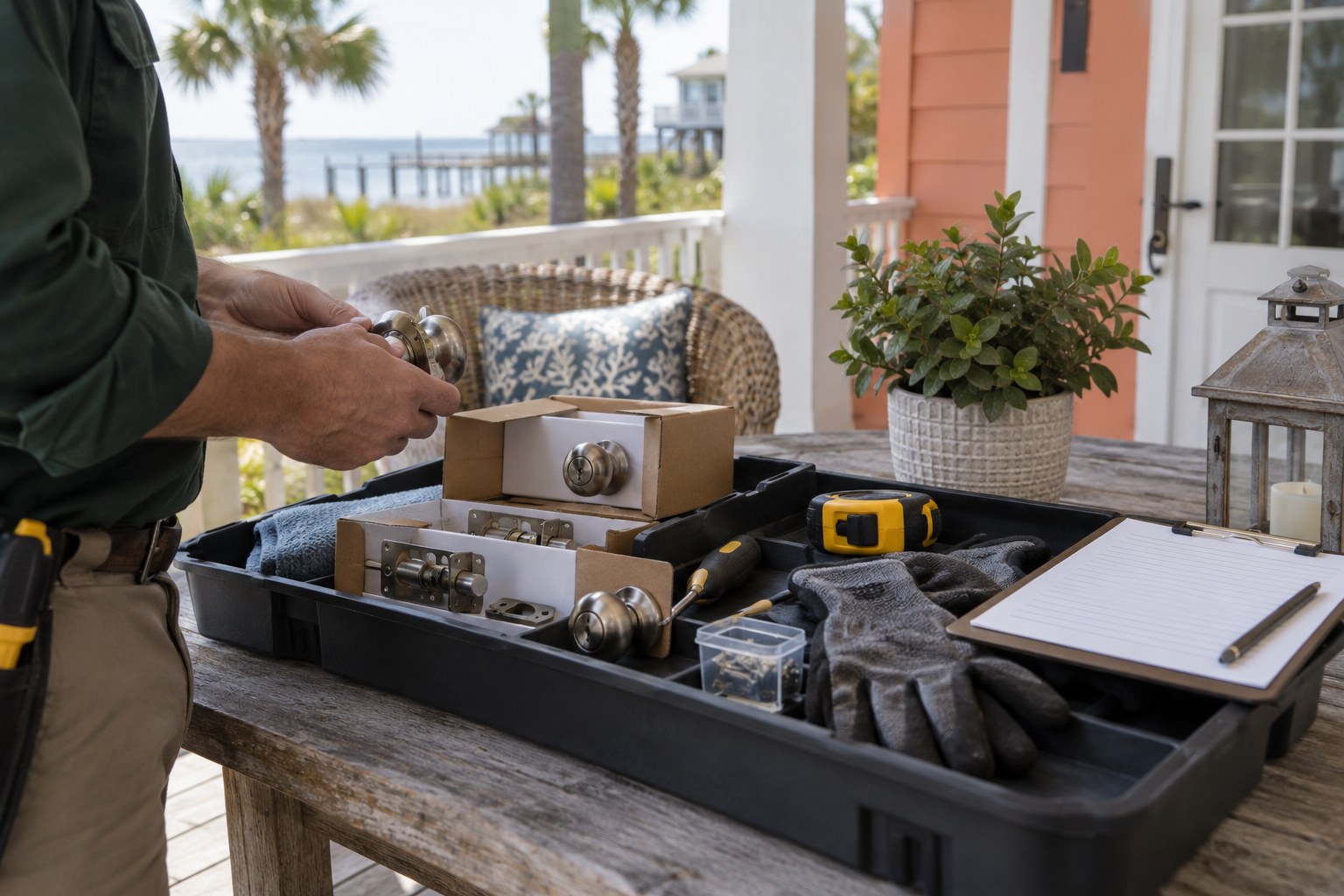
When a whole-house rekey makes sense
Most people think about locks only when something goes wrong. But there are predictable moments when every door in a home deserves attention: moving into a house you did not build, ending a lease with roommates, finishing a renovation with many contractors, or discovering that a key has gone missing and could be anywhere.
Past owners, past tenants, cleaners, relatives, babysitters and tradespeople may all still hold working copies. You rarely know the full list, and you cannot get the keys back with certainty. Rekeying makes all of those old keys useless without changing the hardware.
A whole-house approach also keeps your life simple. Instead of juggling different keys for the front, back and garage doors, you carry one. Instead of wondering which doors were changed and which were not, you know every exterior lock responds only to the keys you hold now.
It is also a sensible response to the Gulf Coast lifestyle. Homes here are often left empty for a season, rented out for the summer or visited by extended family. Having a clear, controlled set of keys makes all of those arrangements easier to manage.
T
h
i
n
k
o
f
i
t
a
s
r
e
s
e
t
t
i
n
g
t
h
e
l
i
s
t
o
f
p
e
o
p
l
e
w
h
o
c
a
n
e
n
t
e
r
y
o
u
r
h
o
m
e
.
E
v
e
r
y
k
e
y
t
h
a
t
e
x
i
s
t
s
t
o
d
a
y
r
e
p
r
e
s
e
n
t
s
a
p
e
r
s
o
n
o
r
a
p
a
s
t
s
i
t
u
a
t
i
o
n
.
A
w
h
o
l
e
-
h
o
u
s
e
r
e
k
e
y
l
e
t
s
y
o
u
s
t
a
r
t
f
r
e
s
h
a
n
d
d
e
c
i
d
e
,
d
e
l
i
b
e
r
a
t
e
l
y
,
w
h
o
h
o
l
d
s
a
c
c
e
s
s
f
r
o
m
t
h
i
s
d
a
y
f
o
r
w
a
r
d
.
Start by counting every lock
Before you call, walk the property with a pen. List the front door, back door, side door, garage entry door, patio or sliding door, and any storm or screen door that locks. Then add the less obvious ones: a shed, a pool gate, a detached workshop, and the mailbox.
Next, note interior locks you care about, such as a home office, a bedroom with a lock, a storage closet or a gun safe closet. These are often forgotten and are sometimes the very locks you most want controlled. Tell the technician which ones matter to you.
Look at each lock and record what you can: the brand name stamped on the face, the finish, whether it is a knob, lever or deadbolt, and whether it has a keyed cylinder on one or both sides. A photo of each lock on your phone makes this faster and more accurate.
The final count shapes the plan. Five identical deadbolts are very different from five locks of three brands. When the technician knows what to expect before arriving, the visit is more likely to be finished in a single trip with the right supplies.
D
o
n
o
t
f
o
r
g
e
t
t
h
e
d
o
o
r
s
y
o
u
r
a
r
e
l
y
u
s
e
.
A
s
e
l
d
o
m
-
o
p
e
n
e
d
s
i
d
e
e
n
t
r
y
i
s
e
x
a
c
t
l
y
t
h
e
o
n
e
a
f
o
r
m
e
r
o
c
c
u
p
a
n
t
m
a
y
s
t
i
l
l
h
o
l
d
a
k
e
y
f
o
r
,
a
n
d
i
t
i
s
a
l
s
o
t
h
e
o
n
e
a
v
i
s
i
t
o
r
i
s
m
o
s
t
l
i
k
e
l
y
t
o
t
e
s
t
.
C
o
u
n
t
i
n
g
i
t
c
o
s
t
s
n
o
t
h
i
n
g
a
n
d
c
l
o
s
e
s
a
n
e
a
s
y
g
a
p
.
One key for every door
The most common goal is a single key that works on every exterior lock. This is possible when the technician can put all of the cylinders on the same key pattern. Rekeying does this by rearranging the pins inside each cylinder to match one cut.
There is one important condition: the locks need compatible keyways. A keyway is the shape of the slot the key enters. If your front deadbolt is one brand and your back knob is another, their keyways may differ, and one key will not fit both. The technician can sometimes swap in a matching cylinder to solve this.
Think about convenience and risk together. A single key is easy for you, but it also means one lost key affects every door. Some people prefer to keep a separate key for a detached garage or workshop for exactly this reason. There is no wrong answer, only a tradeoff worth discussing.
A related option is keeping interior or specialty locks on separate keys. Many households choose one master pattern for the main doors and a different one for a safe room or an office. The technician can set this up, and you can decide how many different keys you are comfortable carrying.
S
o
m
e
t
i
m
e
s
a
f
a
m
i
l
y
w
a
n
t
s
t
w
o
k
e
y
g
r
o
u
p
s
:
o
n
e
f
o
r
t
h
e
m
a
i
n
l
i
v
i
n
g
a
r
e
a
s
a
n
d
o
n
e
f
o
r
a
r
e
n
t
a
l
s
u
i
t
e
o
r
g
u
e
s
t
q
u
a
r
t
e
r
s
.
T
h
i
s
i
s
a
n
o
r
m
a
l
r
e
q
u
e
s
t
,
a
n
d
t
h
e
t
e
c
h
n
i
c
i
a
n
c
a
n
p
i
n
t
h
e
g
r
o
u
p
s
s
e
p
a
r
a
t
e
l
y
s
o
t
h
a
t
a
g
u
e
s
t
k
e
y
n
e
v
e
r
o
p
e
n
s
t
h
e
o
w
n
e
r
'
s
s
i
d
e
o
f
t
h
e
h
o
u
s
e
.
Dealing with mixed brands and unusual locks
Real homes seldom have matching hardware. Over the years, a front lock may have been replaced after a break-in while the back door kept its original knob. A garage entry may carry a cheap builder-grade lock. A sliding door may have a lock of its own design.
A skilled technician looks at each one and decides whether it can be rekeyed reliably. Many standard residential locks can. A few cannot, because the internal parts are worn, the cylinder is not designed to be reconfigured, or the lock is of such low quality that rekeying would not improve security.
In those cases, the technician may recommend replacing the lock with one that does match the others. This tends to be the better value if you want a uniform, dependable set. The decision is yours, and any quote for extra work is explained before it begins.
Patio doors and sliders often have their own hardware. Some carry keyed locks, some use thumb latches, and some rely on a bar or pin. A technician can explain what is practical for each and may suggest a secondary measure such as a track bar, even if the main lock cannot join your key set.
F
o
r
r
e
n
t
a
l
o
w
n
e
r
s
i
t
o
f
t
e
n
h
e
l
p
s
t
o
b
r
i
n
g
p
a
p
e
r
w
o
r
k
:
a
l
e
a
s
e
,
a
l
i
s
t
o
f
u
n
i
t
s
,
a
n
d
t
h
e
n
a
m
e
o
f
t
h
e
p
r
o
p
e
r
t
y
m
a
n
a
g
e
r
.
H
a
v
i
n
g
t
h
e
s
e
o
n
h
a
n
d
l
e
t
s
t
h
e
t
e
c
h
n
i
c
i
a
n
c
o
n
f
i
r
m
a
u
t
h
o
r
i
t
y
q
u
i
c
k
l
y
a
n
d
s
p
e
n
d
t
h
e
v
i
s
i
t
o
n
t
h
e
w
o
r
k
i
t
s
e
l
f
.
Who needs to approve the work
A locksmith checks ownership or authority before rekeying anything. For a house you own, that means identification and some proof of the address, such as a closing document or a utility bill. The check is routine and protects everyone, including you.
If you rent, things are a little different. Many leases require landlord approval for changing or rekeying locks, and some require the landlord to keep a copy of the key. Talk to your landlord or property manager first, and keep their approval in writing.
Condominiums and association-managed properties may have additional rules, particularly for exterior doors that affect the building's appearance or security system. Check your governing documents or ask the association whether they need to approve the work or keep a key.
If you are the person arranging work for someone else, such as a parent, a client or a tenant, make sure the person with authority is part of the process. A locksmith will ask who is authorizing the work, and clear answers keep the visit moving.
A
n
e
a
t
h
a
b
i
t
i
s
t
o
p
h
o
t
o
g
r
a
p
h
t
h
e
f
i
n
a
l
k
e
y
s
e
t
b
e
s
i
d
e
t
h
e
r
e
c
e
i
p
t
,
w
i
t
h
a
s
m
a
l
l
w
r
i
t
t
e
n
n
o
t
e
o
f
w
h
i
c
h
k
e
y
o
p
e
n
s
w
h
i
c
h
d
o
o
r
.
S
t
o
r
e
i
t
i
n
a
s
a
f
e
p
l
a
c
e
,
a
w
a
y
f
r
o
m
t
h
e
k
e
y
s
t
h
e
m
s
e
l
v
e
s
,
s
o
y
o
u
c
a
n
r
e
c
o
n
s
t
r
u
c
t
t
h
e
s
e
t
u
p
i
f
a
n
y
t
h
i
n
g
i
s
l
o
s
t
.
How the visit usually unfolds
The technician arrives, confirms who you are and what you want done, and looks over the doors. A short walk-through lets them check lock condition, confirm the count and verify that each lock can be rekeyed. Any change from the original plan is explained before work begins.
Then the work proceeds door by door. The cylinder is removed, the pins are changed, the new key is tested, and the lock is reinstalled. Once a rhythm is established, additional locks can move along steadily, which is one reason doing them together is practical.
The technician tests each lock with the new key several times, with the door open and closed. They also check that old keys no longer work. This step is important, because it confirms that the point of the visit, making old keys useless, has actually been achieved.
At the end you receive working keys, a summary of what was done, and a receipt. If extra copies are needed, the technician can cut them on the spot. Take a minute to try every key in every lock before the technician leaves.
R
e
m
e
m
b
e
r
t
h
a
t
r
e
k
e
y
i
n
g
d
o
e
s
n
o
t
r
e
p
a
i
r
a
d
a
m
a
g
e
d
d
o
o
r
o
r
f
r
a
m
e
.
I
f
a
s
t
r
i
k
e
i
s
l
o
o
s
e
o
r
a
j
a
m
b
i
s
c
r
a
c
k
e
d
,
t
h
e
t
e
c
h
n
i
c
i
a
n
m
a
y
s
u
g
g
e
s
t
f
i
x
i
n
g
t
h
o
s
e
a
t
t
h
e
s
a
m
e
v
i
s
i
t
.
S
t
r
o
n
g
l
o
c
k
s
n
e
e
d
s
o
l
i
d
w
o
o
d
b
e
h
i
n
d
t
h
e
m
t
o
d
o
t
h
e
i
r
j
o
b
.
Keys, copies and who gets what
After a whole-house rekey, think carefully about how many copies to make. Fewer is more secure, but too few leaves you vulnerable to a lockout. A common approach is to give each household member a key, keep one spare in a safe place inside the home, and leave out any extras that have no clear purpose.
Consider whether anyone outside the household truly needs a key. A trusted neighbor who waters plants, a cleaner, or a family member who checks on the house may need access. Decide each case deliberately, and write down who holds a copy.
Avoid the hidden key under the mat, the flowerpot or the fake rock. These are the first places anyone checks. If you want an emergency option, a lockbox with a code or a keypad entry gives you control and can be changed whenever you like.
Label the new keys discreetly, without writing the address on them. A tag that shows your name and address helps anyone who finds it to use it. A coded mark known only to you identifies the key without giving a stranger a map to your door.
L
a
r
g
e
r
j
o
b
s
c
a
n
b
e
s
p
l
i
t
a
c
r
o
s
s
t
w
o
v
i
s
i
t
s
w
h
e
n
p
a
r
t
s
m
u
s
t
b
e
o
r
d
e
r
e
d
.
I
n
t
h
a
t
c
a
s
e
t
h
e
t
e
c
h
n
i
c
i
a
n
s
h
o
u
l
d
e
x
p
l
a
i
n
w
h
i
c
h
d
o
o
r
s
a
r
e
f
i
n
i
s
h
e
d
,
w
h
i
c
h
a
r
e
p
e
n
d
i
n
g
,
a
n
d
h
o
w
t
o
k
e
e
p
t
h
e
r
e
m
a
i
n
i
n
g
o
n
e
s
s
e
c
u
r
e
u
n
t
i
l
t
h
e
s
e
c
o
n
d
v
i
s
i
t
.
Rekeying versus replacing in a bigger project
In a project involving many locks, it is worth asking which ones should be replaced rather than rekeyed. Rekeying keeps your existing hardware, which is fine if the locks are solid and in good shape. It does not improve the strength of the lock itself.
If a lock is old, worn, corroded or built to a low standard, replacing it may be smarter. Salt air and humidity attack hardware on the coast, and a lock that sticks or feels loose is a candidate for replacement even if the key still turns.
Replacement also lets you upgrade. You can move from a basic knob to a deadbolt, add a keypad to a back door, or choose a finish that stands up to the weather. The technician can explain which upgrades are worthwhile for each door.
A mixed approach is common: rekey the good locks, replace the worn ones, and make sure everything shares the same key at the end. The final result is what counts, and a thoughtful plan gets you there without spending more than the job requires.
A
f
i
n
a
l
t
h
o
u
g
h
t
o
n
h
a
b
i
t
:
k
e
e
p
t
h
e
o
l
d
k
e
y
s
l
o
n
g
e
n
o
u
g
h
t
o
c
o
n
f
i
r
m
t
h
a
t
e
v
e
r
y
t
h
i
n
g
w
o
r
k
s
,
t
h
e
n
d
i
s
p
o
s
e
o
f
t
h
e
m
.
O
l
d
k
e
y
s
s
i
t
t
i
n
g
i
n
a
d
r
a
w
e
r
a
r
e
h
a
r
m
l
e
s
s
o
n
c
e
r
e
k
e
y
e
d
,
b
u
t
t
h
e
y
c
a
u
s
e
c
o
n
f
u
s
i
o
n
,
a
n
d
c
l
u
t
t
e
r
i
s
t
h
e
e
n
e
m
y
o
f
a
t
i
d
y
k
e
y
s
y
s
t
e
m
.
Timing and logistics for larger jobs
A larger rekey benefits from a quiet appointment. Choose a day when you are home, doors are accessible and nobody needs to be in and out constantly. A morning with the house open and the technician able to move between doors keeps things orderly.
If the home is a rental or vacation property, coordinate with guests or tenants so that locks are not changed while someone is trying to enter. Turnover days can be busy, and it is smart to schedule rekeying in the gap between guests.
Remember that availability changes through the year. Hurricane season, college move-in and tourist seasons all produce clusters of lock work. Call and confirm availability for your area, and give as much notice as you can.
If the job turns out to be complicated, a technician visits and the service call charge is explained before dispatch. That keeps the final plan transparent and lets you decide how to proceed without pressure.
After the rekey: keeping control
Once the work is done, keep your records tidy. Write down which doors were rekeyed, the date, and who has copies. Store the receipt with your other home documents. If you sell or rent the property later, this record makes handover simple.
Test the locks again in a few days. Humid weather can make new keys feel slightly stiff, and a quick lubrication with a lock-appropriate product can help. If any lock sticks or fails, call the technician rather than forcing it.
Review your key habits. Does everyone know to keep keys away from beaches, boats and pools where they can be lost? Are spare keys stored in a secure place? Small routines make the effort of rekeying last longer.
Finally, plan to revisit the setup at major life changes: a new roommate, a breakup, a renovation or a change in who looks after your home. A rekey is not a one-time fix, but a tool you can use whenever control of your keys changes.
Questions people ask us
Can all my locks really use the same key?
Usually, if the locks have compatible keyways or can be fitted with matching cylinders. Mixed brands sometimes need one or two cylinders swapped. The technician will check each lock and explain what is possible before starting, including any extra work that would be needed.
Does rekeying make my locks stronger?
No. Rekeying changes which keys work, not how strong the lock is. If a lock is worn or low quality, replacement may be the better choice. A technician can look at each lock and suggest which ones are worth keeping.
Do I need landlord approval to rekey?
In many rentals, yes. Leases often limit changes to locks and may require the landlord to hold a copy. Get permission in writing before booking. The locksmith will also check authority before starting any rekey.
How many copies should I have made?
Enough for each person who truly needs one, plus a spare kept safely inside the home or in a lockbox. Avoid extras that have no clear purpose. Write down who holds each copy, and revisit the list when household circumstances change.
What if one of my locks cannot be rekeyed?
Then the technician may recommend replacing that lock with one that matches your key pattern. Worn or low quality cylinders are the usual reason. Any quote for extra work is explained before it starts, and the choice is yours.