

Living near Perdido Bay and what it does to metal
Being close to a large bay means high humidity all year and salt that travels inland on the wind. Even if you cannot see the water from your yard, the air carries enough moisture to keep metal surfaces damp through much of the morning. Locks on exterior doors are the first things to show it, because they combine moving parts, small tolerances and steady exposure.
The pattern is familiar to anyone who has owned a home near the water. The finish dulls first, then white or green powder shows up around the keyway, then the key starts to feel rough. By the time the bolt sticks, the inside of the cylinder has usually been corroding for a while, which is why prevention matters more than a quick fix.
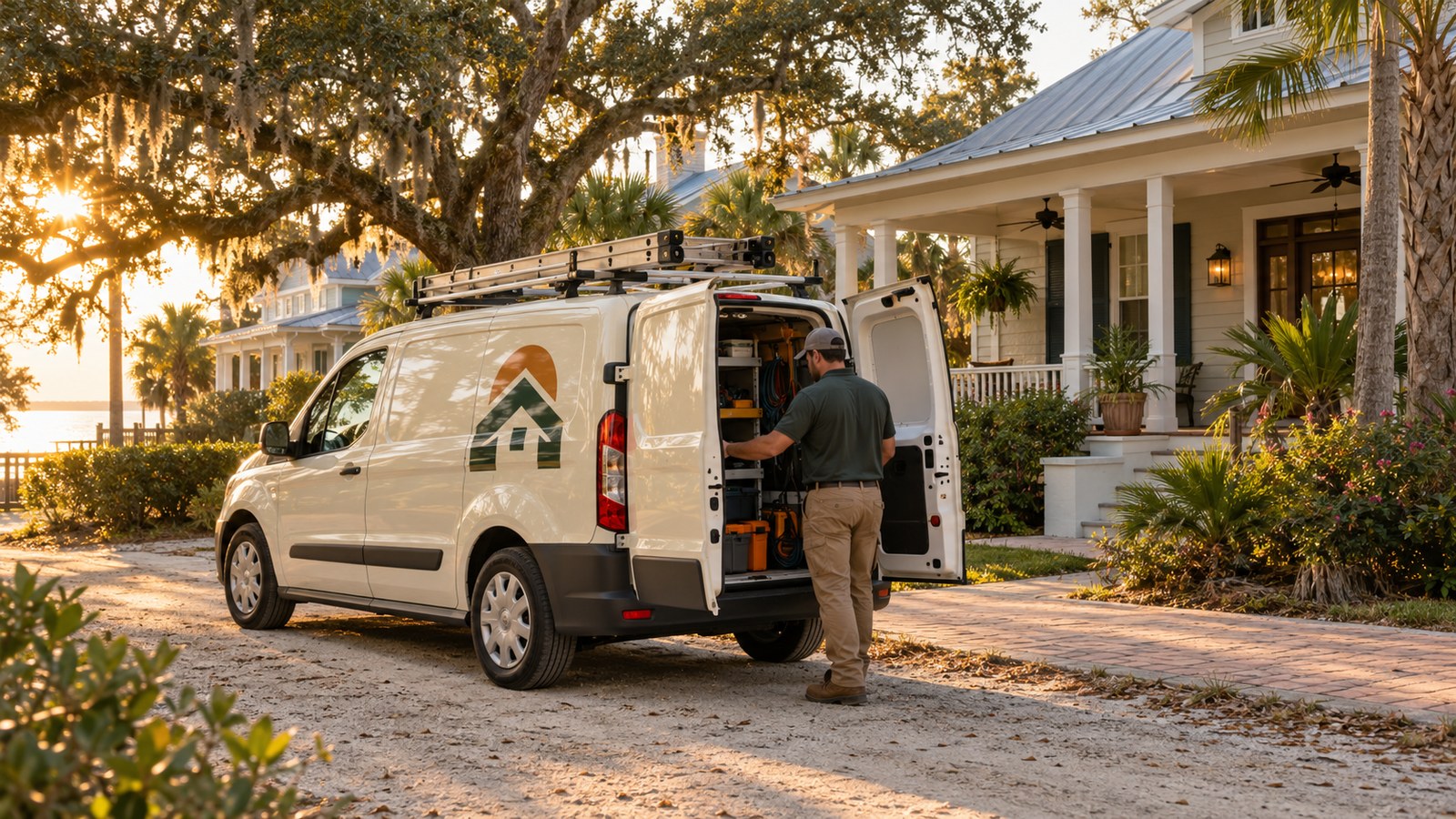
A technician who works in this area expects it and carries appropriate parts. Brass cylinders with a protective finish, stainless fasteners and dry-film lubricants hold up better than bargain hardware. The goal is not to make a lock immune, but to give it a service life that makes sense for the cost of replacing it.
Reading the early signs of corrosion
A damp lock has its own symptoms. The key goes in but resists turning until it warms in your hand. The deadbolt throws slowly and stops short on humid days, then works better when the weather dries. A latch that sticks inside the door edge points to rust on the spring or the latch tail.
Look at the screws too. Surface rust on screw heads often means the metal in the hole is corroding, which weakens the grip of the hinge or strike plate in the wood. Tightening may help for a while, but if the wood is soft around the screw it needs a longer screw or a filler before it holds again.
Photograph anything unusual and mention it when you call. A technician can often tell from your description whether a cleaning will be enough or whether the cylinder should be replaced. Either way, it is cheaper in time and trouble to act before the key snaps off inside the lock.
Dock gates, boat sheds and waterside storage
Many bayside properties have a gate to a dock, a boat shed, or a storage box for lines, life jackets and tools. These are the hardest-working locks on the property. They sit in salt spray and sun, they are used by wet hands, and they are often the thinnest padlocks in the hardware aisle, which is why they fail so quickly.
Marine-grade padlocks with stainless or coated bodies and sealed internals last far longer. A technician can recommend suitable models and fit a hasp that resists prying. If a lock has already seized, getting it off without wrecking the door or gate frame requires patience and the right tools, not brute force.
Think about how the lock is used. A gate used daily is better served by a keypad or combination lock that does not need a key in cold, wet fingers. A shed opened once a month can stay with a conventional key. The technician can help match the lock to the routine.
Move-in and turnover rekeys for local rentals
Waterfront and near-waterfront neighborhoods often include rentals, from long-term leases to seasonal stays. Each tenant change raises the question of who still holds a key. A rekey answers it decisively: old keys stop working, new ones are cut, and the lock stays on the door.
Owners often choose to key all exterior doors alike so tenants carry a single key, and to key outbuildings separately so a dock hand or maintenance person cannot enter the house. A technician can arrange that structure during a single visit and label each key by door.
For rentals, the locksmith confirms authority first. If the requester is the owner or the manager acting for the owner, work proceeds. If a tenant wants a change, the landlord's approval is required. This protects everyone and keeps lease terms intact.
When you are locked out
Lockouts happen in the middle of ordinary days: a screen door that slams, a key left on a boat, a spare that turned out to be for a different lock. Call us and describe the door, the lock, and whether anyone is inside. If a child, a pet or someone with a health need is inside, say so right away.
The technician confirms that you live at the property or have authority over it. That is done at the door, with an ID or other proof, before any tool touches the lock. It can feel like a formality when you are standing outside in the heat, but it protects the home from anyone who might try to talk their way in.
Non-destructive methods are tried first. If the lock is corroded and will not respond, the technician explains what is possible, including drilling if it comes to that, and what replacement hardware would be needed. Call to confirm availability; times depend on where technicians are working.
Hurricane season, evacuation and coming home
In a bayside area, storm season changes how people think about their houses. Doors take wind and rain, frames flex, and water can get into the lock body. Before a storm, make sure each exterior door seats firmly and the deadbolt extends all the way. A loose door is more likely to be forced by wind than a snug one.
Afterward, check each door in turn. Swollen wood or shifted frames can make a bolt bind. If you meet resistance, stop and call rather than forcing it. A stuck bolt forced past its limit may snap, and then the door cannot be secured at all, which is a serious problem when the neighborhood is without power.
If you left in a hurry and returned to find a door pried or a lock damaged, a locksmith can secure the opening and replace what was broken. Because ownership matters, bring proof of residence, and be ready to explain which doors were affected.
Sliding doors facing the yard
Sliding glass doors are common on the back of Gulf Coast houses and are often the weakest point on the property. The standard latch is easy to defeat on some models, and the track collects sand and grit that keep the door from closing fully. A door that looks shut but is not fully latched is an open invitation.
The technician can clean and adjust the track, replace worn rollers, and add a secondary lock such as a pin or bar. These are small changes, but together they make the door both easier to use and harder to defeat. A properly set slider rolls smoothly with a light push and latches with a firm click.
For doors that open onto decks or screened porches, think about how the lock is reached. If the glass can be broken to reach the latch, a keyed secondary lock helps. The technician will talk through the layout and offer an honest view of what is worth doing.
Smart locks in damp conditions
Electronic locks are popular, and many are well made, but not all handle moist air equally. Check whether a model is rated for weather exposure and ask how the keypad is sealed. A lock that works in dry showrooms may develop sticky buttons or erratic readings after a humid summer.
Installation quality shows up in these conditions. A door that has swollen slightly may bind the bolt, and the motor will work harder and drain batteries faster. The technician checks alignment before installing and may adjust the strike so the bolt slides in freely with the door closed.
Keep a mechanical backup. A key, even if you rarely use it, gets you inside when batteries die or a keypad fails. Many homeowners leave a spare with a trusted friend and change codes whenever someone no longer needs access. That habit is simple and works.
Shared housing, duplexes and small apartment buildings
Multi-unit buildings in the area range from a pair of units sharing a wall to small complexes. Each unit usually has its own keyed entry, sometimes a shared exterior door, and sometimes a laundry or storage room with a separate lock. Understanding which locks belong to whom is half the battle.
For tenants, any lock change needs the manager's approval. For managers, the technician can rekey units on turnover and cut keys with clear labels. A tidy system reduces calls from tenants who got the wrong key or whose old key still works.
Common doors benefit from a periodic review. Those that are used daily wear out first and may have seen many hands. A technician can check closers, latches and strike plates, and suggest repairs before a door fails to latch at night.
Garage doors into the house
The interior door between a garage and a home often receives less attention than the front door. It may be hollow, with a plain knob lock, and it faces a space that people can reach from the driveway when the overhead door is open or defeated.
A solid-core door with a deadbolt and a reinforced strike adds real resistance. The technician can install the deadbolt, replace short strike screws with long ones that reach the frame, and check that hinges are secure. Many break-ins fail when the door itself holds firm.
If your garage also holds boats, bikes or tools, consider separate locks on the most valuable items. Layered protection is slower for a thief and gives you more time to notice that something is wrong.
How to book
Call us and explain the situation in your own words. Tell us which door is involved, what the lock does or does not do, and whether you are the owner or a tenant. We confirm availability by phone, and routine work is quoted over the call.
If the job requires a look, a technician visits and the service call charge is explained before dispatch. Any added work is discussed and agreed with you at the door before it begins. We would rather you hear it plainly than be surprised at the end.
Have proof that you live at the property or are authorized, and clear the way to the door. The technician confirms ownership or authority, then starts. If you cannot be there, tell us ahead of time so arrangements can be made.
Maintenance habits that extend lock life near the water
A few habits make a measurable difference over the years. Once a month, wipe the faceplate and keyway of exterior locks with a dry cloth to remove salt film. After a storm that blows spray against the house, do it again. It takes less than a minute per door and removes the deposits that start corrosion.
Apply a dry-film or graphite lubricant to the keyway once or twice a year, and a drop of light machine oil to the latch bolt edge, not the cylinder. Wet oil in the cylinder attracts sand and pollen and gums up the pins. Many people do the opposite out of habit, and the lock gets worse.
Check hinges, screws and strike plates when you do this. Tighten loose screws, and replace rusted ones with stainless or coated screws. If a screw spins freely in its hole, the wood around it is stripped and needs a longer screw or a repair. A locksmith can fix this during any visit.
How a Myrtle Grove lock quote is put together
People often ask how a locksmith arrives at a price without seeing the door. For most residential jobs, the answer is a few questions: what kind of lock, how many doors, what is wrong, and whether any hardware must be supplied. From those answers the quote is given by phone, so there is no mystery about it.
Some jobs cannot be judged from a description. A door that is damaged, a lock of unknown make, a frame that has warped: for those, a technician visits to assess. The service call charge for the visit is explained before dispatch, so you know what you are agreeing to before anyone drives to your home.
If the technician finds something different from what was described, the new scope and any added cost are explained at the door before work begins. You decide whether to go ahead. Honest communication on this point is a basic part of the service, not an extra.
Setting up your Myrtle Grove door ahead of the technician
Some of the most useful locks around a Myrtle Grove home sit away from the front door. A driveway gate with a latch that corrodes, a mailbox lock with a lost key, a pool gate that must latch by itself, and a utility cabinet that needs to stay shut all matter more than people expect. Because they are outside, they take the worst of the damp air, and because they are used less often, trouble builds up unseen until the day the key will not turn.
A good habit is to test each one when you do other seasonal chores. Turn the key, listen for the latch, and check that hinges do not sag. A pool gate that no longer closes by itself is a safety issue and deserves prompt attention. A mailbox that jams is annoying but also a security concern, since mail can reveal a lot about a household. If a padlock is rusting, replace it before the shackle seizes, because a seized padlock often has to be cut.
When you call about any of these, mention what the lock is attached to and how it is mounted. A gate hasp on a wooden post needs different parts than one on a metal frame. A technician can bring suitable replacements, and where practical can key several outdoor locks alike so you carry one key for the yard and a different key for the house. Ownership or authority is confirmed, and the visit charge is explained first if the job needs an assessment.
Getting the house and the paperwork ready before the visit
A few minutes of preparation helps the visit go smoothly. Move vehicles away from the entry, put pets in another room, and have a clear path to the door. If the work involves several doors, unlock any that can be opened so the technician can reach them easily.
Gather proof that you live at or control the property. A utility bill, a lease, a document with the address, or an ID that matches will do. If you are a property manager, have written authority from the owner available. Without this check, no reputable technician should open or rekey a lock.
Have a list of questions ready. Ask about key counts, restricted keyways, and what other doors might be worth attention while the technician is on site. A visit is a good time to deal with several small matters at once rather than calling again for each.
Questions people ask us
Why does my deadbolt stick in the morning but work by afternoon?
Overnight moisture can swell wood and leave a film on metal parts, so the bolt drags until warmth and drier air loosen things. It can point to misalignment or early corrosion. A technician can check the strike and the cylinder and tell you if cleaning or replacement is the better choice.
Can you replace the lock on a dock gate or boat shed?
Yes, a technician can fit marine-suitable padlocks and hasps, or a keypad lock if you prefer not to use a key with wet hands. If the existing lock is seized, removal is handled carefully so the gate frame is not damaged. Call to describe what you have.
Do you need proof that I own the house?
Yes. For any lockout, rekey or lock change, the technician checks ownership or authority first. A document with the address, a lease with landlord approval, or similar proof is enough. This protects your home from anyone who might try to gain access improperly.
Is rekeying better than replacing the lock?
Often, yes. If the lock is in good shape, a rekey changes the internal pins so old keys stop working without buying new hardware. If the lock is corroded or damaged, replacement makes more sense. The technician will look at each lock and tell you honestly.
How soon can someone come?
Call to confirm availability. We do not promise arrival times because scheduling depends on where technicians are. When you call, we will explain what is possible, quote routine work by phone, and explain the service call charge before dispatch if a visit is needed.