
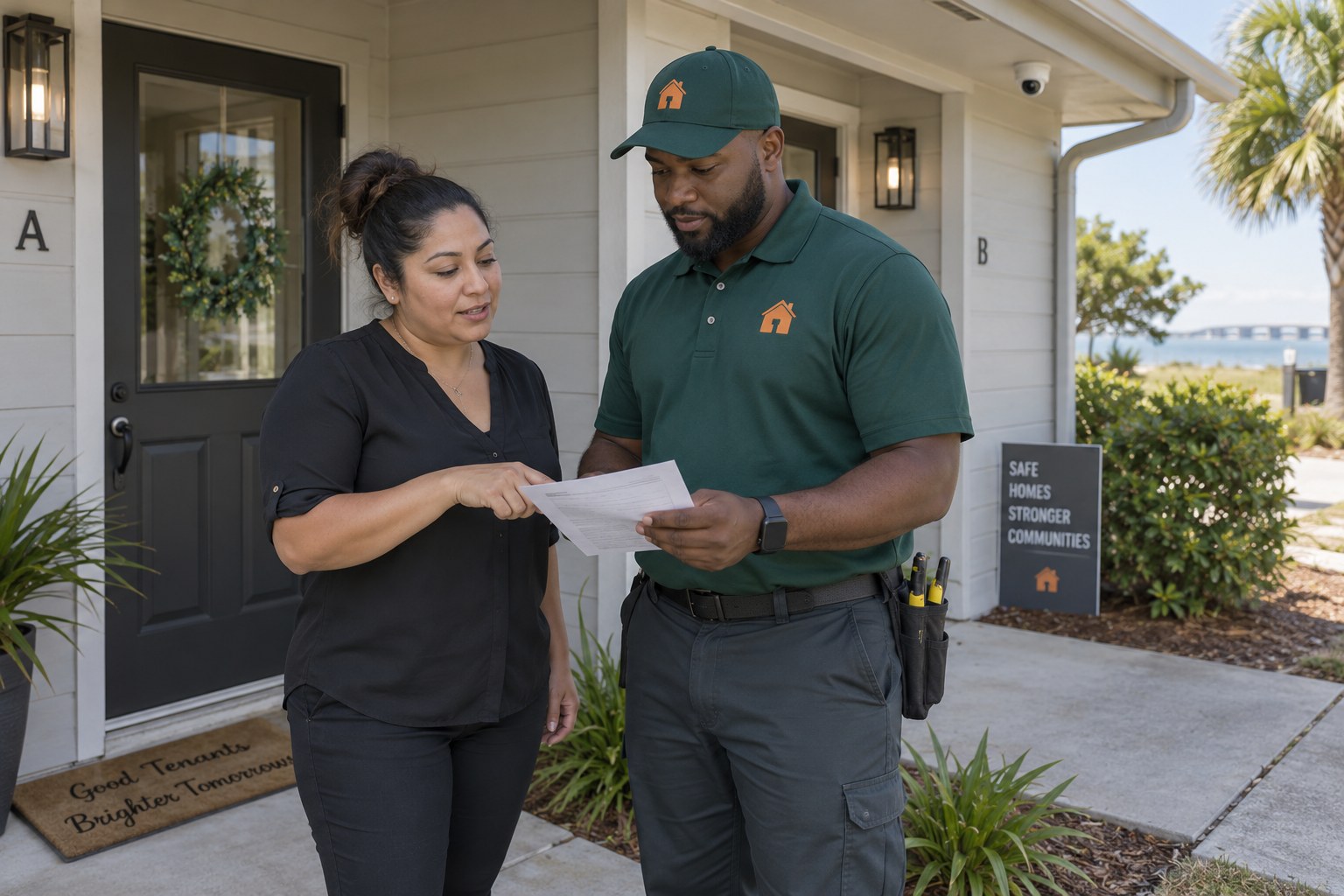
Read the lease before you touch anything
The lease sets the boundaries. Many leases forbid changing locks without written permission, require the tenant to hand over any new keys, or prohibit drilling into doors and frames. Some state that the landlord must keep a master key. Others are silent. Read the sections on alterations, entry, and security, and note what is allowed, what needs approval, and what is forbidden outright.
If a clause is unclear, ask in writing. A short email asking whether you may install a removable door device, or whether the landlord would rekey the locks, creates a record and avoids misunderstandings. Keep replies and approvals in a folder. If you ever dispute a deposit deduction for a change, that paper trail matters more than a verbal yes.
Remember that rules about locks in rental housing vary, and a lease cannot always override what the law requires. If you are unsure about your rights, a local tenant resource or housing office can explain them. A locksmith is not a legal advisor, but we can describe what a lock change involves and help you present a clear request to your landlord.
Take dated photos of the doors, locks, and windows on move-in day, before you change or add anything. Note scratches, dents, and worn finishes. These photos show that you did not cause existing wear, and they help if a dispute comes up about damage later. Store them somewhere safe, such as a cloud folder, along with a copy of the signed lease and any messages with the landlord about security.
Ask whether the locks were changed since the last tenant
In many rentals, the same keys circulate for years. Former tenants, their guests, cleaners, maintenance workers, and the previous tenant's ex-partner may all hold copies. The most important question to ask the landlord or property manager is whether the locks have been rekeyed since the previous occupant moved out. A yes is reassuring. A vague answer deserves follow-up.
If the answer is no, ask politely for a rekey. Many landlords agree, because it limits their liability and takes little time. Rekeying changes the inside of the existing lock so old keys no longer work, without replacing the hardware. It is a modest job, and a locksmith can usually do it in a single visit once the owner or manager has authorized it.
Offer to coordinate. You can say that you are happy to schedule the visit, and that you will give the landlord a copy of the new key. The locksmith will confirm that the person authorizing the work owns the property or acts for the owner. That check protects everyone, including you, and is a standard part of responsible work.
If the landlord declines to rekey, ask what the reason is and whether there is a compromise, such as a deadbolt added by management or a lock you can install and later remove. Some landlords will agree if the tenant pays for the work and hands over a key. Whatever you decide, put the agreement in writing, and keep the original hardware in a labeled bag so it can be reinstalled at move-out.
Removable devices that leave no marks
Several security products work without drilling or permanent changes. A portable door lock that wedges between the door and the frame, a door stop alarm that sounds when someone pushes, and a security bar that braces under the knob are all removable and tenant friendly. Used at night or while at home, they add resistance beyond the building lock.
For sliding doors, a bar or dowel laid in the track costs very little and is easy to take with you when you move. For windows, wedge-style stops and stick-on contact alarms attach without damaging the frame. These devices will not stop determined force, but they slow quiet entry and give you warning.
Choose products carefully. Cheap gadgets often fail at the first test, so push on any device to see whether it flexes. Prefer simple, sturdy designs. Also think about fire safety: anything on a door or window should be quick to remove from inside, and everyone in the home should know how. A device that traps you in an emergency is worse than no device.
Be honest about what these products cannot do. A portable wedge helps when you are inside, but it does nothing while you are away. A track bar stops a sliding door from opening but does not stop a lifted panel. Think of them as layers that raise the effort required, not as full replacements for a solid lock and frame. Use them together and keep your expectations realistic.
Always test a new device before you rely on it. Close the door, apply the device, then push and pull on the door from the inside the way a person would from outside. Look for slipping, bending, or marks on the paint. If a device slips or marks the finish, return it and try a different design, because a product that fails your own test will fail a real one.
Test the doors and windows you have
Spend an evening testing every point of entry. Check that the deadbolt fully extends, that the door closes without being lifted or pulled, and that the strike plate is solidly attached. Look at the gap between the door and the frame. Open every window, make sure the latch engages, and notice anything that sticks or rattles.
Make a short list of defects and send it to the landlord, with photos if possible. Broken latches, loose strike plates, missing deadbolts, and sliding door locks that no longer catch are all reasonable repair requests. Most landlords prefer to fix these items promptly, because a break-in costs them as well.
Keep copies of your requests and dates. If an issue is not repaired and something goes wrong, your record shows you asked. Gulf Coast humidity and salt air cause real wear on door hardware, and landlords of older buildings in particular may not realize how many locks have degraded until a tenant points it out.
Pay special attention to sliding glass doors and balcony doors, which are common in coastal apartments. Check that the latch actually catches the keeper and that the panel cannot be lifted out of the track. A worn latch is a standard repair request. Also check the screens and the weatherstripping, since moisture damage and loose parts often show up first on doors that face the weather.
Keys, codes, and who has access
Keep a list of every key you have been given and every person who has one. Roommates, a partner, a family member, a dog walker, a cleaner, a friend who watered plants once. When someone no longer needs access, ask for the key back. If you cannot get it, treat that key as unaccounted for and ask your landlord about rekeying.
If your building uses keypad codes or key fobs, ask how they are managed. Codes that never change become public over time. Ask whether the code is changed when tenants leave, and whether there is a way to disable a lost fob. Do not share a building entry code on social media or with delivery apps beyond what is necessary.
Be careful with the spare key. Hiding it near the door defeats the purpose. A trusted friend or relative who lives nearby is a better solution, especially in an apartment where you can be locked out at inconvenient hours. If you do get locked out, call us, and the technician will check that you live there before opening the door.
Consider a lockbox only if the building and lease allow it, and choose a spot that is not obvious. Many rentals prohibit attaching anything to the exterior. A better arrangement for most tenants is a trusted contact with a spare. If you have a roommate who loses a key, the whole household should discuss whether to rekey. The cost of a rekey is usually small compared with the worry of an unknown key.
Lighting, neighbors, and the surroundings
Rentals often have limited outdoor lighting. If a porch or stairwell is dark, ask management to fix or add a light. Many places allow tenants to install a plug-in or battery-powered light, which is removable. Good lighting makes a front door less attractive as a target and helps you see who is there when you come home.
Get to know the neighbors. In apartment complexes with a mix of students, military families, workers, and seasonal residents, people can be less familiar with each other. A casual hello and a shared phone number go a long way. Neighbors who notice an unfamiliar person at your door are among the most effective security tools available.
Look around the property for hazards you can report. Broken gates, burned-out lights, overgrown shrubs near entrances, and doors that do not latch properly in common areas all affect safety. Report them in writing, and follow up. Managers often respond faster when several tenants point out the same issue.
Ask whether the complex keeps its gates, stairwell doors, and laundry room doors in working order. A gate that stands open all day defeats the purpose of controlled access. If you notice a propped door, a broken latch, or a lock that no longer works, report it right away, and encourage neighbors to do the same. Shared spaces are only as secure as the weakest door.
Packages, mail, and what people can see
Packages left on a doorstep tell the world you are not home. Ask for deliveries to be held at a pickup location, use a locker if your complex has one, or arrange for a neighbor to collect them. A package that sits for days is an invitation.
Think about what is visible through windows. Bags, electronics, and bicycles near the glass or on a balcony can be seen from outside. Curtains and blinds that close at night limit what a passerby sees. A balcony with expensive items on display draws attention, even from above the ground floor.
Protect your mail. Collect it daily when possible, and consider asking the post office to hold it during travel. Mail with personal information can be misused. If your mailbox is unlocked or broken, ask management to repair it. These are small habits, but identity problems often start with a stack of mail.
When you travel, tell one neighbor and no one else. Avoid posting vacation photos in real time, since public posts can tell strangers you are away. Use timers on a couple of lamps so the home looks lived in, and ask someone to bring in mail and packages. Simple routines like these cost nothing and work best when they are consistent and quiet.
Short-term rentals, roommates, and shared houses
Shared houses add complications. If several roommates have keys and one leaves, the number of people who could enter is unclear. Agree on a process for keys at move-out. Ask the landlord to rekey, and make sure everyone who stays gets a new key. A fair way to share the cost, if any, avoids arguments later.
If you rent a room inside a house, a lock on your bedroom door may be a useful privacy measure. Check the lease and ask the owner before installing one. Choose a lock that can be opened from outside in an emergency. Many privacy sets include a release feature for this reason.
Seasonal and vacation rentals around the beaches present another picture. Guests come and go, and codes or keys may pass through many hands. If you live in such a building, ask how access is managed. A property that changes codes between stays is much better than one that never does.
Keep personal belongings that matter, such as documents, passports, and electronics, in a place that can be locked or hidden. In a shared house, a small lockable box or a locking drawer is a reasonable measure that does not offend roommates. Discuss expectations openly: who locks up at night, who handles deliveries, and what happens when someone has a guest stay over.
Questions to put in writing to your landlord before you change anything
A renter often wants to improve security but worries about breaking the lease. The safest approach is to ask in writing before making any change, even a small one. A short email can cover everything: Would you permit me to install a portable door brace? May I rekey the locks at my expense and give you a copy of the new key? Is it acceptable to add a removable stick in the sliding door track? A written yes protects you later and shows you are being careful with the property.
Ask also about the current state of the hardware. Who has keys to the unit, and when were the locks last changed? Is there a master key held by the property manager, and under what conditions is it used? Does the building have a procedure for reporting a broken latch or a door that does not close? Having these answers on file gives you something to point to if a problem arises and clarifies who is responsible for what.
If a request is declined, you still have options. Many tools leave no mark and can be removed at move-out, such as door jammers, window pins that do not require drilling, and sensors that stick on with adhesive. Ask the landlord to confirm that these are fine. Keep copies of every message, and when you leave, return the unit with the locks as you found them or as agreed. That tidy paper trail helps you get your deposit back and keeps the relationship simple.
Move-out and what to do when you leave
When your lease ends, return every key you were given and do not make unauthorized copies. Keep a record of the date and who received them. If you had a keypad code, ask that it be changed. A tenant who leaves cleanly and documents it protects their deposit and their reputation.
Take down any removable devices and repair small marks, if you made any with permission. Photograph the doors, windows, and locks as you leave, to show their condition. If the landlord approved a lock change, make sure you pass on the new keys, so the next tenant starts with a clean slate.
If you ever need help, call us and describe the situation. Quotes are given by phone, and call us to confirm availability. A technician will confirm that you live at the property or that the owner has authorized the work. For more complicated jobs, a technician visits and the service call charge is explained before dispatch.
Before you leave, double check that you have not left spare keys hidden outside, in a mailbox, or with a neighbor you no longer plan to see. Tell your old landlord in writing that you have returned all keys. Then, at your new place, start the checklist again from the top, since every home is a fresh set of questions and a fresh opportunity to get things right.
Questions people ask us
Can a renter change the locks?
Usually only with the landlord's permission, and the lease often says so. The best route is to ask the landlord to rekey, or to get written approval. Keep a copy of the new key for the landlord if the lease requires it.
What can I install without damaging the door?
Portable door wedges, door stop alarms, security bars, track bars for sliding doors, and stick-on window alarms all leave no marks. They add resistance and warning, and they come with you when you move.
How do I know if the previous tenant still has a key?
You usually cannot know. Ask the landlord whether the locks were rekeyed after the last tenant left. If not, request a rekey. Rekeying makes old keys stop working without replacing the lock.
What if I get locked out of a rental?
Call us and describe the situation. The technician will confirm that you live there or have the owner's permission before opening the door, which protects you and the owner. Call to confirm availability.
What should I do with keys when I move out?
Return every key you were given, do not copy them, and keep a record of the date. Ask that any keypad code be changed. Photograph the locks and doors to show their condition when you leave.