
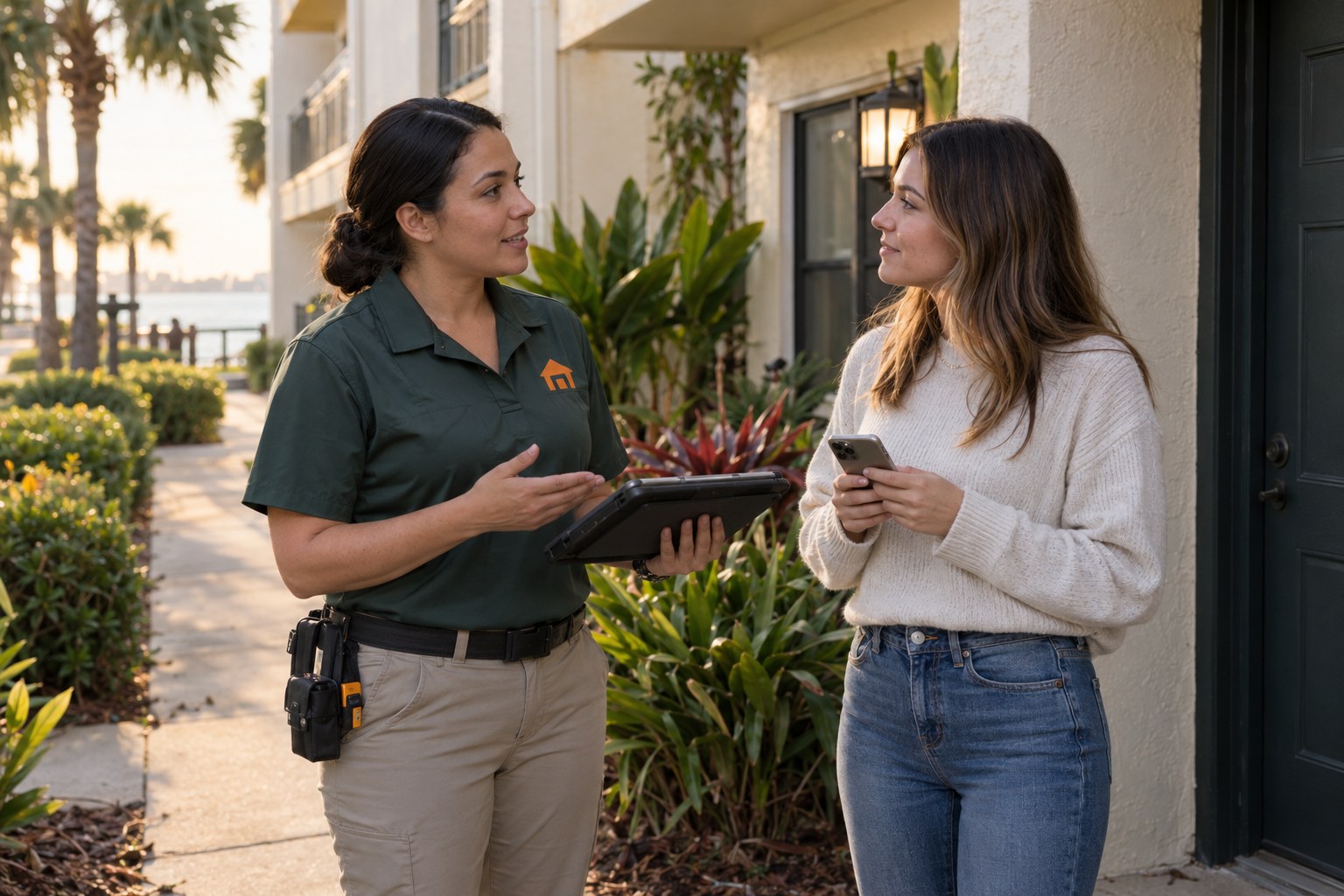
Quiet streets, steady wear: what to expect from your locks
In a calm residential area, it is easy to assume the locks will last forever because nothing dramatic ever happens to them. In reality, the slow forces are the ones that matter. Humid air, a little salt on the breeze and thousands of daily turns of a key all take their toll. A lock that looks fine from the outside can have a keyway full of fine grit and pins that have lost their spring.
People in quiet neighborhoods often realize a lock is tired only on the day it fails, usually when they are carrying shopping or arriving late. The remedy is attention before the failure. If a key has started to feel notchy, if the deadbolt needs a lift of the door to engage or if the knob has a faint wobble, these are signs that deserve a call.
A technician can often restore a lock at this stage with cleaning, a tune-up of the latch and a tightened mount. It is a low-drama visit that prevents a lockout later. If the cylinder is worn, rekeying with new pins or replacing the cylinder gives a fresh start without changing the look of the door.
When you call, describe the symptoms in your own words. We will tell you whether a repair is likely and give a quote by phone.
Retirees, snowbirds and houses that sit empty
Gull Point and neighboring areas have residents who live here year-round and others who come for part of the year. A house that is empty for weeks needs thoughtful locks. The key issue is who has access while you are away. A friend who waters plants, a neighbor who checks the mail and a property manager who airs out the rooms may each hold a key. When you return, you may wonder how many copies exist.
A rekey on return or before departure puts you back in control. You can issue fresh keys to the people who truly need them and let all earlier copies go dead. For frequent travelers, a keypad deadbolt lets you issue and cancel codes from home or by hand, depending on the model, without handing out metal keys.
Before leaving, test every lock and make sure windows and sliding doors are secured. Give a trusted person a way to reach you if a lock problem arises. If something seems tampered with when you return, do not enter. Call the authorities, then call us to secure the opening.
We can talk through a travel-ready lock plan by phone and quote the work before sending anyone.
Rental homes and short stays
Coastal Florida draws visitors, and some homes in the area serve as rentals for stretches of the year. That introduces a pattern of repeated turnovers, many keys and a lot of wear on door hardware. Owners and managers need a system that keeps the property secure without creating constant hassle.
Keypad deadbolts and lockboxes with changeable codes are popular because they remove the need to hand over a metal key. The owner can change the code between stays, and a guest who forgets the code can be reminded rather than locked out. Choose hardware rated for humid conditions and keep a mechanical backup.
If you prefer physical keys, plan for loss. A rekey between seasons keeps old copies from working. For multiple doors, keying them alike simplifies check-in. We can discuss which approach suits your property.
We check ownership or management authority before working on a rental. A deed, management agreement or similar document is enough. Call to confirm availability and we will quote by phone.
- Keypad deadbolt with changeable codes
- Lockbox for backup keys
- Seasonal rekey between stays
- Matched keys for all exterior doors
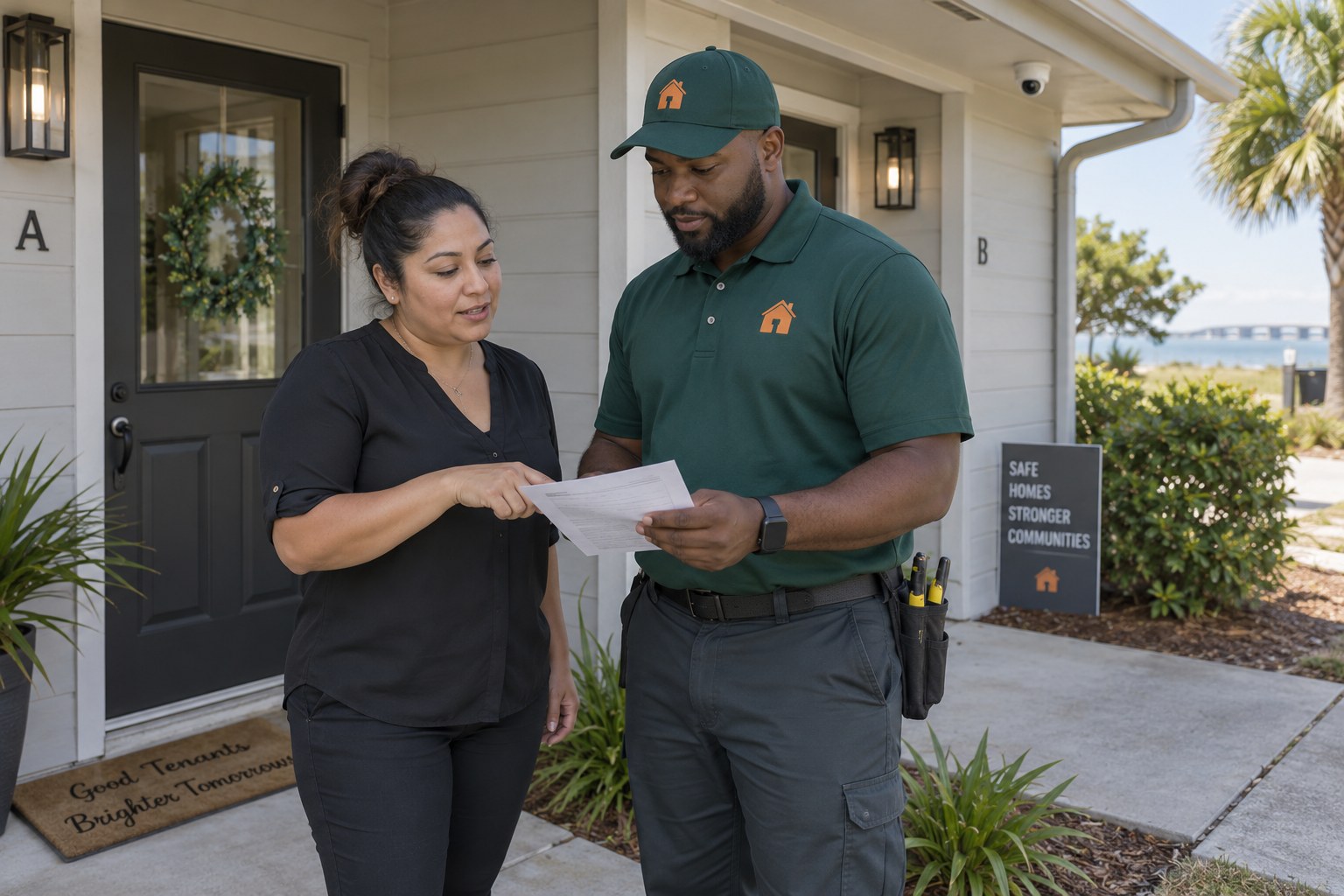
Coastal air and the parts of a lock that suffer first
Not every part of a lock ages equally. The finish on the outside shows tarnish first, but the working parts inside are what decide whether the lock keeps functioning. The springs behind the pins, the cam that turns the bolt and the latch spring in the handle are all small, thin and vulnerable to corrosion. When any of them weakens, the lock feels different.
Moisture also finds its way into the keyway during rain, then dries slowly in humid air. Over time, a film builds up on the pins. The key picks up that film and carries it deeper with each use. A periodic cleaning and a dry lubricant slow this process considerably.
Exposure matters. A door under a deep porch roof sees far less weather than a door that faces the open yard. If you have a choice, upgrade the exposed door first. If you do not, consider a coastal-rated lock with a sealed cylinder and stainless fasteners.
A technician can show you the condition of the parts when the lock is open. Seeing the wear for yourself makes the decision easier.
Fishing gear, tools and detached storage
Many households near the water accumulate gear: rods, nets, coolers, cast nets, tackle and small engines. These items often live in a shed or an outdoor closet, and the locks on those spaces are usually basic. A weak shed lock is an invitation, especially when the shed is out of sight from the road.
Upgrade by thinking about the weakest part. If the hasp is screwed onto the surface, a pry bar can remove it with the lock still intact. A through-bolted hasp, a sturdy padlock and hinges that cannot be unscrewed from outside make a real difference. Moisture-resistant padlocks last longer here.
Consider keying your padlocks alike. A single key for the shed, gate and storage box means fewer keys on the ring and less hunting before an early morning outing.
We check ownership and authority before rekeying or replacing locks on any structure. Tell us how many locks you have and where they are, and we will plan the visit.
Shift workers, early starts and late returns
Households with irregular hours face their own lock challenges. Someone comes home at dawn while the others sleep, someone leaves in darkness and a key gets dropped into a bag and forgotten. Under these conditions a door that sticks or a deadbolt that is hard to find in poor light becomes a real nuisance.
Small improvements help. A porch light with a sensor, a keyhole with a light ring or a keypad with backlit keys all make entry easier at odd hours. A deadbolt with a smooth action avoids the noise of a struggling lock that wakes the household.
Plan a spare. A lockbox with a code gives anyone a way in if their key is lost, without having to wake someone. A neighbor with a spare is another option. Avoid hiding keys near the door.
Tell us about your household's schedule when you call. We can suggest hardware that fits.
Lockouts: honest expectations
If you are locked out, take a moment to check for another way in. A back door, a window or a family member with a key may solve it without a call. If not, call us and describe the door and lock. Tell us if anyone is inside, especially a child or pet.
We do not promise arrival times, because conditions vary. We will tell you plainly what we know about availability when you call, and we give a quote by phone. If the job is complicated, a technician visits and explains the service call charge before dispatch.
On arrival, we verify ownership or authority, which means showing identification with the address or a similar document. We then use the least damaging method suited to the lock. Most home lockouts end without damage.
After entry, we check the lock for faults that might have contributed, and advise if any repair is needed.
Hurricane season and the doors you rely on
Anyone living near the Gulf plans for hurricane season. Doors are part of the plan. A door that latches firmly stays closed. A door with loose hinges or a worn strike can give way under pressure. Check yours well before a storm approaches.
A technician can tighten hinge screws, replace short screws with longer ones, adjust the strike and verify the bolt seats fully. For sliding doors, check that the track is clean and the latch engages. For doors that swell, make sure they close smoothly in damp weather.
After a storm, look for debris in the keyway and water at the base of the door. If a key sticks, do not force it. A broken key in a cylinder complicates a simple fix.
If you evacuate, make sure a trusted person has a key and that you know who will check the house. Call us if you want a pre-season review of your doors.
Windows, sliders and the openings people forget
A house on a quiet road often has generous glass: a slider onto the patio, windows facing the yard and a sunroom that opens to the garden. These bring light, and they also bring weak points. The latch on a sliding door is frequently a small hook that grips a lip on the frame, and in humid conditions the track collects grit that stops the door from closing fully. A door that does not close fully does not latch fully.
Start with the basics. Clean the track with a brush and a damp cloth, lubricate the rollers lightly and check that the latch catches without lifting the door. Then add a secondary measure: a pin through the frame, a bar cut to fit the track or a surface-mounted lock designed for sliders. Each is simple, and together they raise the effort needed to force the door.
Windows deserve a look too. Sash locks wear out, and some windows have none. Replacement sash locks are inexpensive, and a technician can fit them in a short visit. Window stops that limit how far a sash opens are a good compromise when you like fresh air at night.
Walk your home with these points in mind and make a list. When you call, we can prioritize the work and quote it by phone.
How to decide what to fix first
When several things need attention, it helps to rank them. Start with anything that stops a door from locking at all, since a door that cannot be secured is the most urgent problem. Next come locks that are failing: stiff, loose or inconsistent. After that, think about weak points that have not failed but could be exploited, such as short strike screws or a hollow door at the back.
Cost matters, and so does effort. Small items, like longer screws, a tightened hinge and a clean keyway, give a lot of benefit for little cost. Bigger items, like replacing a door or fitting a keypad system, can wait if the budget is tight, as long as the basics are sound.
Be honest about how your household lives. If the back door is used constantly, make sure its lock is dependable. If the front door is rarely used, it may be fine with modest attention. A lock fits a life, and the best upgrade is the one that solves a real problem.
We help you sort these priorities during a call or visit. If you want a written list of recommendations from the technician, ask, and we will explain what each item addresses.
Mail, packages and the small keys on your ring
Count the keys on your ring and you will probably find more than doors. A mailbox key, a key for a storage cabinet, a spare for a relative's house and a few that nobody can identify any more. Cleaning up the ring is a quiet way to improve security, because keys you cannot name are keys you cannot control. Remove what you do not need and label what remains with a small colored cap.
Mailbox locks are a special case. Many are owned by the property or the postal service, so ask who is responsible before changing anything. If the lock is yours and the key is lost, a replacement lock can usually be fitted quickly. A mailbox is a gateway to personal information, so a working lock matters.
If you receive packages while away, arrange for a neighbor to collect them rather than leaving a spare key outside. A parcel locker or a delivery hold at the carrier avoids the problem entirely.
Tell us on the phone which small locks you want checked. We can rekey or replace them during the same visit as your door work.
Cars, boat trailers and the keys that travel with the household
In a coastal area with active outdoor lives, a household key ring tends to carry more than the front door key. There may be a truck key, a trailer lock, a storage shed padlock and a small key for a tackle box. Each of these is a separate lock, and each can fail or be lost on its own schedule, usually at an awkward moment.
Keeping a record of what each key opens is surprisingly useful. Tag the spare keys, store them somewhere dry and away from the entry door, and avoid leaving a spare in an obvious hiding place near the house. Salt spray, sand and moisture also affect keys over time, so a key that sits in a pocket on the boat will wear faster than one kept indoors.
When a key does go missing, think about what it opens before deciding how urgent the situation is. A lost shed padlock key is an inconvenience, but a lost key that opens a house or a vehicle changes the security picture. A locksmith can verify ownership, rekey the house, or cut a replacement vehicle key where appropriate. Call to confirm availability, and have proof of ownership or authority ready.
Why we ask who you are before we open anything
Every time we open a door, we ask for something that connects you to the address. It might be identification showing the street, a lease, a closing document or a utility bill. Some customers find the request surprising, as if they were being doubted. The reality is the opposite: it is how we make sure that the next person calling about your home is not a stranger.
A locksmith who opens doors for anyone who asks is a risk to every homeowner. Ex-partners, former roommates, curious neighbors and people with bad intentions can all sound convincing on the phone. The check protects the real resident, and it protects the technician from being used to enter where they should not.
If you cannot provide anything immediately, tell us. Perhaps your wallet is inside, or the lease is on your phone, which is also inside. We will talk through what is reasonable. Sometimes a neighbor can vouch for you, a family member can bring documents or a landlord can confirm by phone. We will not open a door until we are satisfied.
The same standard applies to rekeying and replacing locks. We ask whether you own or are authorized to manage the property, and we expect an honest answer.
Questions people ask us
Do you cover the Gull Point area?
Yes, our mobile service reaches Gull Point as part of the wider Pensacola region. Availability changes, so please call to confirm for your address. Describe the door and problem and we will quote by phone before dispatch.
I travel often. How should I handle keys?
Limit copies, give a spare only to someone you trust and consider a keypad deadbolt so you can change codes. A rekey before a long absence ends the use of earlier copies. We can plan this by phone.
Can you secure my shed and storage locks?
Yes. We can fit through-bolted hasps and weather-resistant padlocks, and key several locks alike. We check ownership or authority first. Tell us how many locks you have and what they protect.
Why does my deadbolt need the door lifted?
A sagging door pushes the bolt below the strike opening. The cause is usually loose hinges or a misaligned strike, not the lock. A technician tightens hinges and adjusts the strike so the bolt seats freely.
Do you promise an arrival time?
No. We do not promise arrival times. Please call to confirm availability for your location. We give a quote by phone, and for complicated jobs the service call charge is explained before dispatch.