
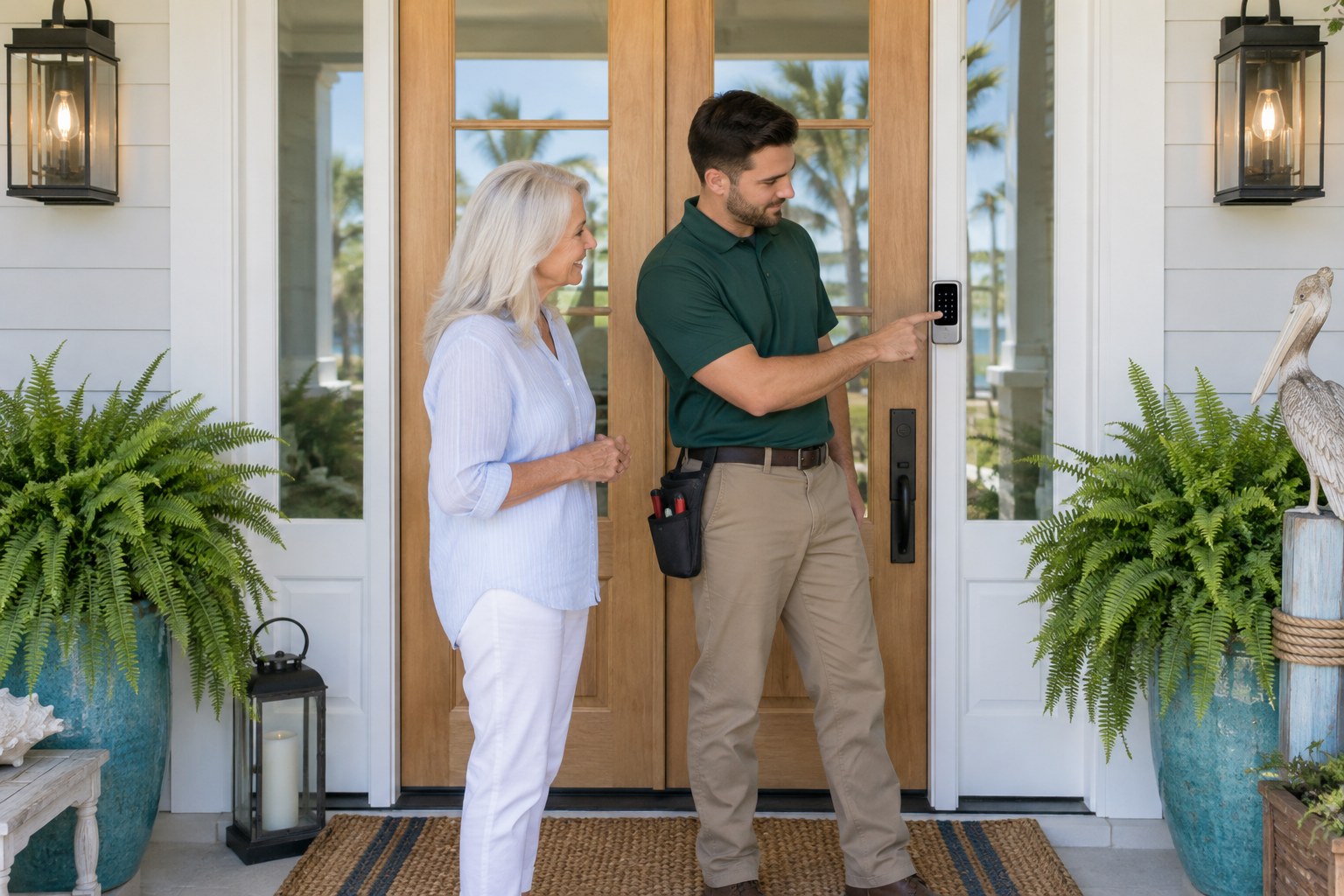
What a keypad deadbolt is and how it works
A keypad deadbolt replaces the usual outside cylinder with a set of buttons or a touch panel. When the correct code is entered, a small motor inside the lock retracts the bolt. From the inside, a thumb turn or a button usually operates the bolt, and many models lock automatically after a set time. The bolt is the same solid steel bar used in a conventional deadbolt.
Most keypad deadbolts still keep a key cylinder as a backup. That cylinder may sit behind a cover or beside the keypad. If the batteries die or the electronics fail, a key still opens the door. Models without any key cylinder exist, and they rely on an emergency battery contact, so it is important to understand what your model offers.
The convenience is clear. A code can be given to a relative for a week and removed afterwards. No one needs to hide a spare key. Children can enter without carrying keys. The tradeoff is that the lock depends on power and settings, and the household has to adopt the habits needed to look after it.
Will your door take one
Keypad deadbolts fit the same standard holes as ordinary deadbolts in most cases. The door usually needs a two and one eighth inch bore in the face and a one inch bore in the edge. If your door already has a deadbolt, the new lock normally drops into the same holes. Check the backset and the door thickness to be sure.
Some keypad locks are bulkier on the inside, because they hold batteries and a motor. The interior housing needs room on the door and should clear any nearby trim or handle. Narrow doors, glass inserts or decorative moldings may restrict the choice. A technician measures and tells you which models fit, rather than leaving you to discover a clash after unboxing.
The door and frame should also be sound. A keypad lock does not strengthen a weak door. If the strike is loose or the frame cracked, those should be repaired. The bolt must meet the strike squarely, because motorized locks are less tolerant of friction than hand turned ones. A sticking bolt drains batteries and can stall the motor.
Choosing between buttons, touchscreens and other styles
Button keypads have physical keys that click when pressed. They tend to be robust and easy to use in the dark, especially with backlighting. Touchscreen versions have a smooth glass surface that lights up when touched. They look sleek, but fingerprints and moisture can affect them, and the screen needs to cope with sun and humidity.
Think about who will use the lock. Children and older relatives often prefer large, tactile buttons. People who carry heavy loads may appreciate a lock that wakes when touched. Households with young children should consider whether the lock gets pressed accidentally. Try a display model if you can, and note how the buttons feel.
Features vary widely. Some locks have a single master code, others hold dozens of user codes. Some include a vacation mode that disables codes, or a tamper alarm that sounds after several wrong entries. More features mean more things to configure. Choose what you will actually use, and avoid paying attention to a long list that adds complexity without benefit.
- Number of user codes the lock can hold
- Automatic relock timer and door sensing
- Backlit keys for use at night
- Tamper lockout after repeated wrong entries
How the lock is installed
The technician begins by removing the existing deadbolt or latch, if there is one, and checking the bores. The new latch is fitted into the edge hole with its faceplate flush. Then the exterior keypad body is placed on the outside of the door, with its cable or connector passed through the hole, and the interior assembly is attached on the other side.
The connecting cable between inside and outside parts is delicate. It must pass through the door without being pinched or kinked. The technician routes it carefully, and tightens the fixing screws evenly. Over tightening can crush the cable or bind the mechanism. The thumb turn or interior button is checked as the lock is assembled.
Next the strike is aligned and secured with long screws. The batteries are installed and the lock is programmed. The technician tests the bolt many times, with the door open and closed, and observes the motor strain. A smooth, quick throw indicates good alignment. Any hesitation is addressed by adjusting the strike or the latch until the lock operates effortlessly.
Batteries: planning so you are never surprised
Keypad deadbolts typically run on four AA batteries, although some use other types. Battery life varies with usage, temperature and how smoothly the bolt moves. Most locks warn you when the batteries are low, by a light, a tone or a message. Heed these warnings promptly, since the final charge can run out sooner than expected.
Choose good quality alkaline or lithium batteries, and avoid mixing old and new. Rechargeable cells are not always suitable, because their voltage differs and may cause error messages. Check the manual for guidance. Keep a spare set in a handy place inside the house, so you are never caught without replacements.
Heat and humidity shorten battery life, and an exposed door in Gulf Coast summer can be hot. If your door faces direct sun, expect to change batteries more often. A routine, such as replacing them at the start of hurricane season or when you change smoke alarm batteries, ensures they are fresh when you most need the lock.
Managing codes sensibly
Set a unique code for each person who needs access, if the lock supports it. This allows you to remove one person without affecting others. Avoid obvious combinations such as birth years, addresses, repeated digits or simple sequences. Make codes long enough to be difficult to guess, within the limits of the lock, and avoid writing them on the door frame.
Change codes when circumstances change. After a contractor finishes a job, a house sitter returns, a guest leaves or a relationship ends, delete the relevant code. Treat codes like keys: you should know who has them. Some households keep a simple note, stored safely, listing who holds which code and when it was issued.
Wear on keys can reveal a frequently used code. Over time, fingerprints on a touchscreen or smudged buttons may hint at the digits. Wiping the surface occasionally and changing codes now and then reduce this. Many modern locks scramble the keypad layout to avoid it. A technician can show you the lock features that help.
Keeping a backup key and a way in
Even the best electronic lock can fail. Batteries run out, motors stall in damp conditions, and electronics can misbehave after a power surge or lightning strike. A mechanical backup key is the safeguard. Keep it somewhere accessible but not obvious, such as with a trusted neighbor or in a securely mounted key box.
Some locks offer an emergency power contact on the exterior, which lets you hold a nine volt battery against two terminals to wake the lock. This can be helpful if you are locked out with dead batteries and no key. Know whether yours has this feature and how it works. Practice once, so you are not learning in the dark.
If you rely on the keypad exclusively, consider the implications. What happens if you forget the code, or the lock locks itself with the door ajar? Having a plan for these situations prevents a stressful lockout. Call us to confirm availability if you ever find yourself locked out, and have identification ready so ownership can be verified.
Humidity, salt and the electronics
Electronics and coastal air are not natural friends. Moisture can creep into keypads, and salt can corrode contacts. Choose a lock designed for outdoor use with a sealed keypad and weather resistant finish. Check the manufacturer's ratings and avoid models intended only for sheltered locations if your door is exposed.
Keep the keypad surface clean. A soft damp cloth removes salt and dirt. Avoid harsh chemicals that could damage the coating. If the keypad becomes unresponsive after heavy rain, let it dry. Persistent issues may indicate water ingress, which requires repair or replacement. Don't ignore it, because water damage can affect the motor and wiring.
Storm season brings power cuts, and a battery powered lock keeps working when mains power fails. That is a clear advantage over some other electronic systems. Still, after a major storm check that the lock responds correctly and the door is aligned. Swollen doors can strain the motor, so a technician may adjust the strike to keep things moving.
Automatic locking and living with it
Many keypad locks can lock themselves after a set time. This protects against forgetting to lock, and it suits busy households. The downside is the risk of locking yourself out when you step outside to take out the trash. Develop a habit of carrying your phone or a key, or learn the code well enough to use it quickly.
Some households disable auto lock and rely on manual locking. That is a legitimate choice if you prefer control. Consider which risk worries you more: leaving the door unlocked, or being locked out. The lock settings can be changed to suit your lifestyle, and a technician will show you how.
Pets, children and visitors should be considered. A guest may not realize the door locks itself. A short instruction card or a verbal reminder helps. Make sure everyone who might need to leave quickly can operate the interior thumb turn or button. The interior side must always be easy to open.
First week with a new keypad lock
The first few days are when most problems show up. Use the lock deliberately many times, from outside and inside, with the door open and shut. Notice whether the bolt moves smoothly, whether the keypad registers every press and whether the automatic relock behaves as expected. If anything seems inconsistent, note exactly when it happens and tell the installer rather than assuming it will settle.
Teach the household together. Walk everyone through entering a code, operating the thumb turn, and what the lights or tones mean. Let children practice under supervision. Show house sitters or relatives the backup key and where it is kept. A fifteen minute demonstration at the start prevents most lockouts and false alarms during the following months.
Write down the initial settings, such as the master code, the number of user codes and the relock delay, and store the note somewhere secure inside the house. Check the batteries after a month, to learn how fast they drain with your usage. That early measurement helps you plan a replacement schedule that suits the way you actually live.
Rentals, short stays and shared access
Keypad locks suit rentals well because codes can be changed between guests. Hosts can set a unique code for each stay. But in a rental you do not own, permission is required, and a locksmith will check authority before fitting or removing a lock. Always keep the original hardware if the landlord wants it back.
For longer tenancies, landlords sometimes prefer to retain a master code or a mechanical key. Agree this in writing. Tenants should know that any code they give to others is their responsibility. Review the lease for clauses about lock changes, and keep the landlord informed of any changes to access.
For vacation rentals, test the lock between each guest, and check battery levels at every turnover. Provide clear instructions and a number to call if the lock fails. A failed lock at midnight is a poor start to a stay. Having a backup key held by a local contact helps, along with a plan for who responds.
Security considerations and honest limits
A keypad deadbolt is as strong as its bolt, its strike and the door. The keypad itself adds convenience, not extra resistance to force. Choose a model with a solid bolt and a reinforced strike. The electronics should be protected from tampering, and the interior assembly should be mounted securely. A technician can advise on well built options.
No electronic lock is immune to attack. Some can be defeated by determined methods, and low quality models may have known weaknesses. Select reputable products and keep firmware up to date if the lock supports it. Combine the lock with good habits: do not share codes widely and do not leave the door unlocked out of convenience.
Think about the whole door. Glass panels near the lock, a weak frame or a hollow door reduce the value of any deadbolt. Fix the weak points first. A well installed keypad lock on a solid door in a strong frame is a good, practical combination for many families, particularly those who value ease of access.
Battery powered does not mean effortless: the hole, the latch and the strike
A battery powered keypad deadbolt does not need wiring, but it still depends on a well-prepared door. Before installing, a technician checks the bore hole in the door face, the smaller hole in the door edge and the strike plate in the frame. Standard holes suit most locks, but older doors may have been drilled for a different size or cut with a rough edge. If the holes do not match, the technician can adjust them with the correct tools rather than forcing a lock into place, which often causes sticking later.
The latch bolt and the deadbolt must also line up with the strike. A deadbolt that extends a full inch into solid wood framing resists force far better than one that hits only the thin jamb. The installer may replace the factory strike with a longer, sturdier version and use longer screws that reach the wall stud. This small step turns an ordinary door into a much stronger one, and it takes only a few minutes. It is one of the quiet benefits of having the work done by someone who watches the whole assembly.
After mounting, the technician tests the lock with the door open and then closed, and repeats several times. The keypad should respond cleanly, the bolt should throw its full distance, and the door should close without needing to be pulled or lifted. Programming comes last: choose your own codes, test each one, and write them down somewhere safe. A short walk through the features, including how to change a code later, leaves you comfortable using the lock without needing to look anything up.
Getting a quote and preparing for installation
Tell us about your door: its material, whether it already has a deadbolt, and what you hope the keypad will do. Mention how many people will need codes and whether you want automatic locking. Quotes are given by phone based on what you describe. If the job looks complicated, a technician visits and the service call charge is explained before dispatch.
Call us to confirm availability for your area. Have proof of ownership or authority ready, since the locksmith checks before installing hardware. Decide who will hold the master code and where the backup key will live. Gather fresh batteries so the lock is ready to go.
At the end of the visit, test every function with the technician. Enter a code, use the thumb turn, test the key backup, and try the auto lock. Ask for a short walk through of changing codes. Keep the manual for later, and write down the programming steps. A clear understanding at the start makes living with the lock simple.
Questions people ask us
Will a keypad deadbolt fit my existing door?
Usually yes, since most use the standard bore sizes of ordinary deadbolts. The technician checks the backset, door thickness and clearance for the bulkier interior housing. The door and frame also need to be sound.
What happens if the batteries die?
Most locks warn you first. If they die, a backup key or an emergency power contact can open the door. Keep spare batteries indoors and replace them at regular intervals, especially in hot weather.
How should I manage codes?
Give each person their own code if the lock allows, avoid obvious numbers, and delete codes when someone no longer needs access. Treat them like keys and keep a simple record of who holds one.
Is a keypad lock suitable for the coast?
Choose a model designed for outdoor use with a sealed keypad and corrosion resistant finish, and wipe it clean of salt. Humidity and heat can shorten battery life, so check them more often.
Do I need permission to install one in a rental?
Yes. A locksmith checks ownership or authority before installing, and tenants need the landlord's agreement. Keep the original hardware if it is to be restored. Call us to confirm availability and discuss details.