
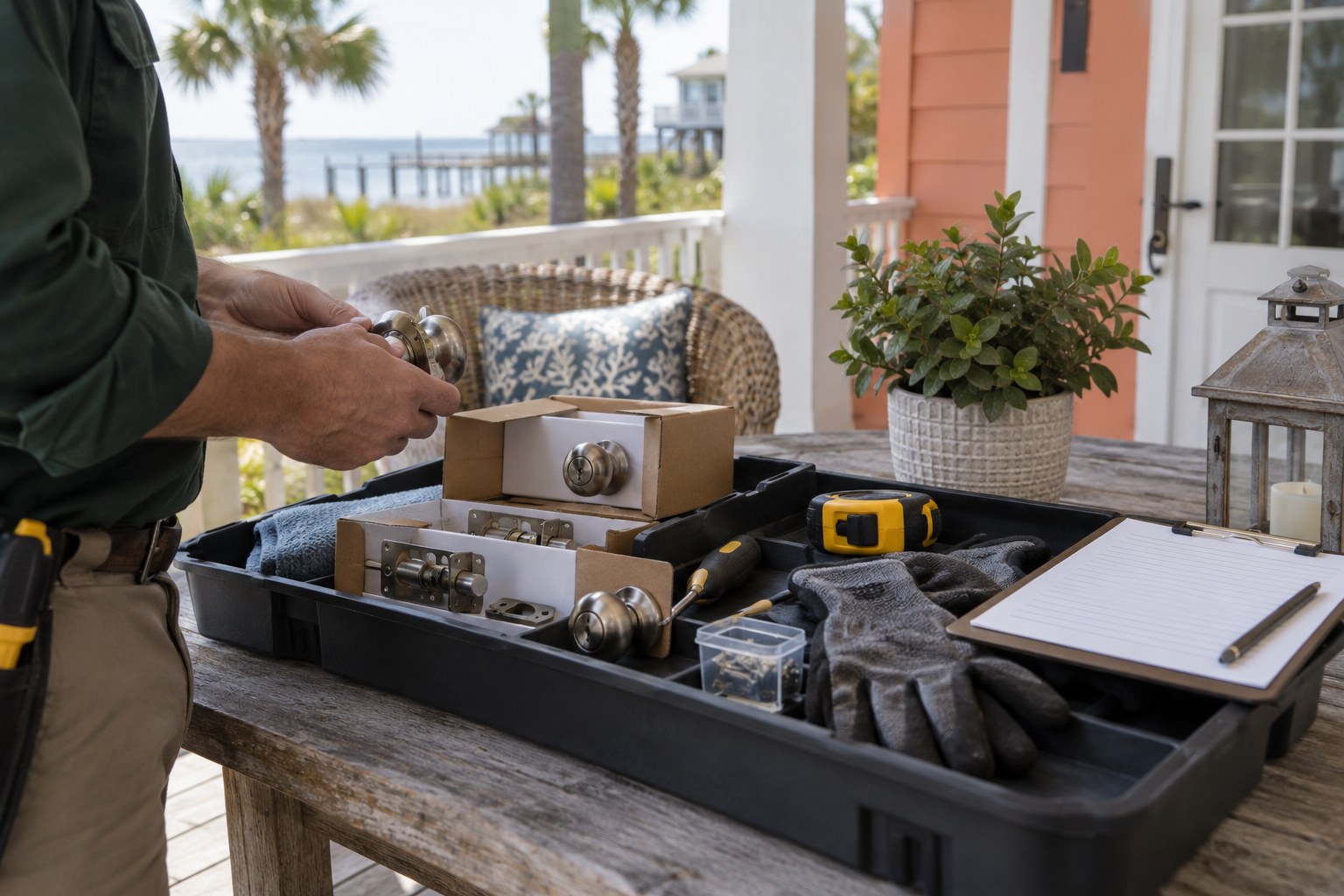
Pull together these details before dialing
Start with a few facts. Know the address and any gate or building details the technician will need. Know which door or doors are involved, and whether the problem is a lockout, a broken key, a lock that sticks, or something else. Clear information leads to a clearer quote.
Look at the lock itself if you can. Note the brand if it is visible, whether it is a deadbolt, a handle set, or a keypad lock, and roughly how old it seems. If the lock is electronic, note whether it has a physical key as backup. These details help the technician bring the right tools and parts.
Think about what you want. Are you looking to open a door, repair a lock, rekey after a lost key, or replace hardware? Having a goal in mind saves time. If you are unsure, describe the situation and let the technician suggest options.
Papers and IDs that show the door is yours to open
Before opening, rekeying, or replacing a lock, a locksmith checks that you have the right to authorize the work. This protects you and everyone else. For a home you own, bring identification and something that connects you to the address, such as a utility bill, a mortgage statement, or a property record.
If you rent, expect to show identification and proof that you live there, such as a lease or mail. For work beyond a simple opening, the owner or manager may need to approve. Having their contact details ready, and letting them know in advance, speeds things up.
If you manage a property for someone else, bring written authority or have the owner confirm by phone. This check is routine and not personal. It prevents a stranger from talking their way into a home, and it is part of doing the job responsibly.
- Photo identification
- Something linking you to the address
- For rentals: a lease and the owner or manager's contact
- For managers: written authority from the owner
Describing the problem clearly
The more precisely you describe a problem, the better the technician can prepare. Instead of saying the lock is broken, say what happens: the key goes in but will not turn, the bolt does not move, the handle spins freely, or the door will not close properly. Mention when it started and whether anything changed beforehand.
Say what you have already tried. If you sprayed something into the lock, tell the technician, since some products affect how the lock should be handled. If you tried to force the key, mention it. Honesty here saves time and avoids surprises.
Photographs help. A clear picture of the lock, the door edge, and the strike plate can tell a technician a great deal before they arrive. Send them if asked, or keep them ready on your phone.
Clear access to the door
Make sure the technician can reach the work area. Move furniture, bicycles, planters, and other items that block the door. Clear a path from the driveway or street. A wide, uncluttered space makes the work faster and safer.
Secure pets. A friendly dog may be perfectly polite with you but excited by a stranger carrying tools. Keep animals in another room or on a leash, away from the door. This protects the animal and allows the technician to concentrate.
Provide light and shelter if possible. If the work is outdoors in the evening, a porch light helps. In the Gulf Coast summer, a shaded spot to work is welcome. In rain, a covered entry makes a difference. These small things help the technician do careful work.
Keys, codes and spares
Collect every key you have for the lock in question, including spares. If the work involves rekeying, the technician will need to know how many keys you need. Gather old keys, since they may be useful for matching or testing.
If the lock is electronic, find the manual or the brand name, and know where the batteries and the backup key are. If you have an app or an account associated with the lock, have your login details available privately. Never share a password with anyone in the open.
Think about who else needs keys. Family members, tenants, and trusted friends may need copies. Deciding in advance how many to cut avoids repeat visits. If you want a restricted key system, mention it when you call.
Plan how long the visit may take
Simple jobs, like opening a door or rekeying a single lock, are often brief. Larger jobs, such as replacing several locks or working on an older door, take longer. Ask when you call how long the technician expects to be on site, and plan accordingly.
If you must leave or take a call, arrange for a responsible adult to be present. The technician should not be left alone without someone who has authority over the property. If the owner cannot be present, make arrangements in advance.
Be patient. Careful work, such as aligning a strike plate or testing each key, is worth the time. A rushed job can leave a door that nearly works. A thorough one gives you a lock that serves you for years.
Understanding quotes and the service call charge
Quotes are given by phone. When you call, describe the work and the technician or dispatcher will explain how the quote is formed and what it covers. Ask any questions then. A clear understanding before the visit avoids misunderstandings after.
If a job is complicated and a quote by phone is not possible, a technician visits first. The service call charge is explained before anyone is dispatched. That charge covers coming to your location and assessing the work, and it is separate from the cost of repair or replacement.
Never be afraid to ask. A reputable locksmith explains the charges plainly and does not pressure you. If something does not make sense, ask for clarification before work begins.
What the technician will do on arrival
The technician will usually start by introducing themselves, confirming the address, and asking to see identification and proof of authority. They will look at the lock and door, confirm the problem, and discuss the plan. If the plan differs from the phone quote, they should explain why before starting.
They will then perform the work, explaining as they go if you wish. They may need to remove the lock, test parts, or adjust the door. Ask questions. A good technician is glad to explain what they find and what they recommend.
At the end, they should test the lock with you. Turn each key several times, operate the thumbturn, and check the door closes smoothly. Make sure you understand any maintenance tips or follow-up they suggest.
Safety around tools and open doors
While work is underway, a door may be open or its lock removed. Keep children and pets away, and avoid leaving valuables near the open entry. If the door cannot be secured during the work, plan for someone to stay nearby.
Tools and parts can be sharp or small. Do not let children handle them. If the work involves drilling or cutting, expect noise and dust, and consider covering nearby furniture.
If you feel uncomfortable at any point, say so. You are entitled to ask questions and to pause work until you understand what is happening. A professional will respect that.
Special preparation for rentals and shared buildings
In a rental, let the landlord or manager know that a locksmith is coming. If the work involves changing locks, their permission is usually required. Ask what they prefer and whether they need new keys.
In a shared building, find out whether common doors or entry systems are involved. Some buildings have rules about who may service locks. Notify neighbors if the work will be noisy or block a shared hallway.
Keep records. Note the date, the technician's name, what was done, and how many keys were issued. Send a copy to the landlord if appropriate. This record is useful if questions arise later.
Preparing for vehicles and other lock work
If your visit involves a vehicle, have the registration and identification ready. The locksmith checks ownership before opening or programming a key. Park in a safe, accessible place and avoid blocking traffic.
For safes, cabinets, or other locked items, be ready to show that you own the item or the premises. Bring any information you have about the lock, such as the maker's name or a serial number. These details help the technician plan.
For all work, the principle is the same: be ready to show authority, describe the problem, and give clear access. Preparation shows respect for the technician's time and your own.
Standing outside a locked door at this moment
A lockout is stressful, and clear thinking helps. First, make sure you are safe. If you are outside at night, in bad weather, or with children or a pet inside, say so when you call. Then check the simple things: other doors, windows you can legitimately open, and whether someone inside or a trusted person holds a spare.
Do not try to force the door, break a window, or climb in at risk of injury. A damaged door or frame often costs more and takes longer to fix than the lockout itself. A technician can usually open a door without damage, but only after confirming that you belong there.
While you wait, gather what you will need to show: identification and something linking you to the address. If you are carrying nothing at all, think of what could prove it, such as a phone with a lease or mail, or a neighbor who knows you live there. Call us to confirm availability.
Special notes for older homes and unusual hardware
Older homes around Pensacola may have mortise locks, skeleton-key hardware, or doors that have been modified many times over the years. If your home has any of this, tell the technician when you call. Some older parts need special tools or have to be sourced, and a visit may take longer.
Take a photo of the lock from both sides and of the edge of the door where the latch sits. If there are maker's marks on the faceplate or the lock body, include them. These small details can help identify the lock and its parts before the technician arrives.
If the home is in a historic district or has hardware you care about preserving, say so. The technician can often repair and rekey instead of replacing, keeping the character of the door intact. Mentioning your preferences at the start leads to better options.
Good questions to put to the person who arrives
Ask what the technician found. A clear explanation of the cause, whether wear, damage, corrosion, or alignment, helps you decide what to do. If more than one option exists, ask about the tradeoffs and how long each is likely to last.
Ask what to expect afterward. Are there maintenance steps? When might the lock need attention again? Are any parts likely to wear soon? Knowing this lets you plan rather than be surprised.
Ask about key control. How many keys exist? Can copies be made at a standard counter, or are the keys restricted? Would rekeying in future be simple? These questions help you maintain security over the long run.
Preparing when a storm is coming or has just passed
Storm season changes what a visit looks like. Before a storm, you may want doors checked, latches adjusted, and frames confirmed solid. Book early, since demand rises as forecasts firm up, and call us to confirm availability rather than assuming. Gather your key list and make sure the technician can reach the property safely.
After a storm, conditions may be difficult. Debris, standing water, and downed lines can make access hazardous. Do not ask anyone to enter an unsafe area, and tell the technician about hazards when you call. If the power is out, mention it, since electronic locks and lighting will be affected.
Take photographs of any damage before work begins, particularly if insurance may be involved. Damaged doors, bent strikes, and swollen frames are all worth recording. The technician can describe what is needed to restore security, and your photos support any claim you choose to make.
Making the doorstep ready: access, pets and a clear working area
Preparation is not only about paperwork. The physical surroundings matter too. Clear a path to the door so the technician can reach it without moving furniture or stepping around boxes. Move cars from the driveway edge if they block access, and turn on an outside light if it is evening. A clean working area makes the job go more smoothly and lowers the chance of a dropped screw disappearing into the landscaping.
Pets deserve a plan. A dog that barks at a stranger at the door can make the work harder and more stressful for everyone. If possible, put animals in a separate room before the technician arrives, and mention them on the call so the visit is handled with care. Be aware that an open door gives a pet a chance to slip out, so close interior doors and keep a leash handy.
Think about what you want from the visit. Make a short list of every lock you are concerned about, including ones you rarely use, so that nothing is forgotten. Note the number of keys you need, who will be home, and who is allowed to approve decisions. Have any old keys together so they can be tested and compared. Call us to confirm availability, and we will walk through what to expect for your particular job.
Finally, plan for the time after the work. Decide where the new keys will live, who gets which copy, and where the extra will be stored. Test every key on the door before the technician leaves, and ask any last questions while they are still there. Keep the receipt or notes about the work, since they help if you need a matching part later. Call us if anything about the visit is unclear beforehand.
After the visit: follow-up and records
Once the work is done, keep your new keys safe. Number them if there are several, and note who holds each. Store spares in a secure place and avoid labeling them with your address.
Keep any paperwork, including notes about what was done. If a part was replaced, note the brand and type. This helps future maintenance and any questions that come up.
If anything seems wrong later, call us. A lock that sticks, a key that does not turn smoothly, or a door that does not close properly should be checked soon. Call us to confirm availability and describe what you notice.
One last habit is worth building: store a short note in your phone or a drawer with the details of the work, including the date, the doors involved, how many keys were cut, and the type of lock installed. Next time a technician asks what you have, you can answer in a sentence. That small record turns a vague memory into useful information and often shortens the next visit considerably, especially if the person who did the work is not the one who comes back.
If several people share the home, tell them about the visit too. Nothing is more awkward than a family member arriving partway through and not knowing why a stranger is working on the front door. A quick message to everyone, saying who is coming, when, and why, keeps the household informed, avoids needless worry, and makes sure the right person is available to receive the new keys at the end.
Questions people ask us
What should I have ready when the locksmith arrives?
Photo identification, something linking you to the address, clear access to the door, and any keys or spares. Renters should have the owner or manager's contact ready.
Why does the locksmith ask for proof of ownership?
To make sure the person authorizing work has the right to do so. It protects you and prevents strangers from gaining entry. Ownership or authority is checked before opening, rekeying, or programming.
Do I need to be present during the work?
Someone with authority over the property should be there. If you cannot be, arrange in advance for a responsible adult to represent you.
Will I know the cost before work starts?
Quotes are given by phone. If the job is complicated, a technician visits first and the service call charge is explained before dispatch.
How should I describe my lock problem?
Say exactly what happens, when it started, and what you have already tried. A photo of the lock and door helps. Call us to confirm availability.